

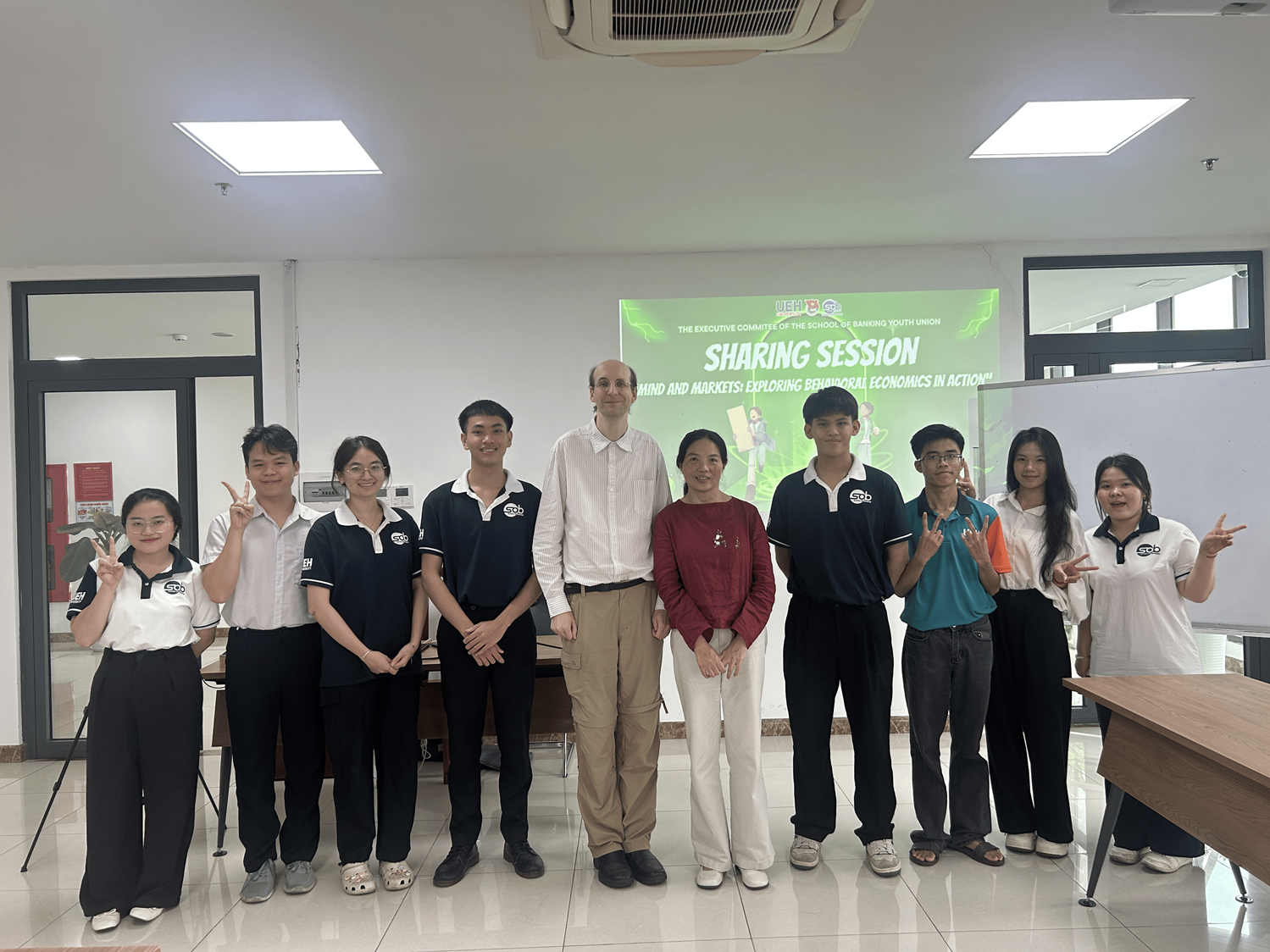
With the aim to spark critical thinking and inspire scientific research in the field of behavioral economics, on this past November 13, the School of Banking - College of Business, University of Economics Ho Chi Minh City hosted a thematic sharing session titled “Mind and Markets: Exploring Behavioral Economics in Action”
The sharing session featured two special guest speakers: Prof. Marc Oliver Rieger, Chair of Finance and Banking at the University of Trier (Germany), and Prof. Mei Wang, Chair of Behavioral Finance at the WHU – Otto Beisheim School of Management (Germany). The event was also attended by Assoc. Prof. Dr. Phan Chung Thuy, Vice Dean of the School of Banking. With their extensive international research experience, both professors delivered invaluable perspectives and groundbreaking findings on behavioral economics and cultural finance. Their practical insights on the INTRA survey, how psychological and cultural factors influence financial decisions, and real-world applications in the banking industry were particularly useful, supporting students with foundational knowledge and multi-dimensional thinking to apply to their future studies and research.
Part 1: Speaker shares on topic “Understanding the Psychology and Behavior in Economics”
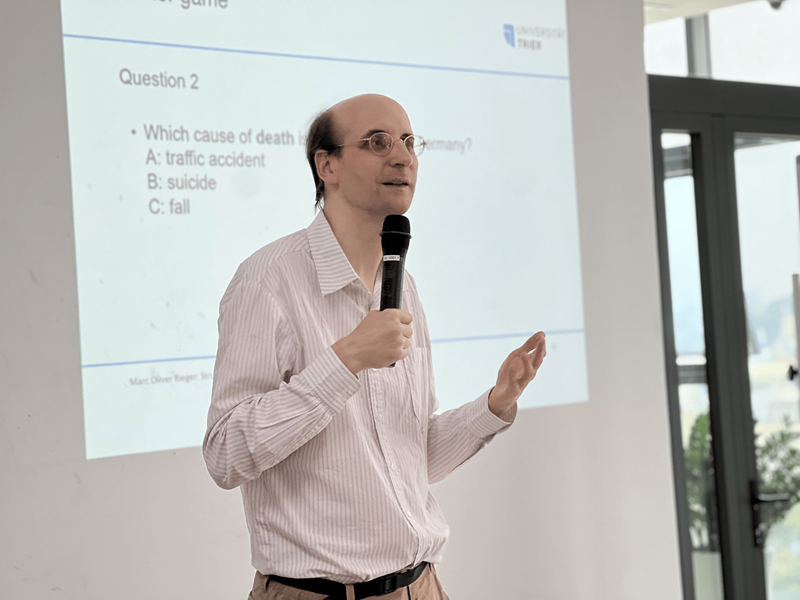
Prof. Marc Oliver Rieger delivered a comprehensive and in-depth presentation on behavioral economics, providing students with a clearer frame of reference for why people make decisions. Drawing from his practical research experience, he offered realistic perspectives, explaining how emotions, cognitive biases, and social factors influence economic choices. He emphasized the importance of understanding "irrational" behaviors compared to classical economic theory and, notably, he organized interactive behavioral experiments on the spot. These instructions and visual experiences not only helped students better grasp the fundamental principles but also motivated them to approach market issues with a fresh mindset.
His presentation equipped students with more thinking tools and the confidence to continue their journey of exploring the field of behavioral finance.
Part 2: Q&S session
One of the highlights of the workshop was the discussion and Q&A session, where students had the chance to directly ask questions and engage in in-depth discussions with Prof. Marc Oliver Rieger. The questions centered on how to apply the theories of behavioral economics to real-world practice.
This lively exchange helped students get answers to their questions and gain a deeper understanding of how "nudges" are designed in public policy, how companies can use behavioral insights to improve governance, and which cognitive biases have the greatest impact on personal financial decisions.
Part 3: Speaker shares on topic “Applying Behavioral Economics in Practice”
Prof. Mei Wang brought students a practical and global perspective on Cultural Finance, especially on how to apply the findings from the INTRA survey. Drawing from her practical experience conducting this large-scale survey in 53 countries, she helped clarify the key points of how culture shapes risk and time preferences and also specified the applications of these findings for product and strategy innovation.
The presentation not only provided students with in-depth knowledge of a new field but also instilled confidence and equipped them with a practical vision to apply these insights to market analysis. Her suggestions and real-world examples helped students view the connection between academic research and business practice with a proactive spirit and a fresher approach.
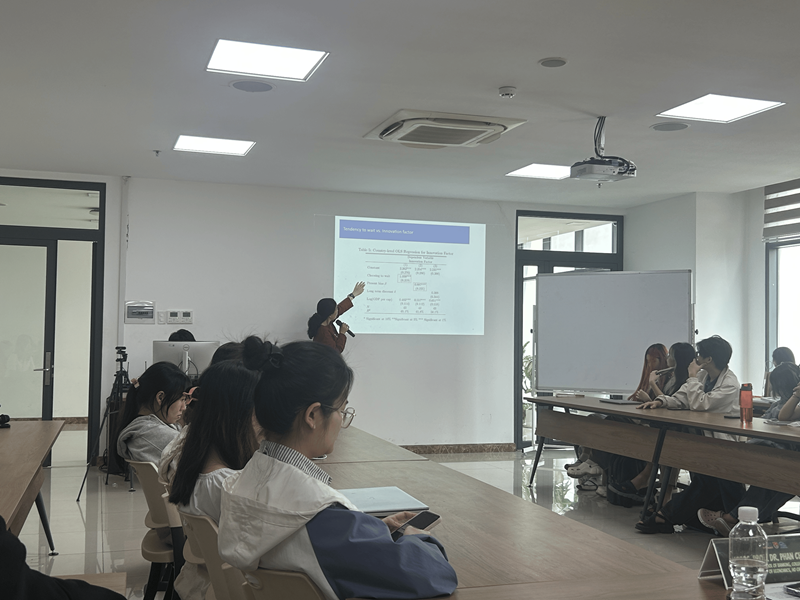
Part 4: Q&S session
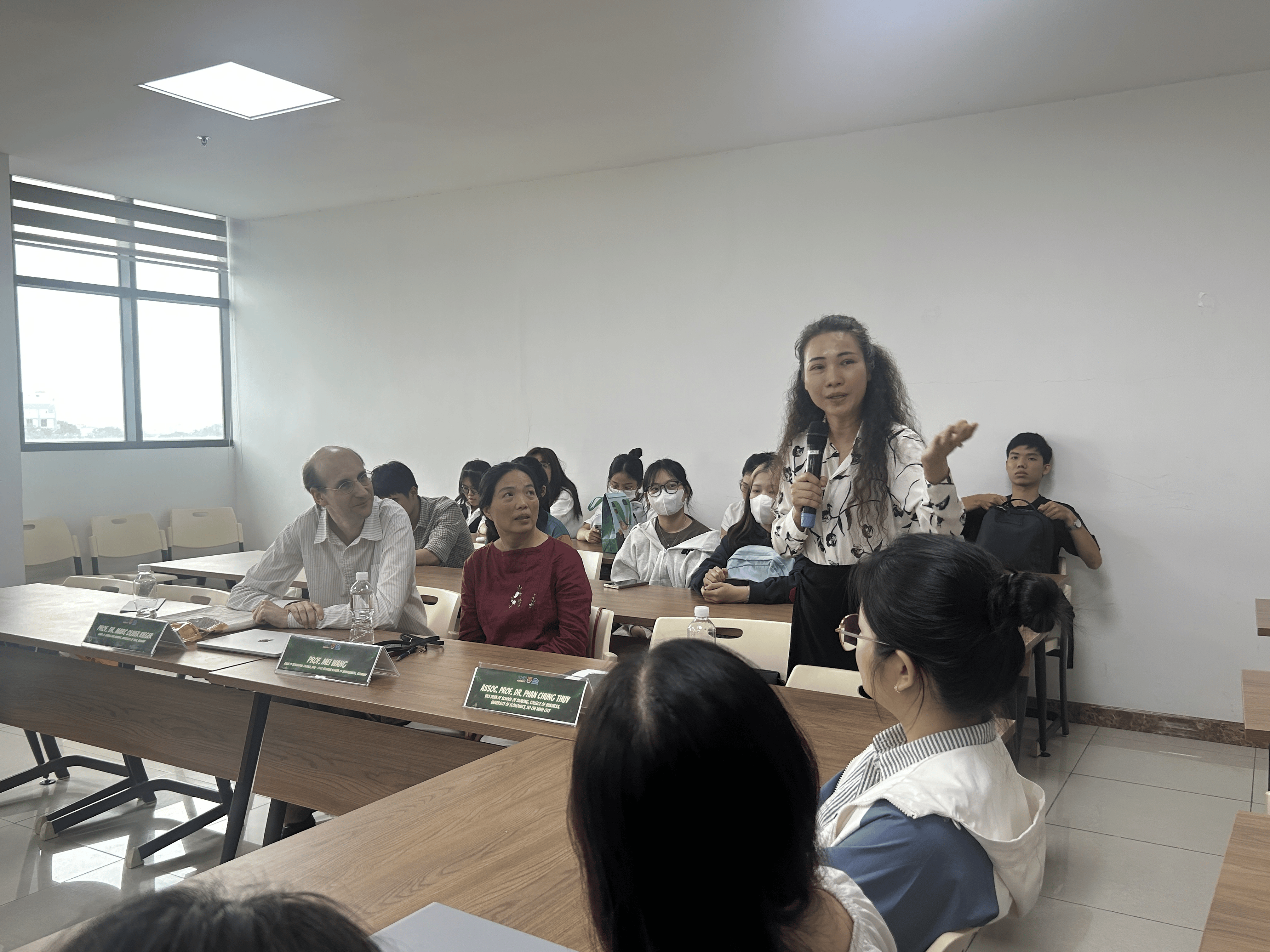
The discussion and Q&A session following Prof. Mei Wang's presentation was particularly lively and insightful, featuring coordination and practical connections from Assoc. Prof. Dr. Phan Chung Thuy. Students showed particular interest and asked many questions about the INTRA survey and the application of cultural finance in the Vietnamese market. The inquiries focused on clarifying the differences in risk attitudes between countries and how businesses could specifically apply these findings to design products or marketing strategies better suited to the Vietnamese mentality.
The combination of Professor Mei Wang's global academic perspective and Assoc. Prof. Dr. Phan Chung Thuy's local context analysis helped students get their questions answered, gaining a deeper understanding of how to apply such a large-scale study to business practice. At the same time, the Q&A session also sparked many new research ideas and directions for students in a field that is still very new in Vietnam.
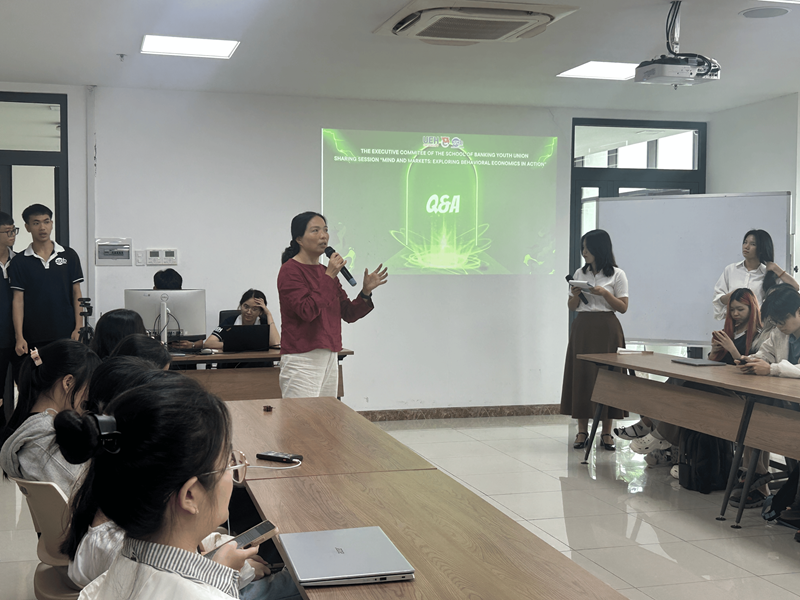
The session provided in-depth knowledge and fresh perspectives on Behavioral Economics and Cultural Finance. Through direct interactions with experts, students not only broadened their academic thinking but also gained strong inspiration for research. This forms a solid foundation, helping them confidently advance in their careers.
[Research Contribution] 10 Global Career Trends Shaping the Super Intelligence 5.0 Era – Episode 2
In the era of super intelligence 5.0, where technology, data and automation are reshaping the global labor market, young people need to understand not only themselves – but also the market. In episode 2 of the Live Talk “10 global career trends shaping the era of super intelligence 5.0 – episode 2 – part 2”, experts continue to accompany parents and students on the journey to identify suitable career options, through practical perspectives: from working at multinational companies or technology startups, to sustainable career trends, the role of deep expertise and co-creation thinking with AI.