

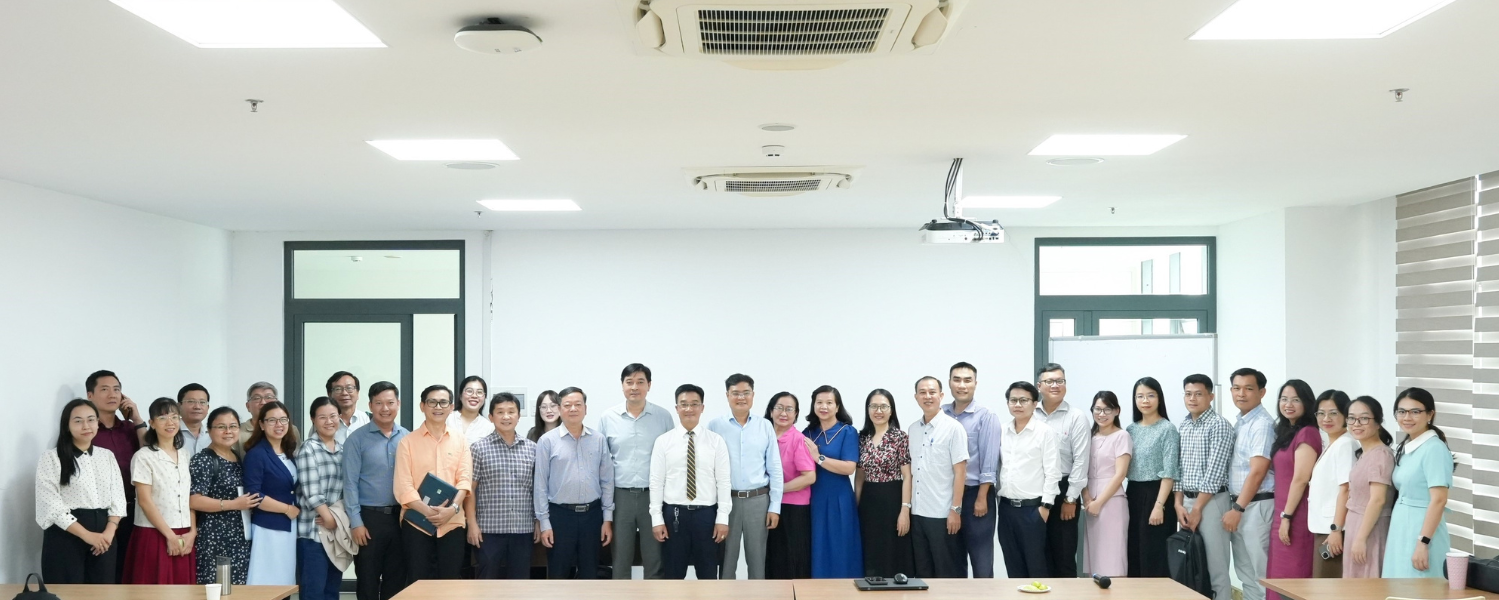
On April 15, 2026, the UEH College of Business (COB) organized a workshop titled “Developing Case Studies for Teaching” at Campus B of the University of Economics Ho Chi Minh City (UEH). The workshop attracted strong interest and participation from a large number of lecturers across various faculties. The program is part of a series of initiatives aimed at enhancing faculty capacity in designing, developing, and utilizing case studies in teaching. It also contributes to improving the quality of case writing and promoting innovative, practice-oriented teaching methods, in celebration of the 50th anniversary of UEH.
The workshop was honored to welcome the participation of Assoc. Prof. Dr. Nguyen Phong Nguyen – Rector of UEH College of Business, Dr. Tran Anh Hoa – Vice Rector, and Assoc. Prof. Dr. Tran Thi Hai Ly – Vice Rector, along with members of the leadership board of COB schools and lecturers interested in developing case studies for teaching.
In his opening remarks, Assoc. Prof. Dr. Nguyen Phong Nguyen emphasized the important role of case studies in enhancing training quality and fostering students’ critical thinking skills. At the same time, the College encourages lecturers to proactively develop practice-oriented cases connected with real business contexts, aiming to build a high-quality academic resource ecosystem.
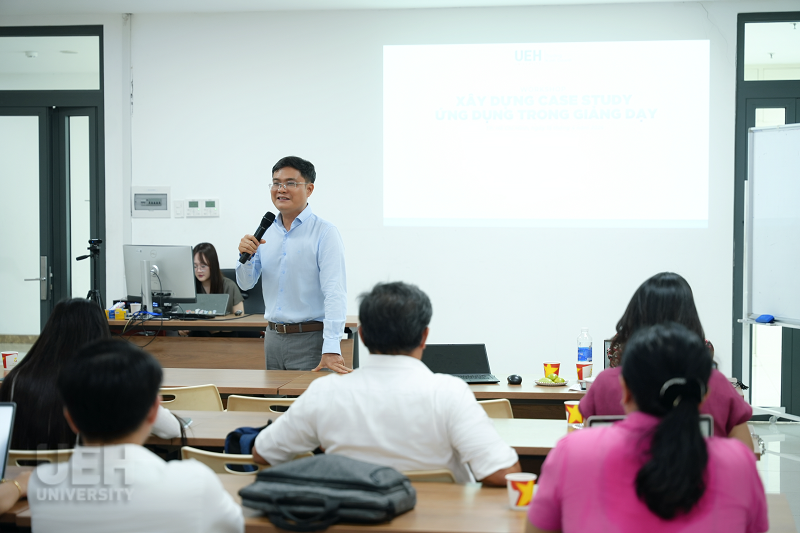
Prof. Dr. Nguyen Phong Nguyen – Rector of UEH College of Business delivering the opening remarks
In the expert sharing session, Mr. Duong Kha, M.A. – Deputy Head of the Department of Finance, UEH College of Business, presented the process of developing case studies, from topic selection and content development to case completion. He also highlighted storytelling techniques and the use of dialogue among key stakeholders to enhance the attractiveness of the case. In addition, case studies must comply with academic standards, align closely with course objectives, and be grounded in solid theoretical foundations. One of the major challenges highlighted was access to corporate data. Proposed solutions included utilizing data from listed companies, leveraging partnerships (MOUs), and drawing on inputs from industry experts involved in teaching.
Mr. Duong Kha, M.A. – Deputy Head of the School of Finance presenting
Continuing the program, Dr. Phan Quoc Tan – Director of the Master’s Program in Human Resource Management, Faculty of Management, UEH College of Business, introduced the case study development process, emphasizing the data collection stage from enterprises as a critical step that requires careful planning. The development of a “problem matrix” and the reconstruction of real business contexts were identified as key factors in ensuring depth and practical applicability of the case. Furthermore, the design of the question system within the case was also highlighted as an essential component contributing to its overall quality.
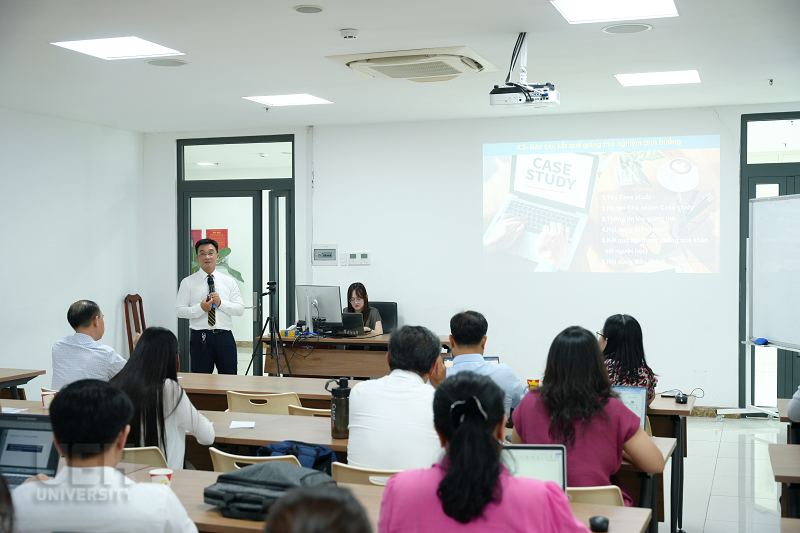
Dr. Phan Quoc Tan – Director of the Master’s Program in Human Resource Management presenting
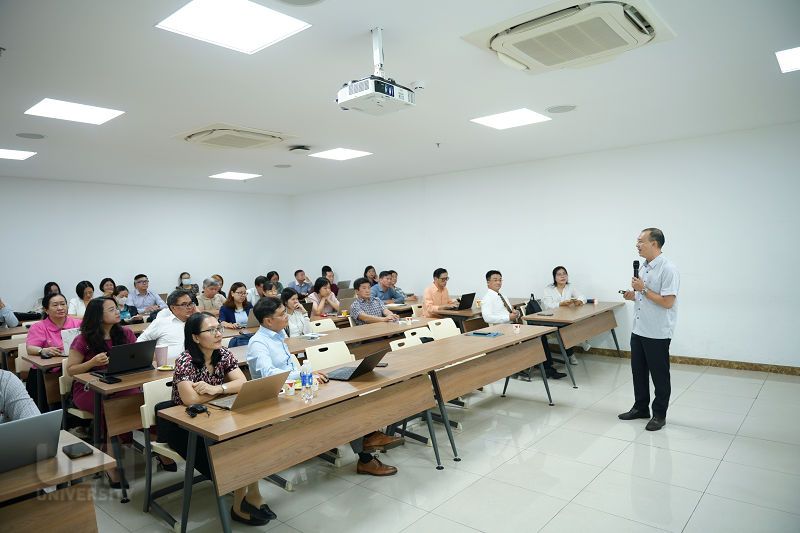
In addition to the presentations, the discussion and Q&A session was lively, with active participation from many lecturers. Various practical issues were raised regarding the development and implementation of case studies, including: requirements for teaching notes; data transparency and validation; distinctions between real and simulated cases; methods for processing and ensuring data reliability; as well as legal concerns related to corporate data confidentiality. The COB Board of Management and speakers directly addressed these questions, clarified procedures, and provided appropriate guidance to support effective implementation in practice.
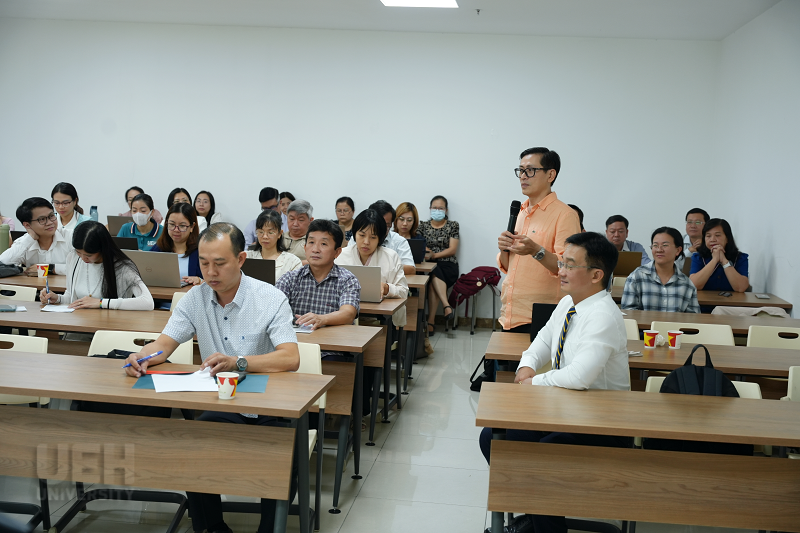
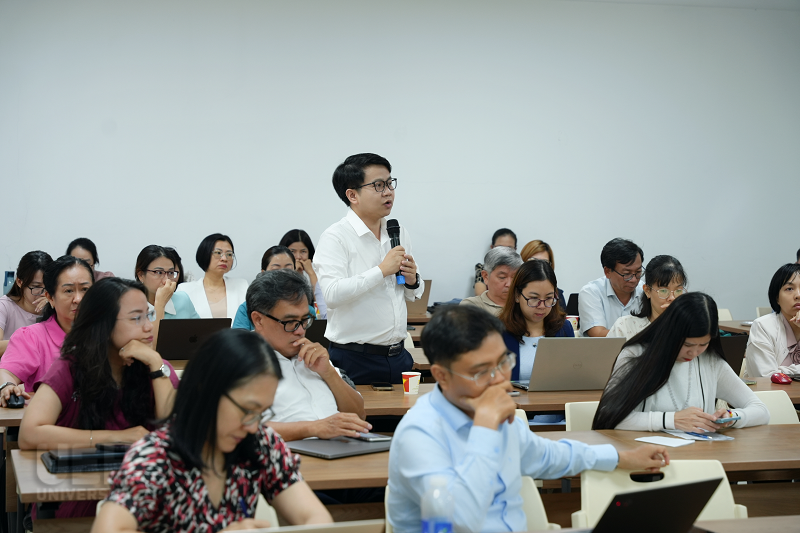
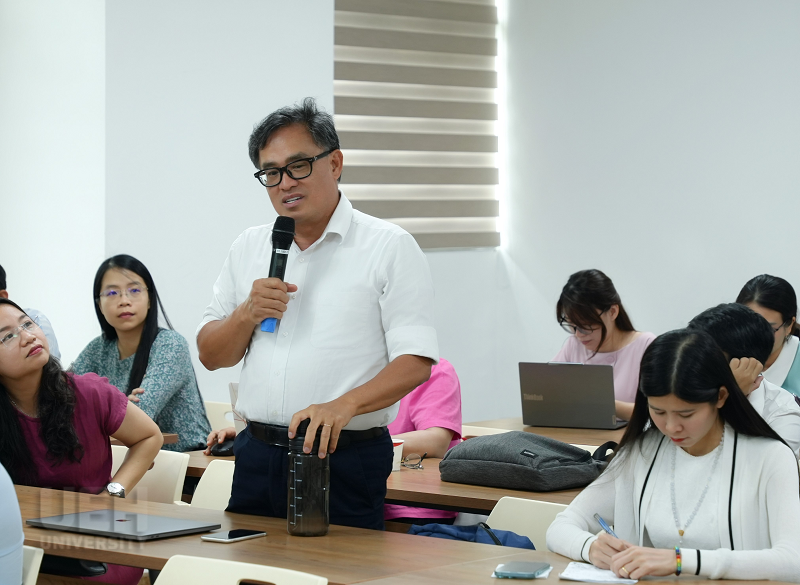
COB lecturers engaging in discussion and sharing insights
Through the workshop, UEH College of Business reaffirmed its commitment to innovating teaching methods in alignment with real-world practice, while also creating an academic forum for lecturers to exchange ideas, share experiences, and enhance professional capacity.
In the coming time, the College plans to organize additional thematic sessions on data legality, corporate information protection, and the role of AI in teaching and research, thereby contributing to improving education quality in the context of modern higher education.
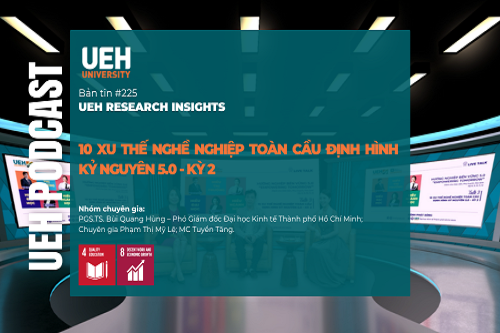
[Research Contribution] 10 Global Career Trends Shaping the Super Intelligence 5.0 Era – Episode 2
In the era of super intelligence 5.0, where technology, data and automation are reshaping the global labor market, young people need to understand not only themselves – but also the market. In episode 2 of the Live Talk “10 global career trends shaping the era of super intelligence 5.0 – episode 2 – part 2”, experts continue to accompany parents and students on the journey to identify suitable career options, through practical perspectives: from working at multinational companies or technology startups, to sustainable career trends, the role of deep expertise and co-creation thinking with AI.