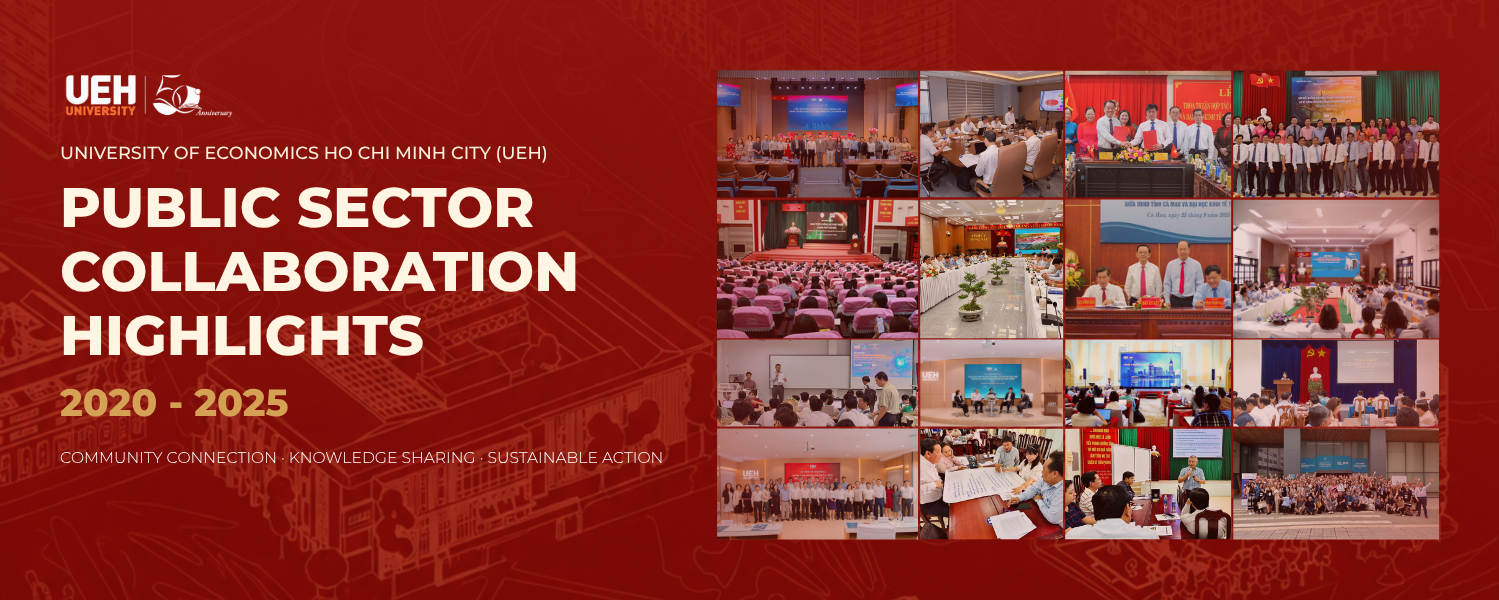
19 Cooperation Agreements, 105 Scientific and Technology Tasks: UEH’s Contributions to the Public Sector, 2020–2025
18 Sep, 2026
Partnering with the Public Sector as Part of the University's Mission to Serve Society
Throughout its development journey, UEH has identified partnering with the public sector as an integral part of its mission to put knowledge at the service of society.
Through human resource training, scientific research, policy consultation and review, knowledge transfer, and the promotion of innovation, UEH has gradually connected academic resources with the practical needs of localities.
From Ho Chi Minh City, UEH's sphere of service has expanded to the Mekong Delta, the Central Highlands, the Central Coast, and many other regions across the country. Each cooperation program not only addresses immediate needs but also aims to strengthen governance capacity, improve the quality of human resources, and lay a foundation for long-term development.
The 2020 - 2025 period provides a clear illustration of this journey. Over six years, UEH signed 19 cooperation agreements and documents, including 12 in 2025, marking a significant expansion of its relationships with localities, central-level agencies, and public-sector organizations.
Before the administrative reorganization, UEH's cooperation network covered 16 provinces and cities and two district-level localities. Following the reorganization, the programs have continued to be carried forward and implemented across 11 provinces and cities, including An Giang, Cà Mau, Đồng Tháp, Khánh Hòa, Đắk Lắk, Tây Ninh, Cần Thơ City, Đồng Nai, Kiên Giang, Lâm Đồng, and Quảng Ngãi.
The partner network has become increasingly diverse, ranging from local governments, departments, agencies, and central-level authorities to public hospitals, state-owned enterprises, socio-political organizations, universities, and research institutes. By 2026, six new cooperation documents had been signed, bringing the total number of cooperation documents signed since 2020 to 25.
105 Scientific and Technological Tasks Addressing Local Development Challenges
UEH has implemented 105 scientific and technological research topics, projects, and tasks, with 550 expert participations. Among these, 25 provincial-level research projects were led by the UEH Institute for Regional Development Research and Consulting. The research focused on issues closely aligned with practical development needs, including productivity enhancement, innovation, logistics development, digital transformation, green transformation, smart cities, and climate change adaptation.
In Ho Chi Minh City, the "Ho Chi Minh City Annual Report on Science, Technology and Innovation" was jointly implemented by UEH and the Ho Chi Minh City Department of Science and Technology, with the participation of 10 experts, across several cycles: 2021, 2022-2023, and 2024-2025. The results contributed to monitoring the technological capabilities and technological development of key economic sectors, while providing additional information to support management and policymaking. Also in Ho Chi Minh City, the research project “The Contribution of TFP to Ho Chi Minh City's Economic Growth”, conducted during 2024-2025 with the participation of 7 experts, provided a quantitative basis for determining the city's growth targets.
In Đồng Tháp, the research project “Solutions for Developing the Logistics System of Đồng Tháp Province”, implemented during 2025-2026 with the participation of 11 experts, focused on proposing logistics development solutions aligned with the province's sectoral strengths and development orientations.
These results demonstrate that UEH's scientific and technological tasks are closely connected to practical realities and are implemented based on specific local needs. Through these efforts, the University's research capacity and expert resources are transformed into data, evidence, and solutions serving management, policymaking, and socio-economic development.
Supporting Smart Urban Development in 25 Provinces and Cities
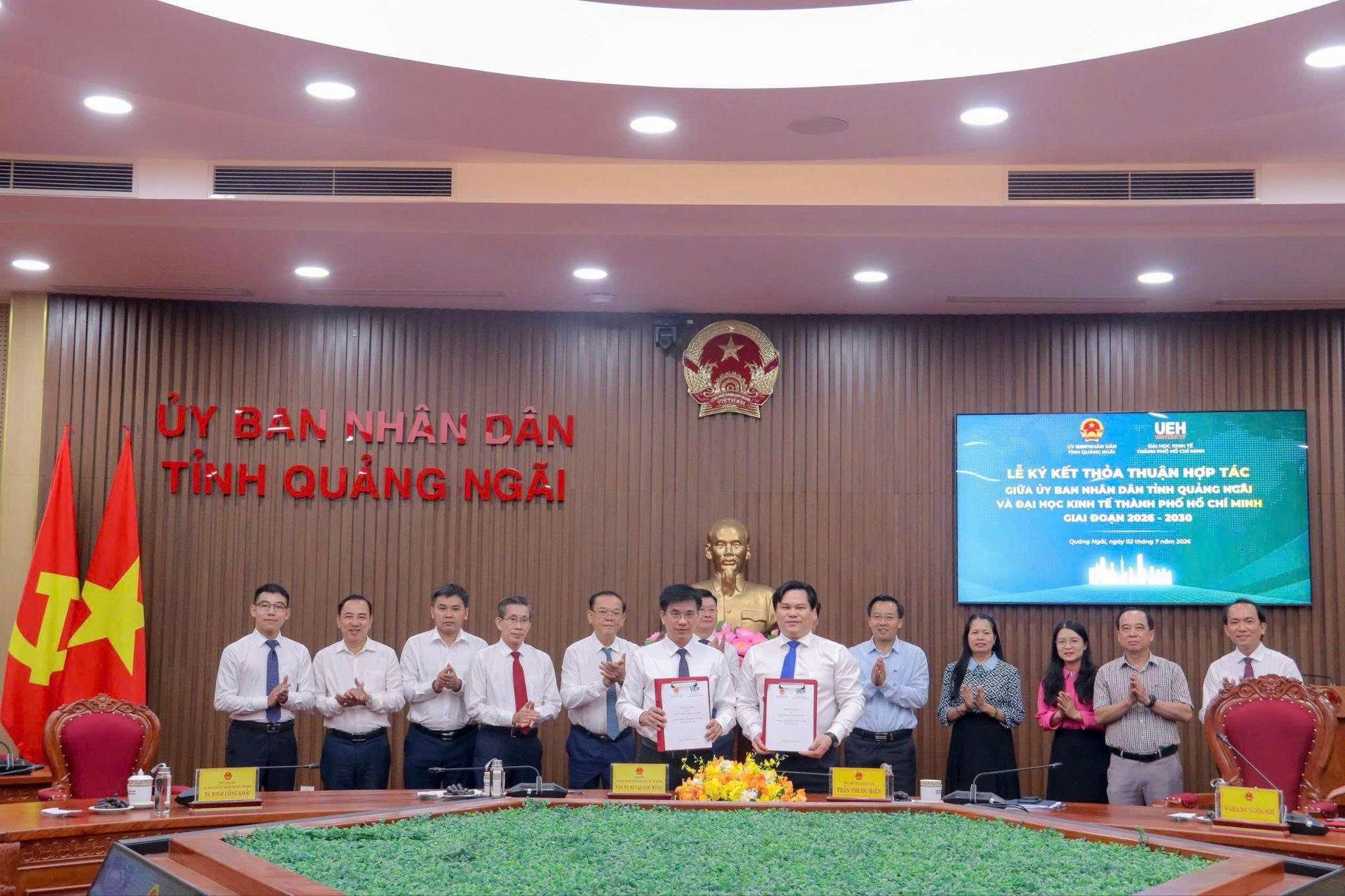
In the field of smart urban development, UEH has implemented 01 provincial/city-level urban development project, 02 ministerial-level research projects, and cooperation activities across 25 provinces and cities. These programs connect interdisciplinary research with requirements related to urban planning and governance, tourism development, logistics, and local economic development.
Notably, UEH participated in developing the Project on Developing Vũng Tàu City into a high-quality, internationally prestigious tourism center; and conducted research on the factors contributing to the success of the Khánh Hội Port Renovation Project, taking into account infrastructure, the environment, socio-economic conditions, and urban landscape.
In Cần Thơ, UEH has supported the development of a smart city strategy associated with modern logistics and sustainable development. Building on this approach, the Local Marketing Project - LOMAR 2026 provides opportunities for learners to research and propose solutions for brand development, OCOP products, community-based tourism, the local economy, and the environment.
These projects demonstrate UEH's capacity to transform interdisciplinary knowledge into solutions tailored to the specific characteristics of each locality, contributing to improved governance quality and the development of smart and sustainable urban models.
26 Conferences and Seminars Contributing Evidence for Policy Development
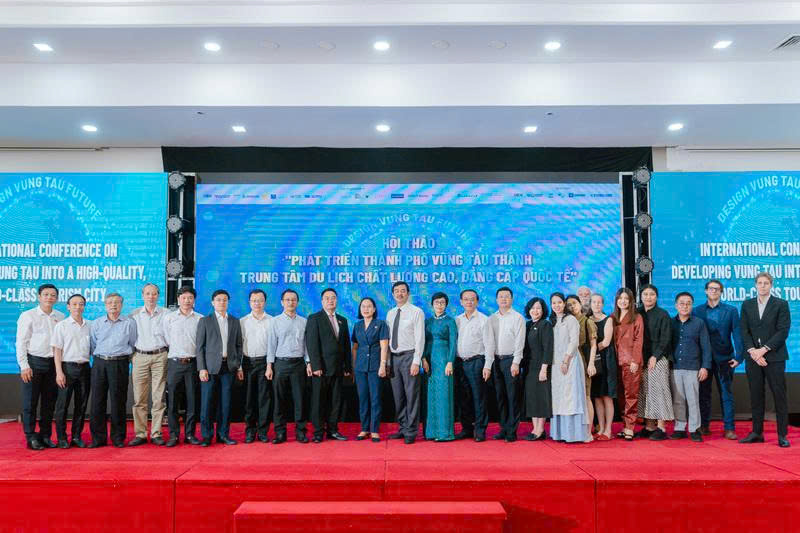
In policy consultation and review, UEH has jointly organized 26 conferences and seminars, connecting 17 central and local agencies and contributing consultation and policy review inputs to 12 provinces and cities.
UEH experts and scholars have participated in data analysis, trend forecasting, evidence building, and proposing solutions to issues related to strategies, planning, growth, socio-economic development, and local governance.
One notable outcome is the series of TFP studies for Ho Chi Minh City, conducted in collaboration with the Ho Chi Minh City Department of Science and Technology during 2021-2025. The research covered the selection of methodologies for calculating the contribution of total factor productivity (TFP) and proposing solutions to increase the contribution of TFP to the city's growth by 2030.
In Đồng Tháp, UEH organized the scientific conference “Past Foundations - Future Vision” on the province's socio-economic and environmental development, contributing additional evidence to support the locality's development orientation for the 2026-2030 period.
UEH scholars also contributed papers to the national conference “Innovating the Country's Development Model Based on Science, Technology, Innovation and Digital Transformation”. The conference was attended by the Central Policy and Strategy Commission; the Central Theoretical Council; the Ho Chi Minh National Academy of Politics; as well as the Hai Phong City Party Committee, People's Council, and People's Committee.
Through these activities, UEH's research capacity has been connected with policymaking processes at both local and national levels, contributing to bringing scientific analyses and evidence closer to practical development needs.
More Than 15,000 Learners Trained to Strengthen Implementation Capacity
While research and consultation contribute evidence for policymaking, human resource training provides the conditions necessary for policies to be effectively implemented in practice.
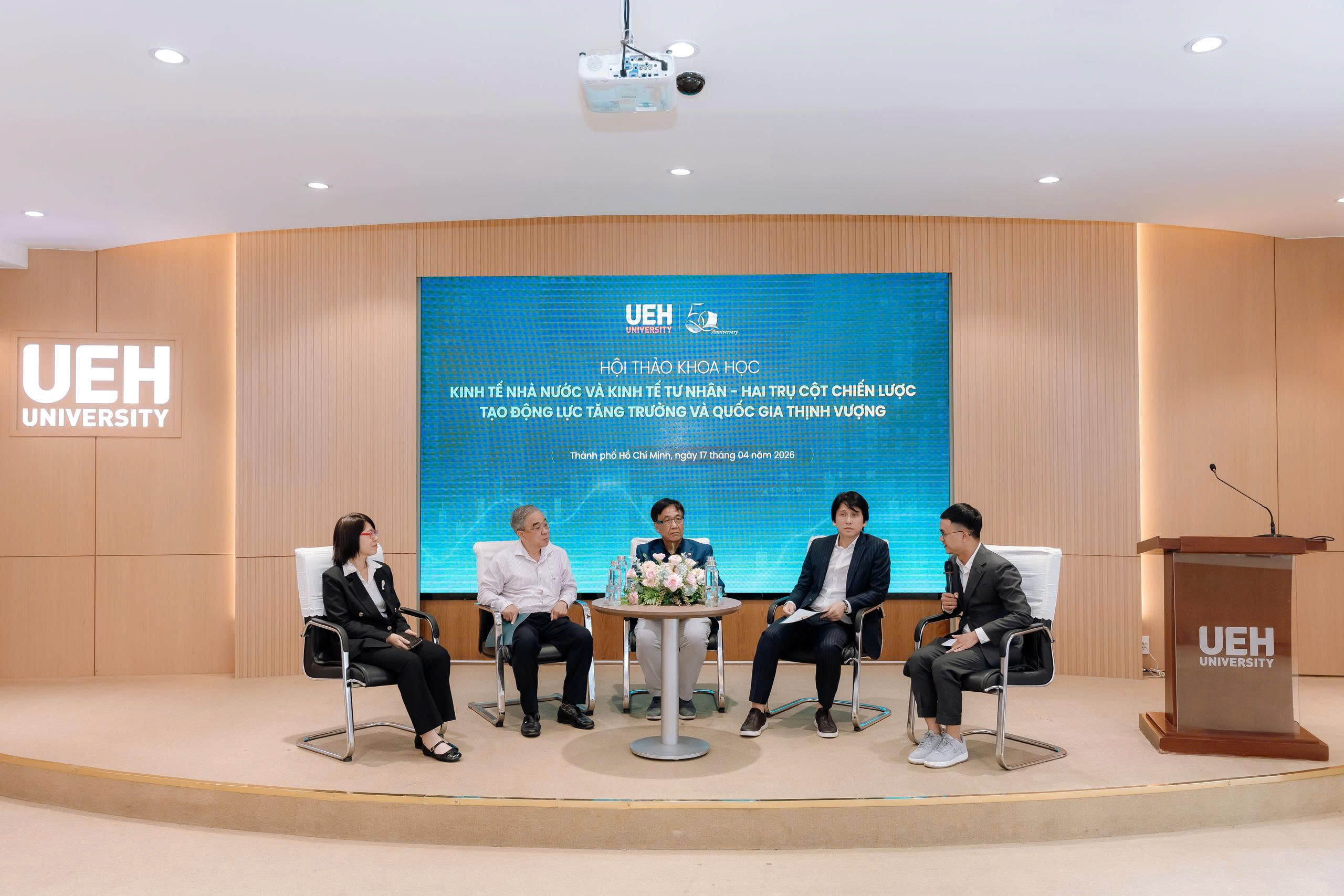
During this period, UEH organized 163 training courses and programs for more than 15,000 learners who were officials from more than 18 provinces and cities. Training content was designed based on practical needs, covering areas ranging from financial and budget management, public assets, leadership and administration to the green economy, digital transformation, urban management, tourism, and the application of artificial intelligence in public service.
During 2023-2024, UEH collaborated with the Department of Home Affairs of Long An Province to organize training programs for more than 3,500 learner participations on financial and budget management, public assets, and financial affairs.
In Cà Mau, six consecutive programs were implemented for more than 1,600 learner participations, focusing on public investment finance, budget management, public assets, and accounting regulations for administrative and public service units.
The connection between research, consultation, and training creates a knowledge cycle: research findings are transferred to implementation personnel, while issues arising from practice continue to serve as inputs for new research and training programs.
6 International Projects Connecting Global Resources with Local Needs
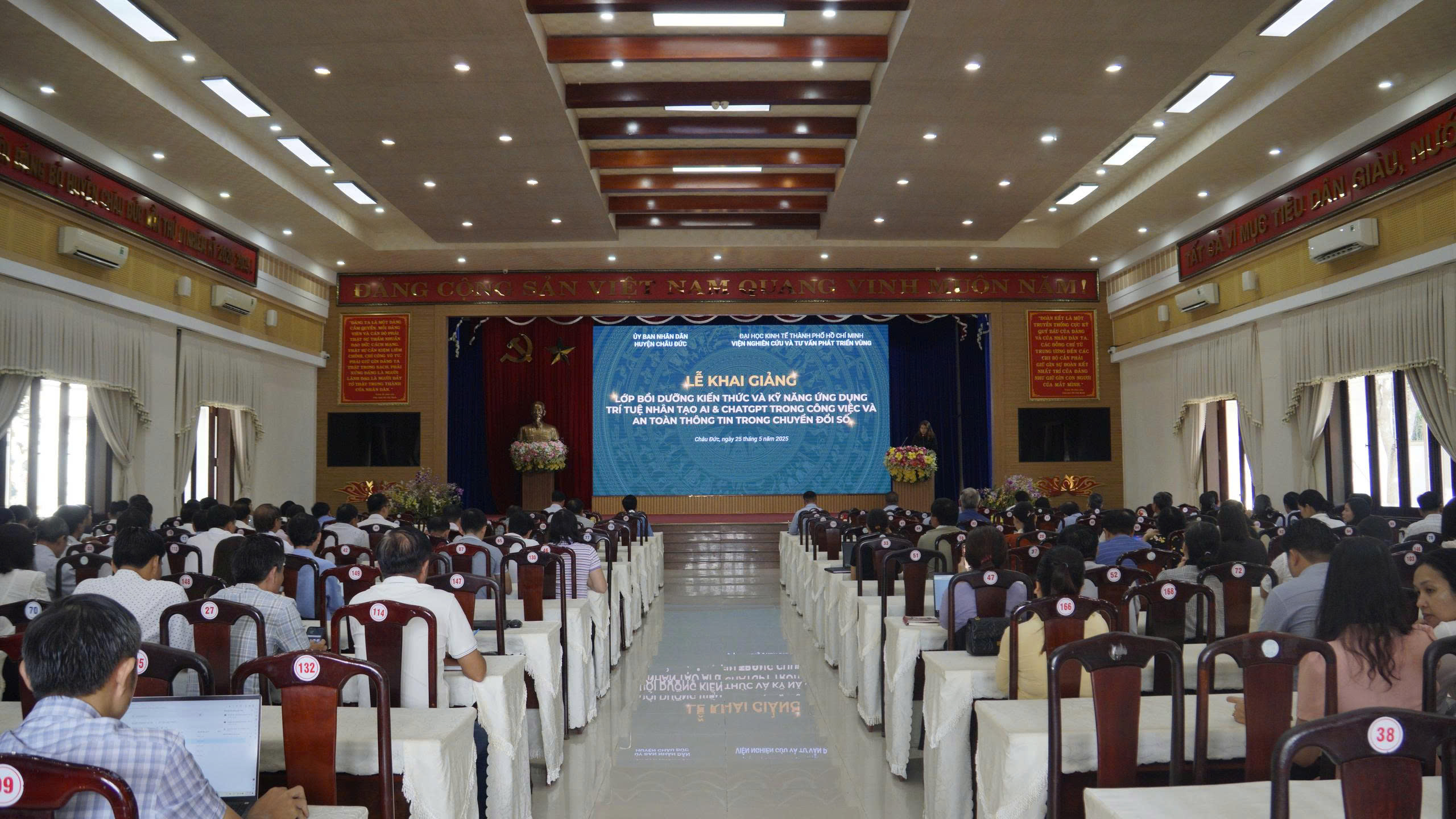
UEH's international cooperation network has been connected with local development needs through six projects supported by seven international donors and partners. The programs focus on issues directly related to community life, including waste management, disaster prevention, sustainable livelihoods, gender equality, and ecosystem restoration.
Notably, the project “Raising Legal Awareness of Household Solid Waste Sorting and Collection”, supported by the European Union and Oxfam Vietnam during 2021–2022, contributed comments to a decision of the Ho Chi Minh City People's Committee on solid waste management, while applying technology to guide residents in waste sorting and collection.
In Cù Lao Dung, Sóc Trăng, the project “GS4Infra - Integrating Gender into Irrigation Infrastructure and Disaster Prevention”, supported by the Australian Government during 2024-2025, provided training for residents in An Thạnh Đông and An Thạnh Nam communes and district officials, combined with policy consultations to incorporate a gender perspective into irrigation and disaster prevention solutions.
In addition, the project “Women4Mangrove - Women-Led Livelihoods and Mangrove Restoration”, supported by the United Nations Environment Programme during 2025-2026, aims to restore 5 hectares of mangrove forests, establish women-managed nurseries, and develop OCOP products and educational tourism.
Expanding the Value Co-Creation Ecosystem in the 2026-2030 Period
The achievements of the 2020-2025 period provide a foundation for UEH to continue expanding its connections with public-sector partners. In the context of transforming local governance following the administrative reorganization, strengthening regional linkages, and establishing new drivers of development, urban and local development challenges increasingly require the participation of multiple stakeholders.
On this basis, UEH is developing the Value Co-Creation Ecosystem for Sustainable Impact - “UEH Value Co-Creation Ecosystem for Sustainable Impact”, with the aim of fostering collaboration between the University and its partners through an approach of co-identifying problems - co-designing solutions - co-implementing - co-creating value. Through models such as Living Labs, Innovation Hubs, and management and monitoring systems that promote growth based on science, technology, innovation, and digital transformation, UEH seeks to connect knowledge resources more effectively with the practical development needs of localities.
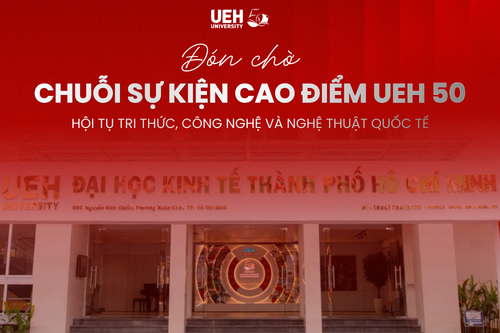
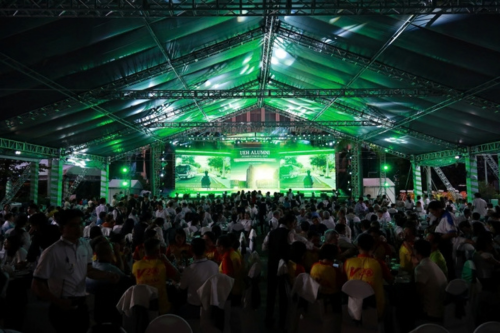
This new cooperation orientation will be concretized at the 2026 Public Sector Partner Connection Conference, organized by UEH on September 20, 2026, under the theme “Co-Creating Value for a Sustainable Future”. Taking place as UEH marks its 50th anniversary, the conference will provide an opportunity to review the cooperation journey, express appreciation to partners who have accompanied UEH, and open up new cooperation programs for the 2026-2030 period.
As part of the event, UEH will introduce innovative cooperation products, exchange views on high-quality human resource training, research, policy consultation and review; and announce the strategy “UniverCity Innovation Hub - Co-Creating Value in the Urban-Regional Innovation Ecosystem”.
A digital platform connecting cooperation needs will also be launched, creating a space for localities, agencies, organizations, and experts to share their needs, seek resources, and develop new cooperation programs.
Half a century has laid the foundation of knowledge, cooperation, and trust at UEH. Building on this foundation, partnering with the public sector continues to be identified as part of the University's mission to serve society: bringing knowledge closer to practice, connecting resources, and working with partners to create sustainable value for cities, regions, communities, and the country.
Information on the 2026 Public Sector Partner Connection ConferenceThe 2026 Public Sector Partner Connection Conference provides an opportunity for UEH to review its cooperation outcomes with public-sector partners and recognize their contributions throughout the journey of collaboration and development; while also strengthening connections among provinces and cities in the Central and Southwestern regions and key localities across the country, opening up new cooperation programs for the next phase through an online connection platform. Time: 9:00 a.m., Sunday, September 20, 2026 Venue: A.103 Hall, University of Economics Ho Chi Minh City, 59C Nguyễn Đình Chiểu Street, Xuân Hòa Ward, Ho Chi Minh City. |
News, photos: Department of Communications and Partnerships