
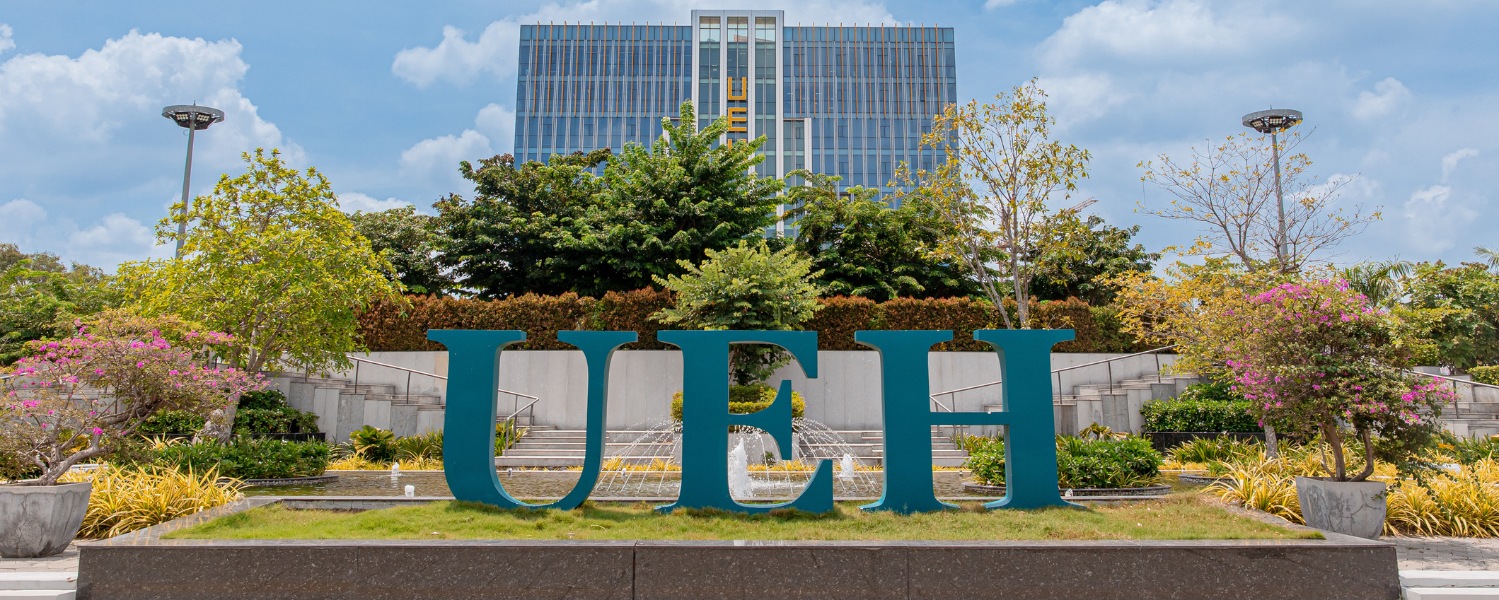
Promoting Government-University-Business Collaboration
17 Apr, 2026
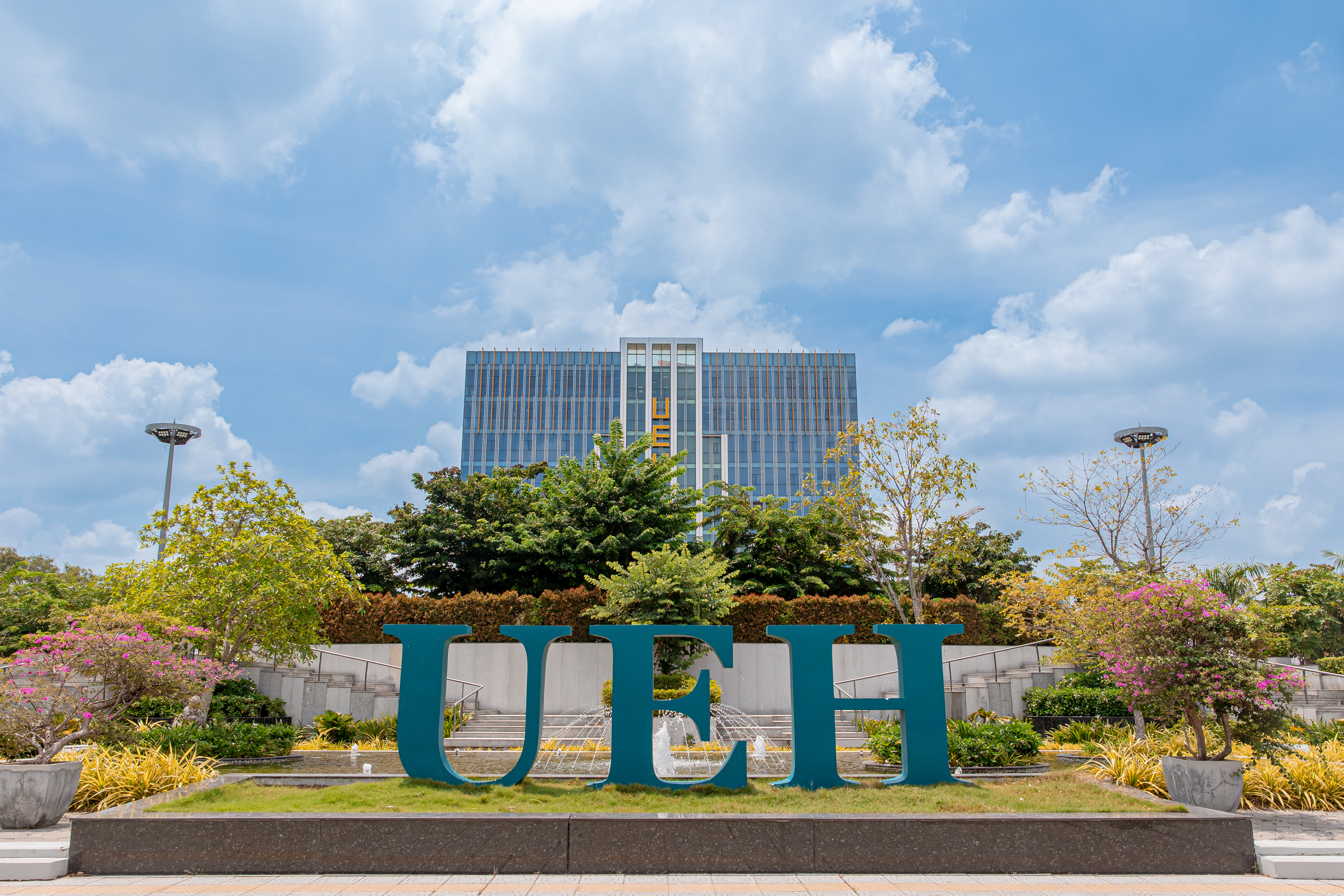
A development model in which government, universities, businesses, communities, and the natural environment jointly create long-term value for society is becoming increasingly essential - Photo: UEH
A New Development Approach Is Needed
As Vietnam’s leading economic hub, Ho Chi Minh City is entering a new phase of development in which traditional growth models are no longer sufficient to deliver transformative breakthroughs.
In this context, the key challenge lies not only in identifying which resources to connect but also in determining how to integrate, coordinate, and leverage these resources to create shared value within a unified and sustainable ecosystem.
A new approach that brings together the resources of government, universities, businesses, communities, and the natural environment to co-create long-term societal value is therefore critically important.
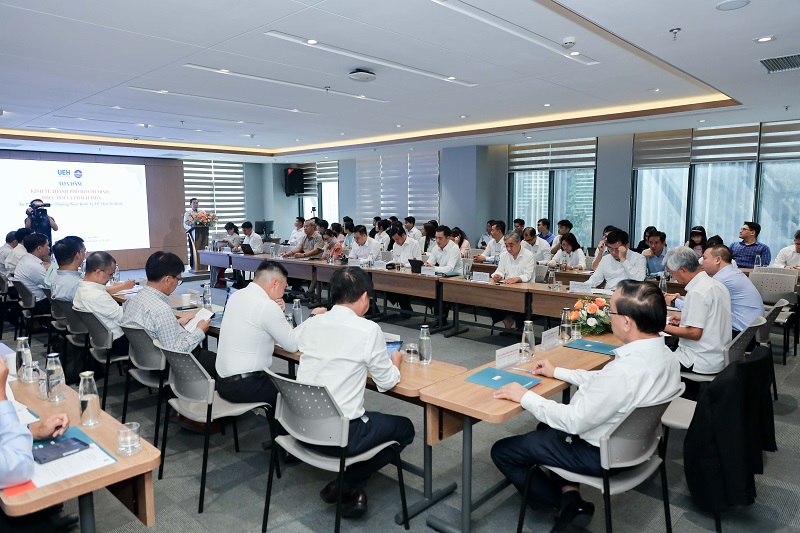
This topic was at the center of the UEH Partnerships Summit 2026, organized by the University of Economics Ho Chi Minh City (UEH) as part of its 50th anniversary celebrations (1976-2026).
At the summit, UEH officially introduced a new initiative that redefines how stakeholders collaborate to create lasting value for cities, communities, and future generations: the UEH Co-Creation Ecosystem for Sustainable Impact.
This multi-stakeholder collaboration model connects five key actors: Government, Universities, Businesses, Communities, and the Natural Environment. Unlike traditional partnership models, it is not based on fragmented cooperation. Instead, it establishes a shared mechanism in which stakeholders jointly identify challenges, co-design solutions, co-implement initiatives, and co-create value.
Within this ecosystem:
• Universities serve as knowledge hubs, leading education, research, and knowledge transfer.
• Government creates policies and institutional frameworks that enable innovation.
• Businesses act as drivers of economic growth, bringing technologies, business solutions, and practical applications into society.
• Communities participate as co-creators, contributing real-world insights and needs.
• The Natural Environment serves as a guiding principle, ensuring that development remains balanced across economic, social, and environmental dimensions.
Through this approach, collaboration evolves from simple coordination to genuine co-creation, shifting the focus from individual organizational value to collective societal impact and sustainable development.
As the ecosystem orchestrator, UEH has proposed a framework built around five pillars of co-creation:
Co-Education – Co-developing Education and Practical Learning Experiences: Businesses, organizations, and UEH jointly design academic programs, courses, and learning experiences that are closely aligned with real-world needs and evolving market demands.
Co-Research & Knowledge Transfer – Collaborative Research and Knowledge Transfer: Stakeholders jointly identify challenges, conduct applied research, provide policy recommendations, and develop practical solutions that bring academic knowledge into business, local communities, and society.
Co-Talent Pipeline – Developing Human Capital and Career Ecosystems Together: Collaboration extends beyond recruitment toward building a sustainable talent pipeline, with businesses actively participating in the education and development of learners from an early stage.
Co-Innovation – Co-Creating Innovative Ideas and Solutions: UEH and its partners collaborate to develop, test, and implement innovative solutions while connecting startup ecosystems, technological innovations, and practical applications.
Co-Investing & Giving for Future Impact – Investing Together for Long-Term Impact: Stakeholders jointly invest in education, research, learning spaces, community initiatives, and sustainable development, moving beyond short-term sponsorship toward long-term commitments that generate meaningful impact.
UEH aims to build a multi-stakeholder collaboration ecosystem that co-creates value for a sustainable future - Photo: UEH
Redefining Partnerships
The UEH Partnerships Summit 2026 marks the transition from the “Connecting Communities – Spreading Knowledge – Acting Sustainably” partnership program (2020–2025) to the new UEH Co-Creation Ecosystem for Sustainable Impact (2026–2030).
Over the past five years, the program has established a large-scale partnership platform involving more than 1,500 partners and nearly 2,000 collaborative activities. More than VND 213 billion in scholarships have been awarded to over 16,000 learners, alongside thousands of internship, employment, and experiential learning opportunities.
More importantly, these efforts have laid the foundation for a meaningful and effective partnership ecosystem, creating favorable conditions for advancing collaboration toward greater long-term impact.
A key highlight of the summit was the panel discussion titled “From Partnership to Co-Creation,” featuring representatives from government agencies, international organizations, and major corporations, including: Mr. Lam Dinh Thang, Director of the Ho Chi Minh City Department of Science and Technology; Ms. Pham Quynh Tran, Representative of the Institute of Chartered Accountants in England and Wales (ICAEW); Mr. Pham Hong Hai, Chief Executive Officer of OCB Bank; Mr. Pham Quang Chien, Deputy Chief Executive Officer of Citek; Ms. Dao Khanh Chi, Head of Human Resources at Sun Group.The discussion was moderated by Assoc. Prof. Trinh Tu Anh, Director of the UEH Institute of Smart City and Management.
Panelists shared perspectives from public administration, business, and international organizations, highlighting co-creation as a practical necessity in today’s context. Discussions focused on deeper business engagement in education, early collaboration in talent development, stronger links between research and policymaking, open innovation models, and long-term investment in education.
Assoc. Prof. Bui Quang Hung, Director of the University of Economics Ho Chi Minh City, stated: “The value of partnerships is not measured solely by the number of activities conducted or by quantifiable outcomes. Rather, it lies in the quality of relationships and, most importantly, in the value created throughout the journey of collaboration and the impact that remains afterward.
Therefore, UEH Partnerships Summit 2026 is not merely a closing event. It marks the beginning of a new development phase in which education, businesses, and government work together to create value within a shared ecosystem.”
Building on its 50-year foundation, UEH continues to strengthen its role as a knowledge connector and ecosystem orchestrator, contributing to the development of a new growth model for Ho Chi Minh City and advancing sustainable values for the future.
|
UEH Partnerships Summit 2026: An Open Dialogue Platform for Shaping Future Collaboration Event Details • Time: 4:00 PM, April 18, 2026 • Venue: Hall A.103, University of Economics Ho Chi Minh City, 59C Nguyen Dinh Chieu Street, Xuan Hoa Ward, Ho Chi Minh City More than a summary of past achievements, the summit is expected to serve as an open dialogue platform where stakeholders can reflect, exchange ideas, and shape future directions for collaboration. |
Source: Bao Tuoi Tre
![[UEH 50] JABES Launches Special Issue Celebrating the 50th Anniversary of UEH: 12 Research Papers Accompanying Vietnam's Development Issues](/images/upload/thumbnail/ueh-thumbnail-639283721313299577.png)
![[UEH Through the Lenses of Time #01] UEH 50 Years: From the Classroom Window to the Aspiration to Contribute](/images/upload/thumbnail/ueh-thumbnail-639282664984784994.png)
![[UEH Through the Lenses of Time #02] School of Mathematics - Statistics: Generations of Deans and the Journey of Continuation](/images/upload/thumbnail/ueh-thumbnail-639282663344912443.png)
![[UEH Through the Lenses of Time #03] Half a Century, A Journey & Hundreds of Thousands of Hearts](/images/upload/thumbnail/ueh-thumbnail-639282661905215411.png)
![[UEH Through the Lenses of Time #04] Simple Frames: Keepsakes, Teachers, and Everyday Memories of Generations of UEHers](/images/upload/thumbnail/ueh-thumbnail-639282660641392168.png)