QS Asia 2027: UEH Maintains Its Position Among Asia’s Top 301+ Universities, Strengthening International Research Connections
12 Nov, 2026



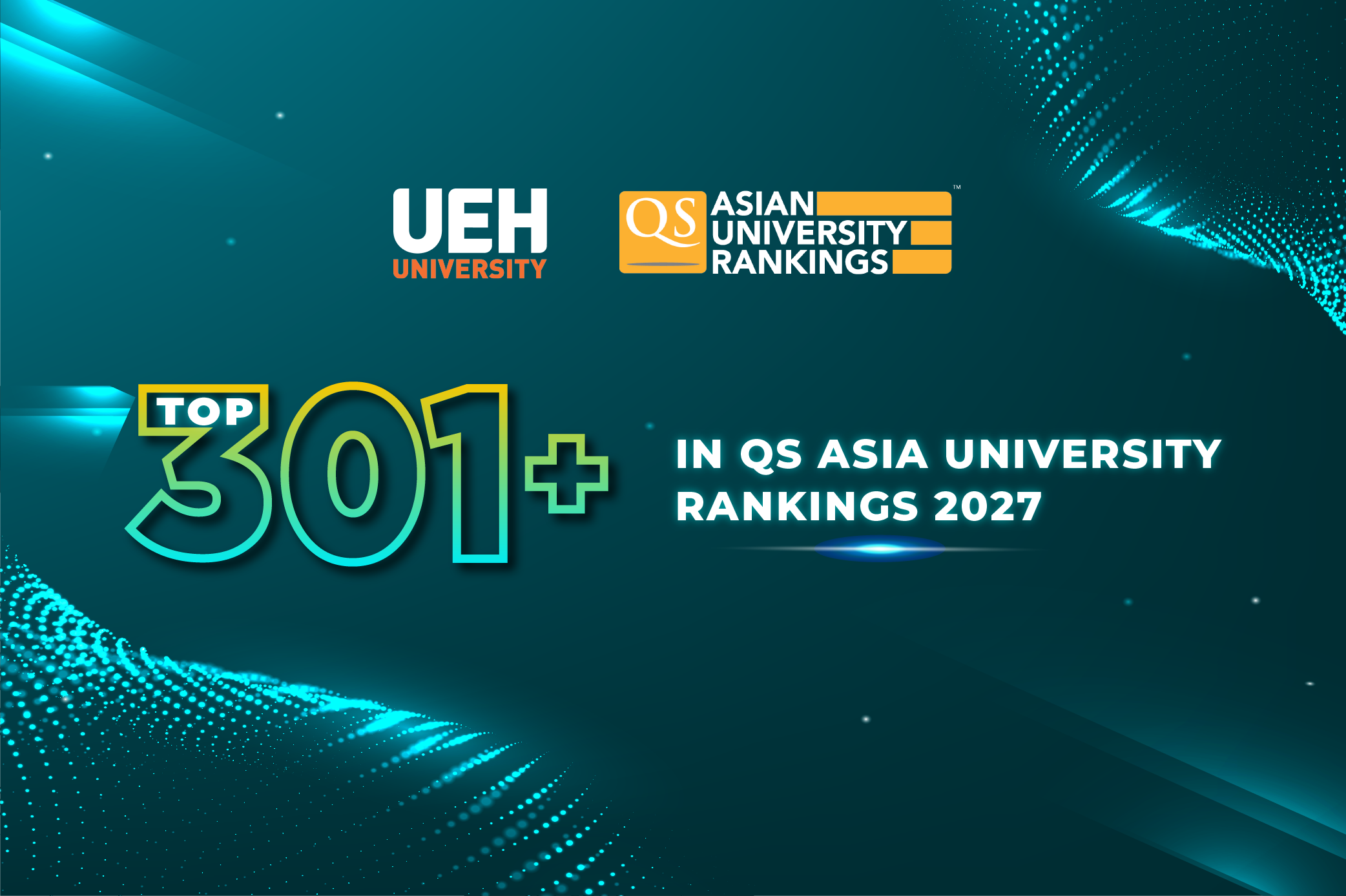
On November 3, 2026, Quacquarelli Symonds (QS) released the QS Asia University Rankings 2027. The University of Economics Ho Chi Minh City (UEH) ranked joint 329th, maintaining its position among Asia’s Top 301+ universities. Notable results included a 105-place improvement in the International Research Network indicator, while the Citations per Paper indicator continued to achieve a perfect score. These results also provide a basis for UEH to benchmark its performance and continuously improve the quality of its operations.
Maintaining Its Regional Position and Building on Research Strengths
According to the QS Asia 2027 report, UEH achieved an overall score of 41.8, ranking joint 329th in Asia. A key highlight of this year's assessment was the improvement in its international research network, while its strength in citations per paper continued to be maintained.
One of the most notable improvements in this year's assessment was the International Research Network indicator, which reached 88 points, ranking 217th in Asia, up 105 places. This indicator assesses the diversity of an institution's international research partnership network, recognizing UEH's progress in fostering cross-border academic connections.
For a university pursuing a multidisciplinary development orientation, an international research network provides a foundation for connecting expertise, accessing new methodologies, and establishing collaborations to address interdisciplinary challenges. Improvement in this indicator creates further opportunities for UEH to deepen its academic engagement and expand its presence in the global research community.
In the Citations per Paper indicator, UEH continued to achieve the maximum score of 100 points, ranking 7th in Asia. This sustained strength reflects the academic impact of UEH's publications within the scope of the data used by QS. The International Faculty Ratio indicator reached 80.4 points, placing UEH 146th in Asia.
Alongside these positive results, UEH ranked 305th in Employer Reputation, while its Academic Reputation was placed in the 401+ band. These results provide additional data for UEH to further examine its recognition and standing within the academic community and the international labor market.
QS Asia 2027 evaluates higher education institutions based on 11 indicators. Academic Reputation accounts for 30% of the overall weighting, while Employer Reputation accounts for 20%. Citations per Paper, Faculty/Student Ratio, and International Research Network each account for 10%. The overall results therefore reflect a combination of research capacity, educational resources, internationalization, and institutional reputation.
Ranking Management Aligned with UEH's Development Strategy at Each Stage
As part of its strategy to enhance quality and strengthen international integration, UEH approaches rankings through three groups: overall rankings, sustainability rankings, and subject and field-specific rankings. These three groups provide complementary perspectives, enabling the University to benchmark its overall performance, identify areas of academic strength, and assess its contributions to society.
The overall rankings group, represented by QS and Times Higher Education (THE), together with regional rankings in Asia, helps UEH assess its educational capacity, research performance, internationalization, and reputation in comparison with other higher education institutions. The sustainability rankings group, including QS Sustainability and the THE Impact Rankings, provides additional perspectives on the University's contributions to the environment, society, and governance quality. Meanwhile, subject and field-specific rankings help identify academic depth and investment priorities to consolidate strengths in economics, business, and management, while developing areas such as technology, design, and interdisciplinary studies.
UEH uses ranking results as an input data source for governance and continuous improvement. Analyzing individual indicators helps the University identify strengths, determine areas requiring improvement, and select appropriate investment priorities. Benchmarking results are integrated into its five-pillar strategic model: Education, Research, Governance, Operations, and Community, which are then translated into objectives and actions across the entire university system.
To put this approach into practice, UEH has implemented a seven-step ranking management process:
- Identify priority rankings, including QS, THE, QS Sustainability, and the THE Impact Rankings.
- Benchmark against international criteria and domestic higher education standards, ensuring alignment between international integration requirements and quality enhancement objectives.
- Develop a Comprehensive Internationalization Criteria Framework comprising five groups of standards and 26 specific criteria.
- Assess the current status across UEH as a basis for defining objectives and improvement priorities.
- Establish targets for each criterion and implement them across units and individuals through the OKR system, aligned with the five strategic pillars.
- Apply technology to ranking data management to support data consolidation, monitoring, and analysis.
- Evaluate results annually and make corresponding adjustments to objectives and implementation solutions.
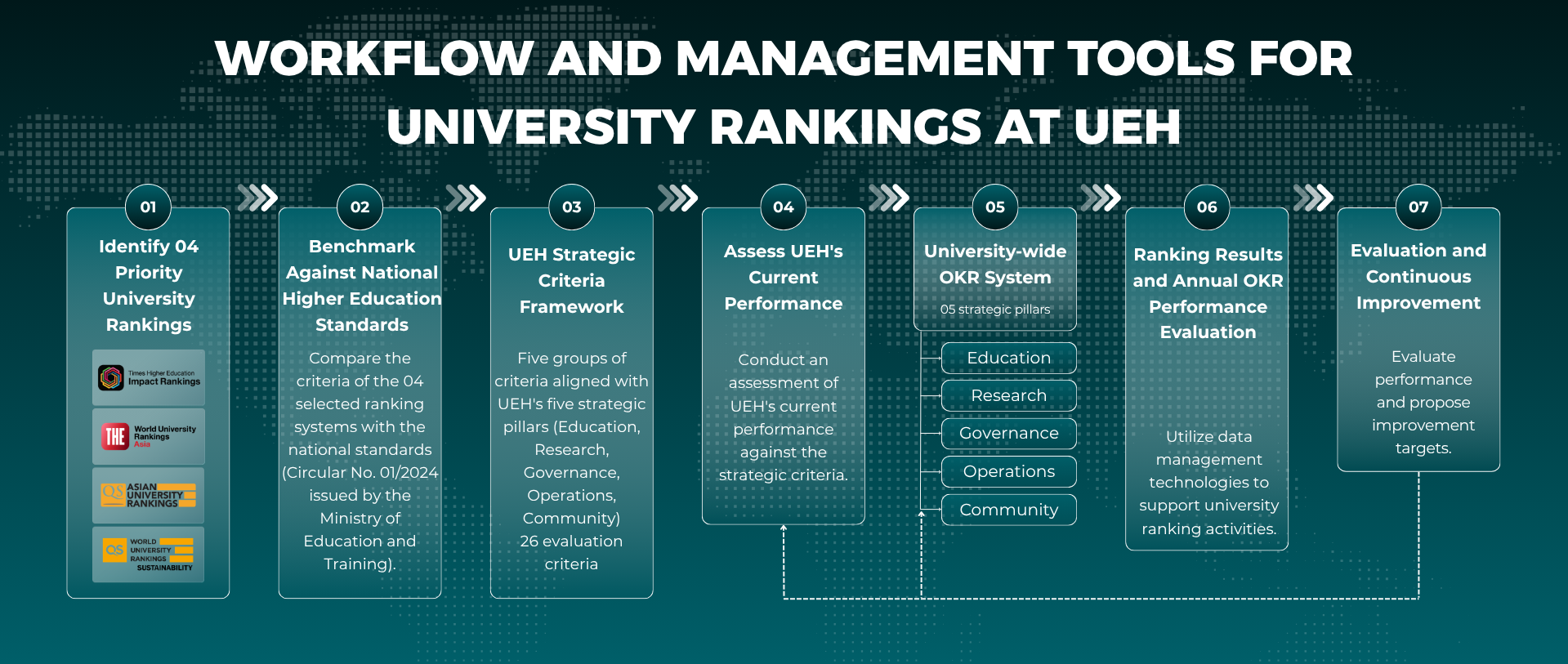
This process connects international assessment criteria with the activities of individual units, enabling UEH to monitor progress and sustain improvements year after year. In QS Asia 2027, its strength in citations and progress in international research networks provide a foundation for further developing in-depth academic collaborations. Meanwhile, changes in reputation indicators offer additional data for reviewing solutions to enhance recognition among the academic community and the labor market.
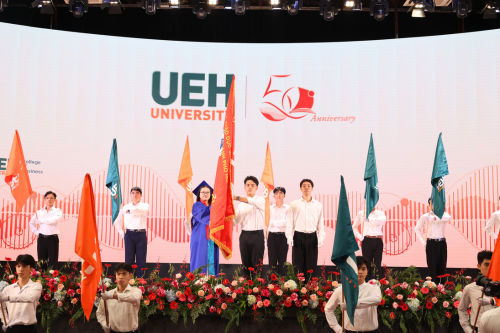
Entering a new stage of development following its 50th anniversary, UEH continues to align the enhancement of its international standing with the quality of education, research, and governance. The shared commitment of its faculty members, staff, learners, and partners provides the foundation for the University to remain steadfast in pursuing multidisciplinary and sustainable development, translating knowledge into practice, and increasing its contributions to the community, the city, and the country.
Further Reading on Ranking Management at UEH:
- University of Economics Ho Chi Minh City: Long-Term Upgrading to International Standards [Link]
- University of Economics Ho Chi Minh City: QS and THE in the Picture of University Governance [Link]
- QS Sustainability and THE Impact in Sustainable University Governance [Link]
News, photos: Department of Communications and Partnerships