The Sustainability Impact Ratings 2026: UEH Enters Top 101-200 Global Universities For Contributions To The 17 Sustainable Development Goals
24 Jun, 2026
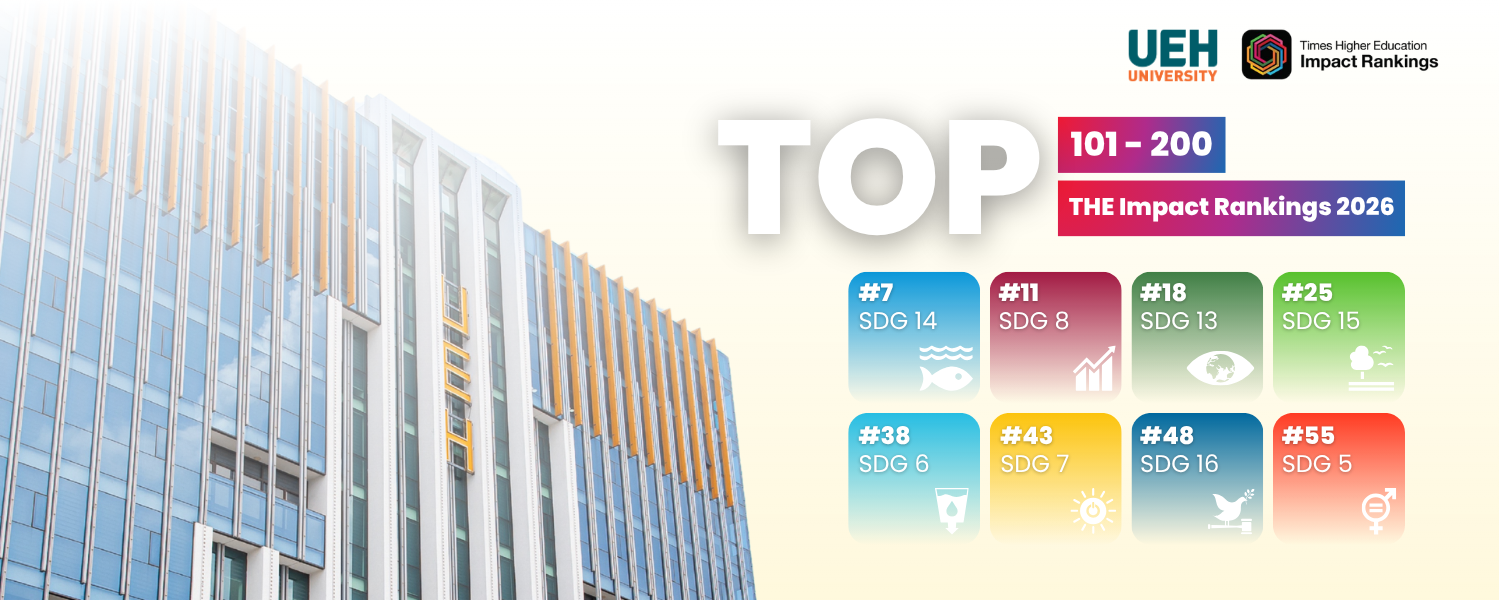
The University of Economics Ho Chi Minh City (UEH) has been ranked among the Top 101-200 universities worldwide for its outstanding contributions to the 17 Sustainable Development Goals (SDGs) in the Sustainability Impact Ratings 2026 of Times Higher Education (THE).
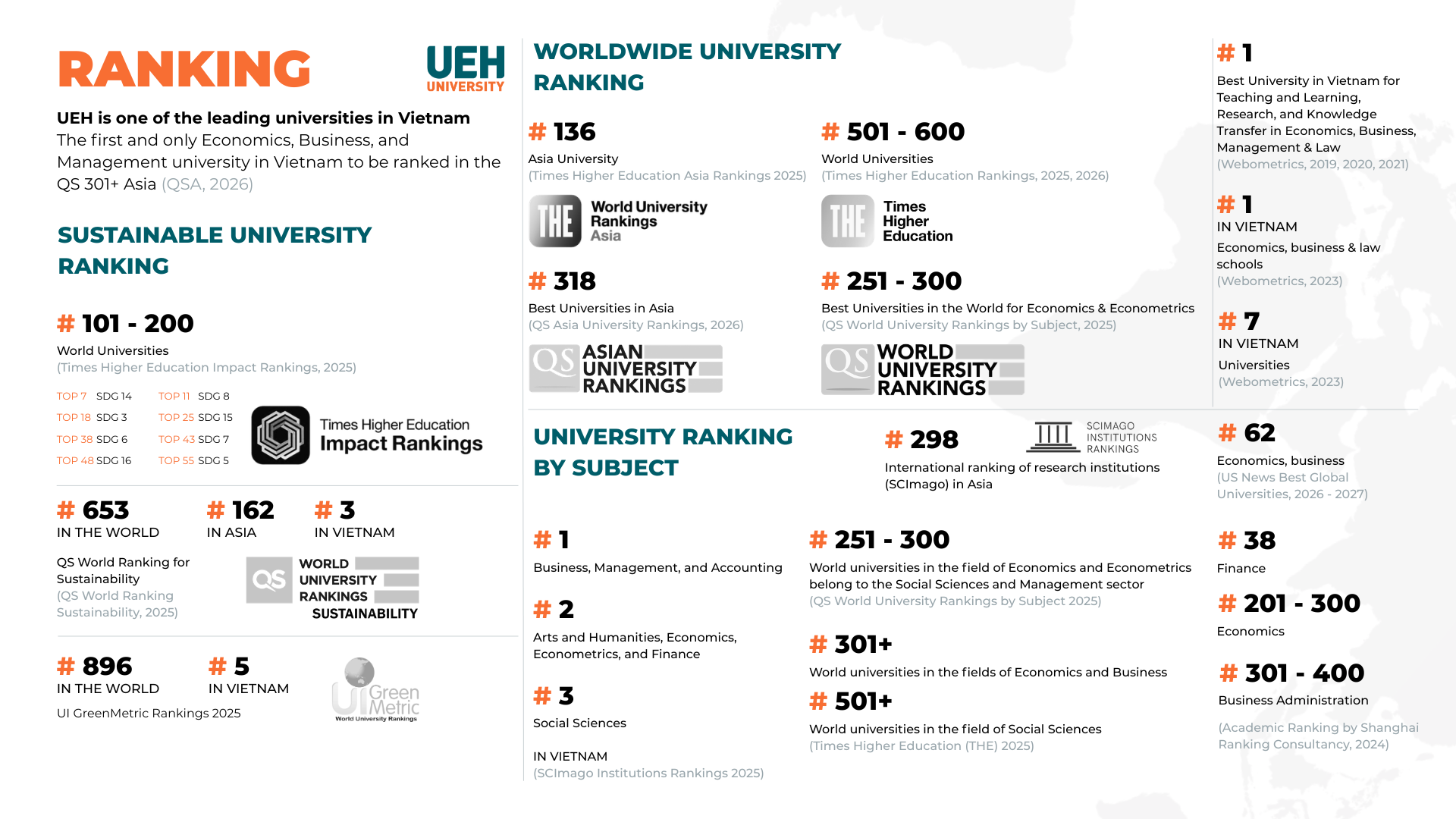
With a score of 89/100, UEH secured a place in the 101-200 bracket out of 1,603 global universities, climbing 200 places compared to the previous year. Notably, UEH is among a select few universities that have implemented and provided comprehensive evidence for all 17 SDGs, demonstrating a deep integration of sustainable development across its strategy and operations.
Top 50 World Rankings in multiple areas
According to the published results, UEH achieved outstanding rankings across numerous sustainable development goals:
- Top 7 globally for SDG 14 - Life Below Water;
- Top 11 globally for SDG 8 - Decent Work and Economic Growth;
- Top 18 globally for SDG 13 - Climate Action;
- Top 25 globally for SDG 15 - Life on Land;
- Top 38 globally for SDG 6 - Clean Water and Sanitation;
- Top 43 globally for SDG 7 - Affordable and Clean Energy;
- Top 48 globally for SDG 16 - Peace, Justice and Strong Institutions;
- Top 55 globally for SDG 5 - Gender Equality.
Furthermore, its performance in SDGs 1, 2, 4, 9, 10, 11, and 12 remains within the world's leading group of universities, reflecting balanced development across economic, social, environmental, and governance dimensions.
From a Sustainable University to a University Creating Impact
This result is not the product of a few isolated achievements but the culmination of a strategic transformation that has been underway for many years. Since 2021, UEH has been implementing the UEH Multidisciplinary and Sustainable strategic model, integrating sustainable development into all its core activities across five pillars: Training, Research, Governance, Operations, and Community.
* Training Strategy:
UEH has developed a Glo-cal Education, model, aiming to train global citizens capable of taking action and creating a positive impact at the local level. The university has integrated sustainability knowledge into over 120 course modules, while also developing specialized programs and modules in health economics and governance, sustainable business and environmental management, smart urban architecture and design, smart and creative urban governance, and innovation and entrepreneurship. The training model is designed to be interdisciplinary, focusing on experiential and lifelong learning, a Living Lab approach, and incorporating new technologies such as AI, Data, and Robotics. Each year, UEH organizes about 120 community education events, 35 short-term training programs, and attracts over 2.500 external learners to participate in its educational activities.
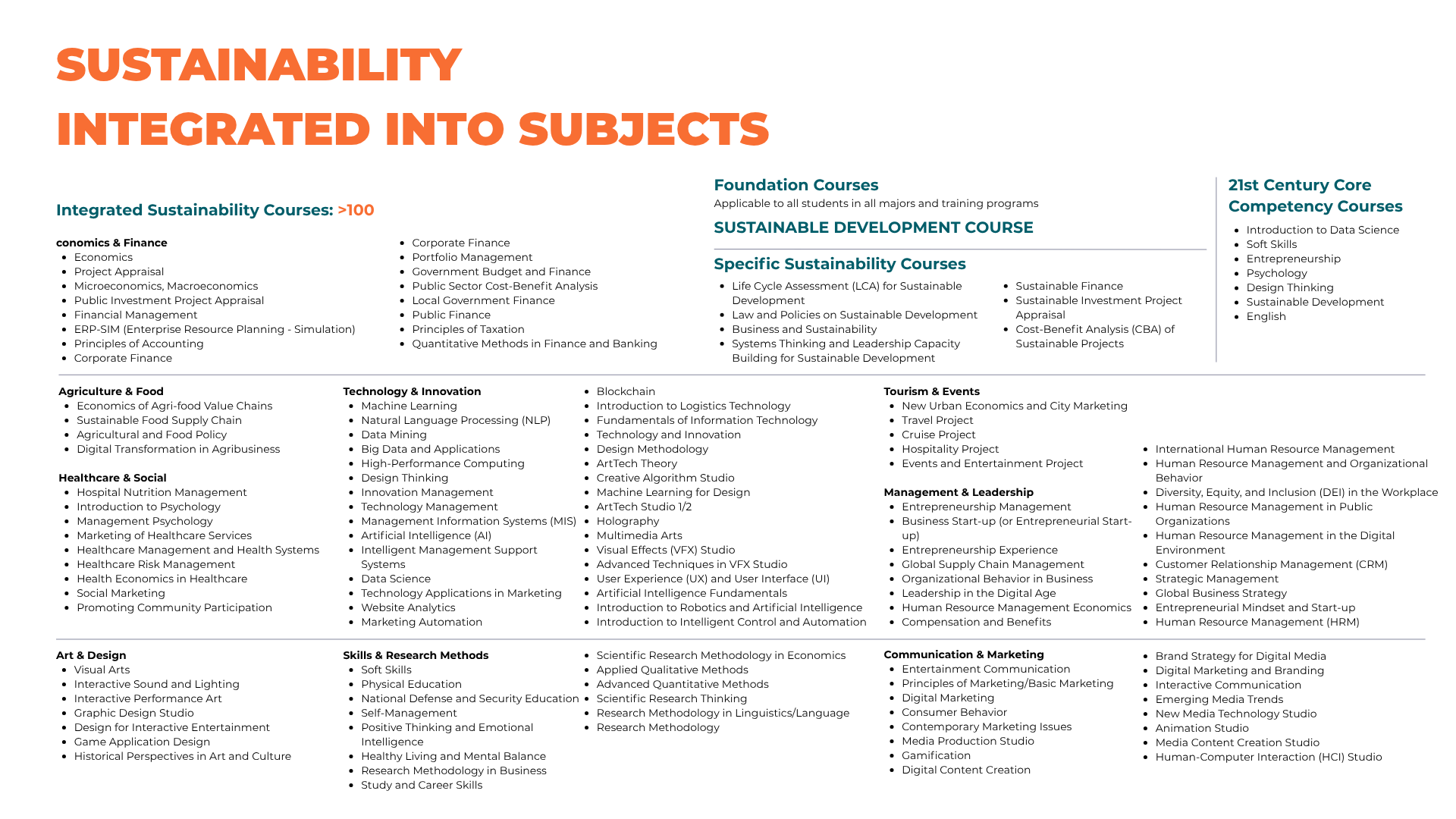
System of training programs and courses incorporating sustainability knowledge at UEH
* Research Strategy
Research is carried out under the Research Contribution for All orientation, inking research, training, and social impact. In the 2020-2025 period, UEH published 2.450 international articles, 87,1% of which were in Scopus Q1/Q2 journals, conducted 498 research projects and 3.878 student research projects. Publications related to the SDGs have consistently exceeded 500 per year. Numerous cooperation programs with the World Bank, UN-Habitat, the EU Jean Monnet program, and SEI/EfD are focused on addressing issues such as green growth, climate change, sustainable finance, and urban development, contributing to translating academic knowledge into practical societal solutions.
* Governance Strategy
At UEH, sustainable development is integrated into the governance system as a cross-cutting strategic priority. The university has built a three-tier governance model, from strategy and coordination to operations, to ensure the synchronized implementation of SDG objectives. The OKRs system is applied to nearly 1.000 staff, lecturers, and employees, ensuring that all development goals are quantified, monitored, and regularly evaluated.
* Operations Strategy
Through its “From Green to Carbon Neutral” strategy, UEH views its campus as a living laboratory for learning, researching, and testing environmental solutions in practice. The UEH Green Campus ecosystem s currently deployed across 13 facilities and 3 dormitories, with 58 green initiatives integrating governance, education, and community action. To date, UEH has generated 470.000 kWh of clean energy from solar power, recycled 10 tons of waste and reduced over 1,27 million units of CO₂ emissions. Through innovation programs, the Green Campus, and over 100 environmental events, UEH has engaged more than 100.000 participants in educational activities and actions for sustainable development.
* Community Strategy
UEH has developed a connection ecosystem between the university, businesses, government, international organizations, alumni, and the community to co-create impact values. The UEH network currently includes 280.000 alumni, 1.593 partner enterprises and 119 international organizations. The university has mobilized over VND 300 billion in scholarships, VND 70 billion in corporate sponsorships, created approximately 6.000 job opportunities annually and supported more than 100 student startup projects. See UEH's detailed Sustainability Report covering the 17 SDGs here.
Assoc. Prof. Dr. Bui Quang Hung, UEH President, shared:
"Sustainable development is not a separate goal but the path UEH has chosen to fulfill its mission as a modern university - a hub for innovation and creativity for the city, the region, the nation, and the world. What matters most is not the numbers, but that sustainability values have become part of UEH's institutional culture. The results from the THE Sustainability Impact Ratings further motivate UEH to continue its development toward the quality standards of leading Asian universities, as the Prime Minister has entrusted UEH to achieve under the project to “develop major higher education institutions in the Southeast region to reach advanced standards on par with leading universities in Asia.”."
|
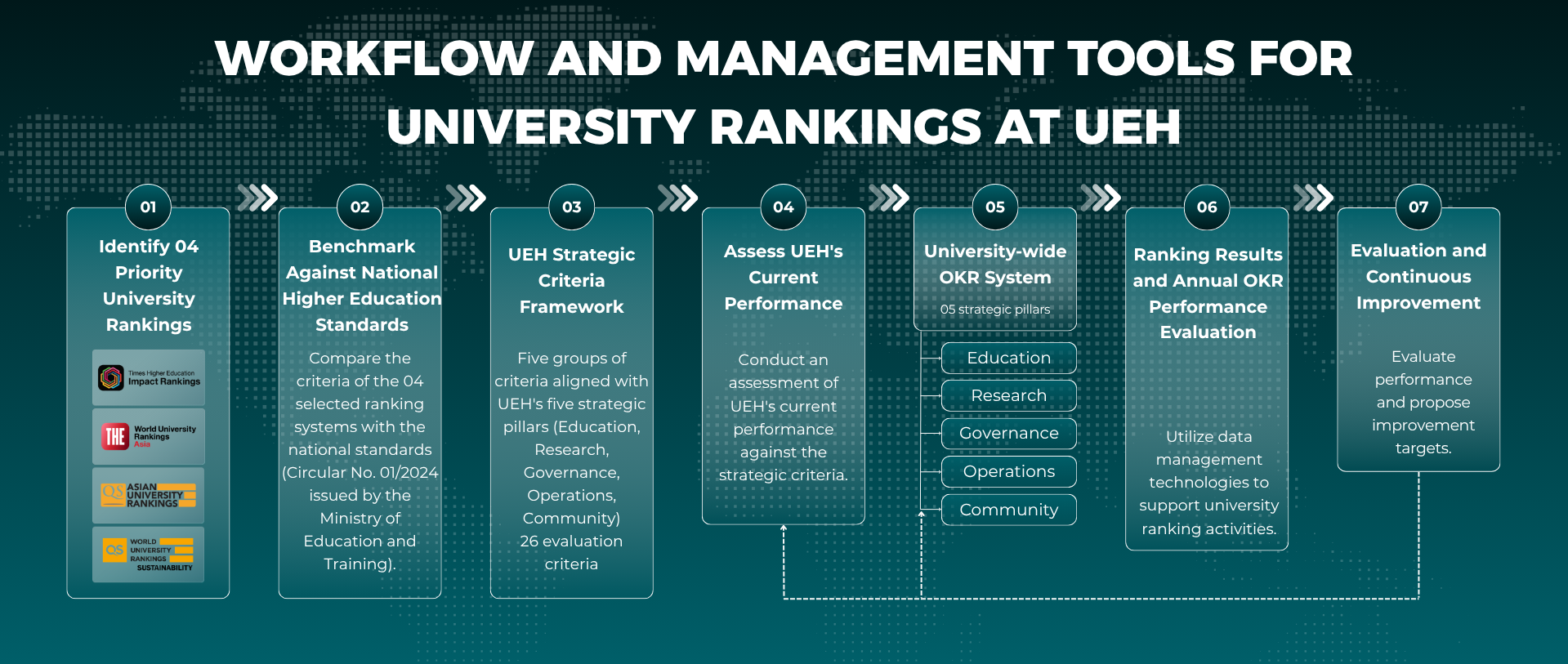
UEH'S RANKING GOVERNANCE SYSTEM To manage its rankings sustainably, UEH implements a seven-step governance process: (1) Identify four priority rankings: QS, THE, QS Sustainability và THE Sustainability Impact Ratings; The key highlight is that the university's overall development strategy is based on these five pillars, which effectively form the internal structure that nurtures these ranking indicators.
See more on how UEH manages its rankings: - University of Economics Ho Chi Minh City: Long-term international upgrading [Link] - University of Economics Ho Chi Minh City: QS and THE in the university governance landscape [Link] - QS Sustainability and THE Impact in sustainable university governance [Link] Summary of UEH's rankings to date: |
THE SUSTAINABILITY IMPACT RATINGS 2026THE Sustainability Impact Ratings is a prestigious global university assessment system developed by Times Higher Education (THE) - a magazine covering news and issues related to higher education. It measures the extent to which higher education institutions contribute to the realization of the United Nations' 17 Sustainable Development Goals (SDGs). |
Pillar: Governance, Operation, Research, Training, Community
News, images: Department of Communications and Partnerships


![[UEH CONFERENCE 50] UEH Hosts SR-ICYREB 2026, Advancing Student Research and Nurturing the Next Generation of Young Scholars](/images/upload/thumbnail/ueh-thumbnail-639273984608805382.png)