
IMAGINE! Shaping Tomorrow: Work and Well-Being – Crafting the Future of Workplace Happiness Through Global Knowledge Dialogue
15 Dec, 2025

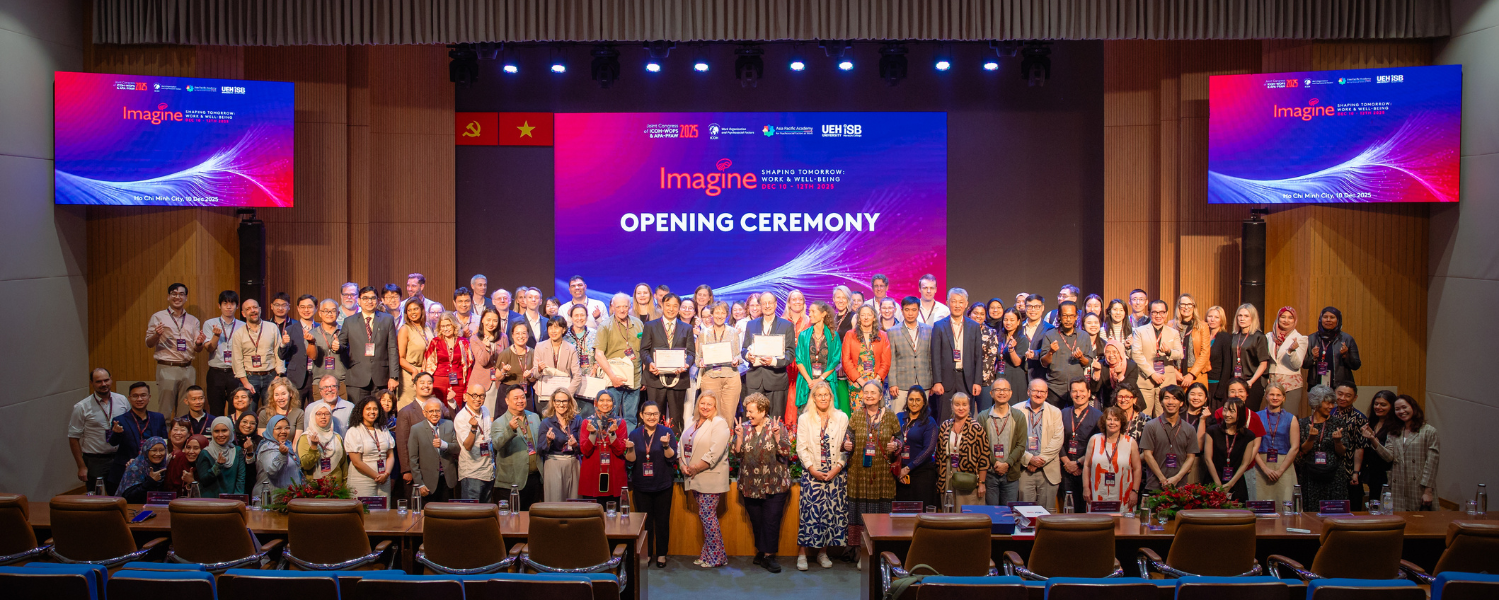
On December 12, 2025, the 2nd Joint Congress of ICOH-WOPS & APA-PFAW 2025, themed "IMAGINE! Shaping Tomorrow: Work and Well-Being," hosted by the UEH Honours College.ISB, concluded with numerous academic highlights and in-depth dialogues. The event contributed to shaping a vision for the future of work, where workplace happiness is recognized as a crucial goal of modern society.
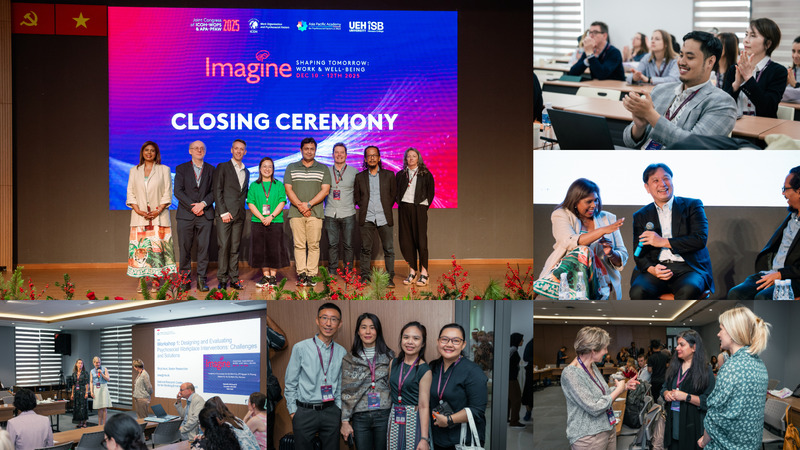
The conference brought together multidisciplinary researchers, experts, and corporate guests for academic connection and engagement
A journey of disseminating academic and practical values, where global knowledge is interconnected
The conference was a resounding success, featuring 8 keynote speeches, 6 specialized symposia, nearly 30 parallel sessions and direct paper presentations, along with various academic dialogues formats such as the PhD Doctoral Colloquium and a Global Policy Roundtable. This series of activities created a rich intellectual space where in-depth professional exchanges, academic networking, and inspirational dialogues were fostered. The event brought together nearly 300 international researchers and scholars, and close to 20 representatives from domestic and international corporations, to share knowledge and jointly promote a vision of workplace happiness in the context of a sustainable development for future society.
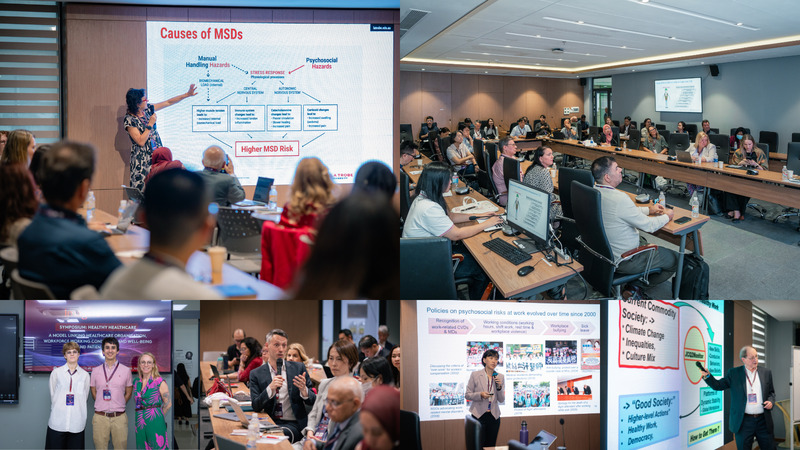
Workshops, presentations, and panel discussions held within the framework of the event
Notably, the UEH.ISB PhD Doctoral Colloquium gathered over 20 PhD candidates with international professors and experts, creating a specialized academic space where UEH.ISB candidates had the opportunity to present their research, discuss their methodologies, and receive valuable feedback from professors, experts, and international peers. Through open and constructive discussions, the colloquium contributed to helping researchers refine their research and fostering academic connections within the global research community.
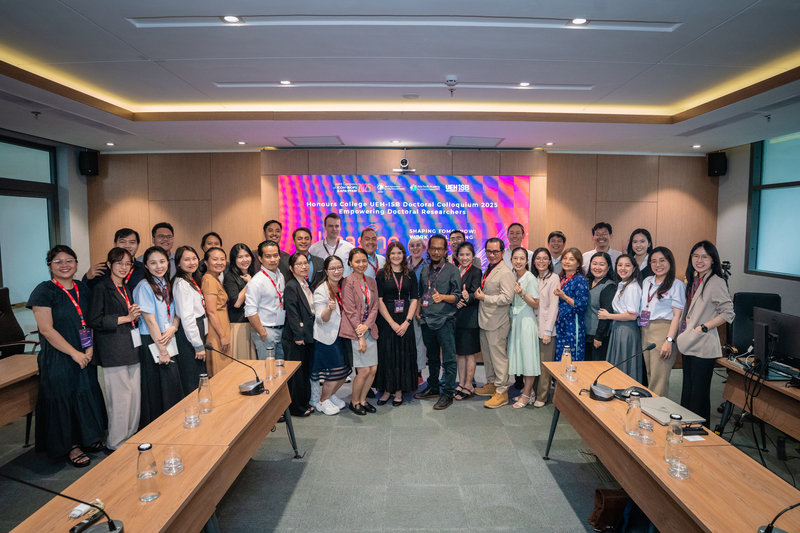
Doctoral Colloquium – An academic dialogue space for doctoral candidates under the guidance of international experts
Impressive figures from the scientific committee's report
Assoc. Prof. Dr. Quentin Durand-Moreau, Chair of the Scientific Committee, presented a summary report highlighting the conference's outstanding results and key academic indicators of the conference. This year's event received 256 paper submissions, with 221 accepted, resulting in an 86% acceptance rate, clearly reflecting the high professional quality and rigorous preparation of the participating research community.
The conference brought together scholars and experts from 33 countries, featuring 141 oral presentations and 71 poster presentations. While Asia continued to have the largest number of submissions, the event also saw diverse contributions from Europe, Oceania, Latin America, and the United States, with Brazil making a notable impact of participating papers, enriching the conference's international and interdisciplinary academic dialogue space..
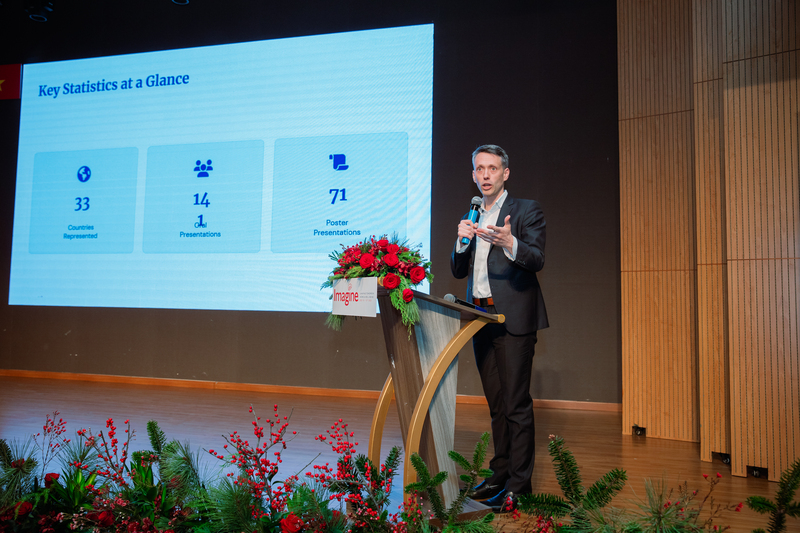
Assoc. Prof. Quentin Durand-Moreau presenting this year’s post-conference scientific report
Workplace happiness through an academic lens
Prof. Akinori Nakata - President of APA-PFAW, expanded the concept of "decent work" through a biological-psychological-social lens, emphasizing that work quality is shaped by how people preserve and allocate their lifetime. Data from the Asia-Pacific region shows that circadian misalignment is significantly increasing the risk of burnout and psychological disorders. These findings lay the groundwork for policies on sleep, nutrition, and more suitable shift design within the "finite 24 hours" of the modern workforce.
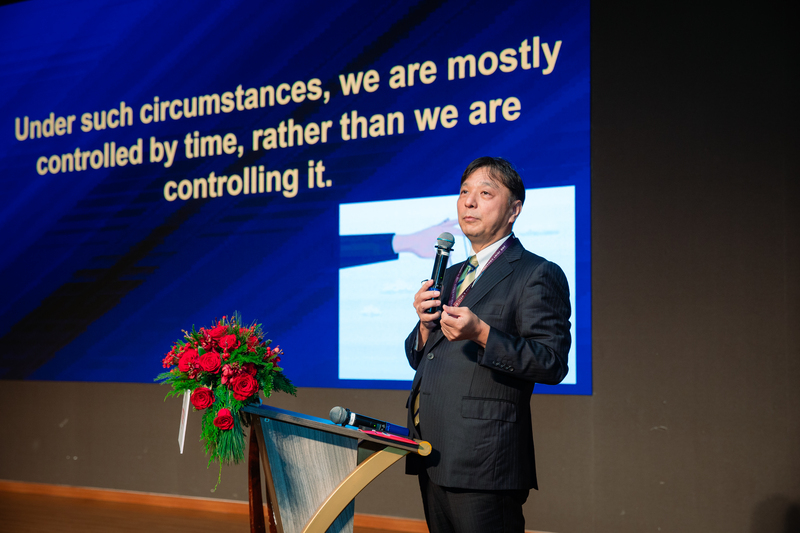
Prof. Akinori Nakata presenting his scientific and humanistic perspective on "Understanding Decent Work: A BioPsychoSocial Perspective"
Following this, Prof. Michelle Tuckey - University of South Australia (Australia) demonstrated that negative workplace behaviors originate from job design structures more than individual personalities. The model of 10 psychosocial risks and the concept of rebuilding the "social fabric" within organizations through connection, empathy, and cooperation reinforced solutions for building healthy workplace environments and minimizing uncivil behavior.

Prof. Michelle Tuckey presenting on “Beyond Risk Mitigation: Preventing Workplace Mistreatment”
Prof. Frida Marina Fischer - School of Public Health, University of São Paulo (Brazil) emphasized the importance of the Circadian Timing System, analyzing the impact of night shifts and rotating shifts on sleep, exhaustion, and chronic disease risk. Based on large-scale studies, the professor proposed policy-oriented recommendations such as limiting consecutive night shifts and ensuring adequate recovery time between shifts, providing necessary guidance for businesses and policymakers in the current context of flexible work.

The topic “Challenges of Working Time: Effects, Interventions and Policies” presented by Prof.n. Frida Marina Fischer
Delving deeper into the topic of Psychosocial Hazards, Prof. Michael Quinlan - Emeritus Professor of Employment Relations, University of New South Wales (Australia), proposed the "Pressure, Disorganization & Regulatory Failure (PDR)" model, highlighting the role of work organization, market conditions, and law enforcement capacity in forming or mitigating psychosocial risks. The professor emphasized that all sustainable improvements in working conditions begin with strengthening workers' voices and reinforcing the argument for dialogue, empowerment, and democratization of the work environment as the foundation of rights-based welfare policies.

The perspective “Psychosocial Hazards in Context” analyzed by Prof. Michael Quinlan
The paper by Dr. Yawen Cheng (National Taiwan University) clarified the high rates of Post-Traumatic Stress Disorder (PTSD), depression, and anxiety among workers experiencing occupational accidents, while highlighting the close link between physical injury and psychological trauma. Notably, the doctor emphasized the crucial role of the workers' compensation system, suggesting that complex administrative procedures could become a source of secondary stress, delaying workers' comprehensive recovery. The research thus calls for building a humane, transparent compensation system focused on physical-mental recovery.
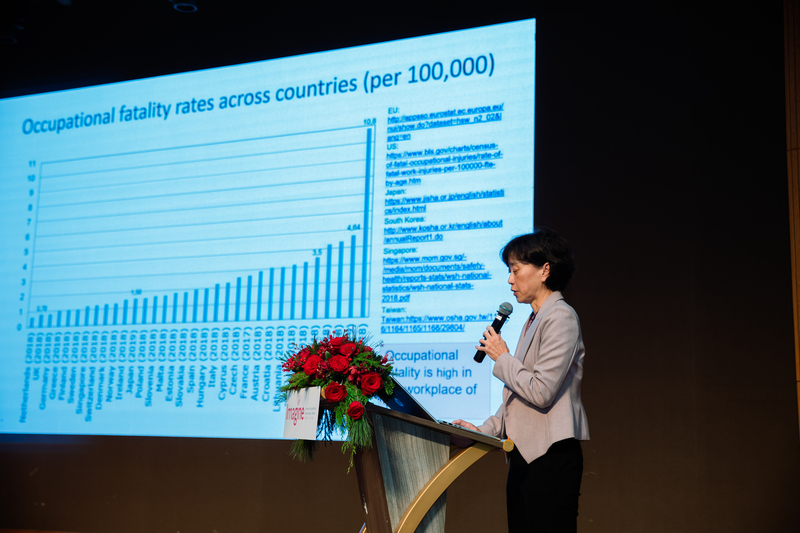
Dr. Yawen Cheng and research on “Psychosocial Consequences of Work-related Injuries”
Based on a synthesis of 1,000 studies, Dr. Birgit Aust pointed out that the sustainable effectiveness of psychosocial work environment interventions primarily stems from changes at the organizational level, including redesigning working time, increasing worker autonomy, improving communication quality, and strengthening social support networks. She also emphasized that future directions need to move beyond the scope of individuals, groups, or individual organizations, expanding to the sectoral and national levels to create synchronized and long-term impacts on occupational health.
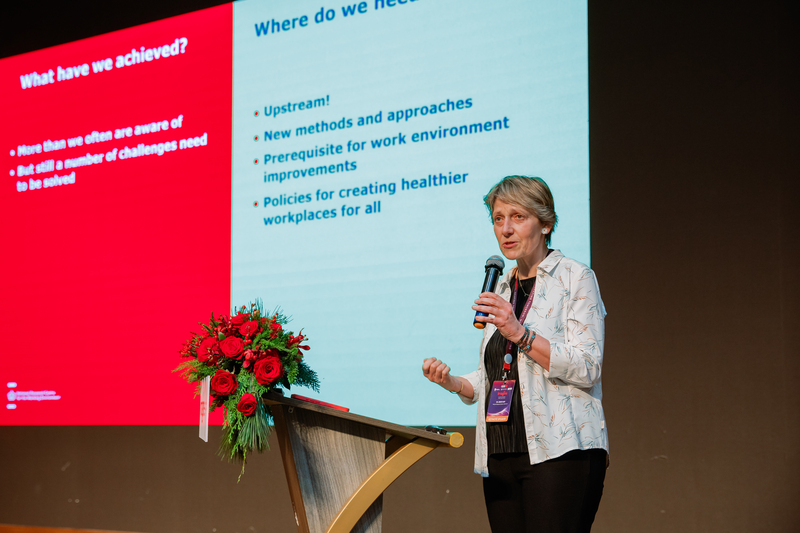
A synthesis of research on“Psychosocial Work Environment Interventions” by Dr. Birgit Aust
In a special Workshop session, Prof. Robert Karasek provided a more comprehensive view of the relationship between sustainability, democracy, and occupational health. Through the "Conducive Economy" model, he explained how societal transformation can begin by enhancing capacity, motivation, and trust within organizations, opening a macro-level approach to research and policy on healthy work environments.
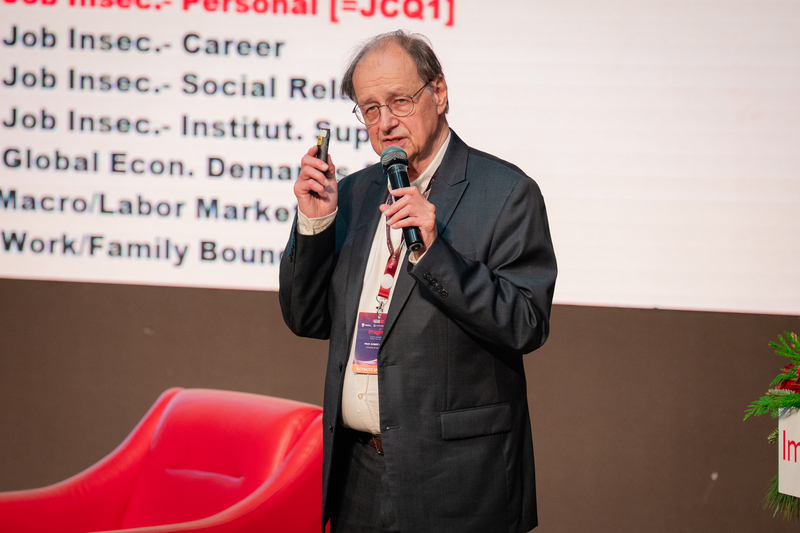
The Special Workshop: “Steps Toward the Good Society” of Prof. Robert Karasek
The conference's academic success was ensured by the International Scientific Committee through a rigorous peer-review process, selecting research meeting international academic standards. Concurrently, the partner organization EAOHP (European Academy of Occupational Health Psychology) was acknowledged for its important contributions in operating the digital paper management system on the Oxford platform.
Honoring outstanding academic contributions, recognizing the efforts that made the conference a success
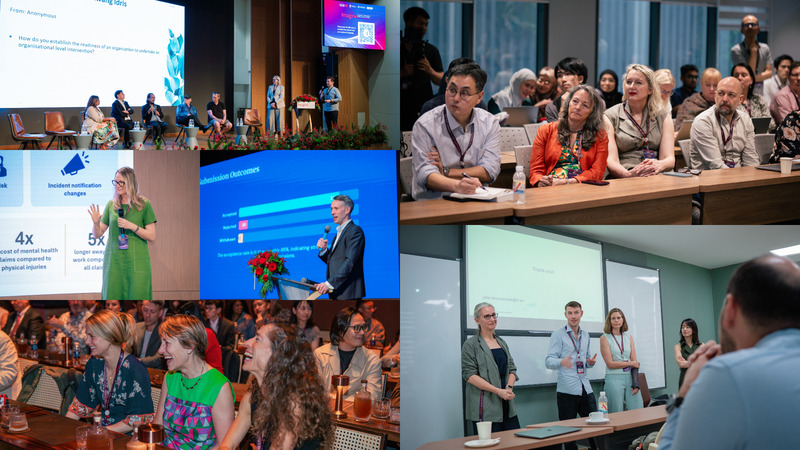
The dedicated academic contributions in an open, globally connected environment at the IMAGINE 2025 conference
Paper Awards and Poster Awards were presented to the four most outstanding works with exceptional scientific value and practical contributions, specifically:
- The Best Paper Award went to the research "Is Volatility Always Harmful? Exploring the Role of Daily Pay Volatility for Gig Workers’ Well-Being" by authors Mengyu Mao and Wladislaw Rivkin.
- The Runner-Up Award went to the research "Parental Long Working Hours and Children’s Emotional Development: A Longitudinal Study from Taiwan" by authors Ming-Wei Lin and Yawen Cheng.
- The Best Poster Award: authors Yi-Ping Wei, Lukas Jyuhn-Hsiarn Lee, and Yawen Cheng for the research "Modifying Effects of Job Strain on the Associations of Dust Exposure and Respiratory Health".
- The Best Poster Runner-Up Award: authors Jungwon Jang, Inah Kim, and Yangwoo Kim for the research "Differences in mental health status by combinations of work schedules and typical working hours among South Korean police officers".

The Best Paper Runner-Up Award belongs to the research "Parental Long Working Hours and Children’s Emotional Development: A Longitudinal Study from Taiwan" by authors Ming-Wei Lin and Yawen Cheng
Assoc. Prof. Dr. Diep Nguyen, the conference chair, extended her gratitude to all speakers, delegates, and researchers for their contributions. She expressed her hope that the conference would continue to inspire interdisciplinary research and foster deeper international collaborations in the future.
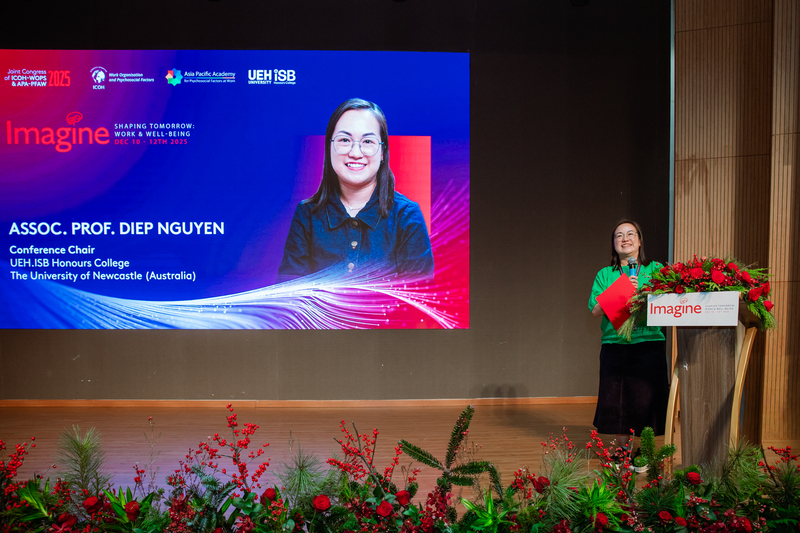
Assoc. Prof. Diep Nguyen expressed her appreciation for the contributions that made this year’s conference a success
The "IMAGINE! Shaping Tomorrow: Work and Well-Being" conference was not only an international professional forum but also a significant milestone in the cooperation between the University of Economics Ho Chi Minh City, the UEH Honours College.ISB, and prestigious global organizations like ICOH-WOPS and APA-PFAW, connecting the multidisciplinary global academic research community in general and Workplace Health & Well-Being in particular.
Other images from IMAGINE 2025:
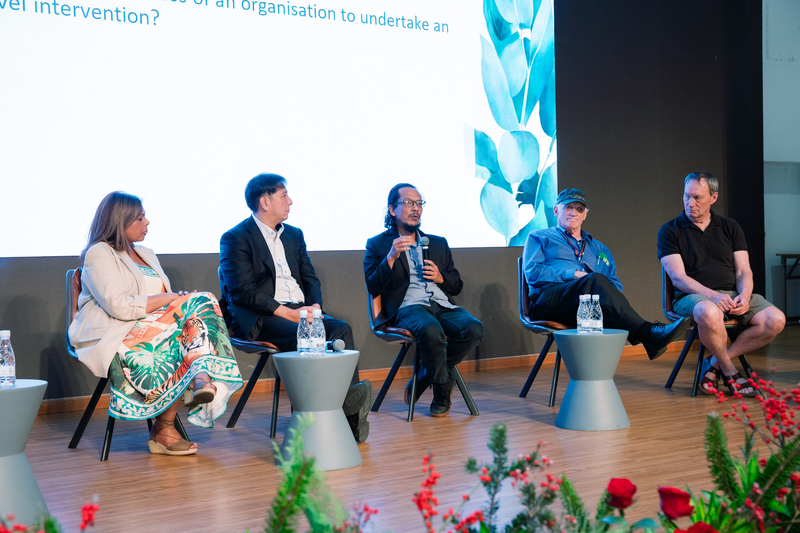
The Panel Discussion at IMAGINE, featuring the President of APA-PFAW and other international professors and doctors

Assoc. Prof. Dr. Tran Phuong Thao – Vice Rector of UEH.ISB Honours College, participating in the discussion on workers' mental health

Prof. Seong-Kyu Kang, President of ICOH-WOPS, offered his perspectives during the Global Policy Roundtable
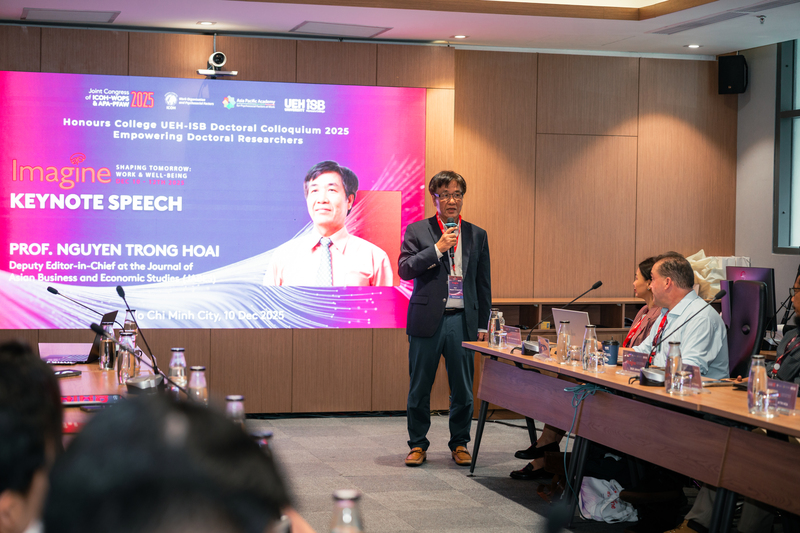
Prof. Nguyen Trong Hoai, Deputy Editor-in-Chief of the Journal of Asian Business and Economic Studies (JABES), shared practical insights from his own scientific publishing journey at the Doctoral Colloquium
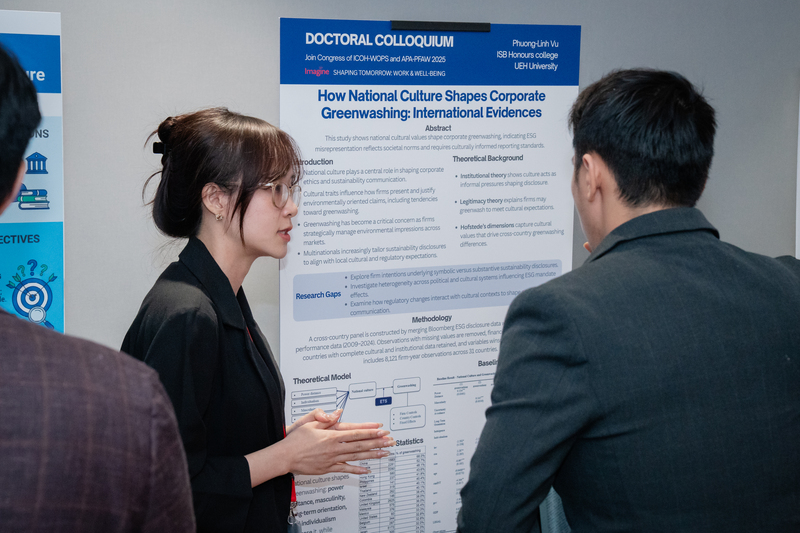
Doctoral candidates and industry guests exchanged and provided direct feedback on each research project during the PhD Students Discussion session

The professors and international participants engaged in discussions about their research based on empirical survey data

Researchers gathered to exchange ideas, experiences in their own research journey, network and build meaningful connections within the international academic community

Gala Dinner – Bringing together researchers and international scholars to experience Vietnamese traditional cuisine and music
Pillars: Research, Community Connection
Project: UEH Connecting
News, photos: UEH Honours College.ISB, Department of Communications and Partnerships
![[UEH 50] Launching Ceremony UEH Technology Convergence Hub and UEH FLEX Pilot Project: A Convergence Point for Technology, Knowledge Connection, and Innovation for Sustainable Development](/images/upload/thumbnail/ueh-thumbnail-639285406692900729.png)

![[UEH 50] JABES Launches Special Issue Celebrating the 50th Anniversary of UEH: 12 Research Papers Accompanying Vietnam's Development Issues](/images/upload/thumbnail/ueh-thumbnail-639283721313299577.png)

![[UEH Through the Lenses of Time #01] UEH 50 Years: From the Classroom Window to the Aspiration to Contribute](/images/upload/thumbnail/ueh-thumbnail-639282664984784994.png)
![[UEH Through the Lenses of Time #02] School of Mathematics - Statistics: Generations of Deans and the Journey of Continuation](/images/upload/thumbnail/ueh-thumbnail-639282663344912443.png)
![[UEH Through the Lenses of Time #03] Half a Century, A Journey & Hundreds of Thousands of Hearts](/images/upload/thumbnail/ueh-thumbnail-639282661905215411.png)