
Scientific Conference: "Implementing the Special Urban Law: A Roadmap for Building Ho Chi Minh City into a Smart, Sustainable, and Net-Zero City"
01 Jun, 2026
On the morning of May 29, 2026, the University of Economics Ho Chi Minh City (UEH) hosted the scientific conference "Implementing the Special Urban Law: A Roadmap for Building Ho Chi Minh City into a Smart, Sustainable, and Net-Zero City." The conference served as a forum connecting scientists, policy experts, regulatory bodies, businesses, and organizations from home and abroad to exchange scientific arguments and practical solutions for Ho Chi Minh City's development in the new era.
A Special City Demands Special Thinking
The conference was organized to directly contribute to the implementation of policies under Ho Chi Minh City’s Special Urban Law, particularly as the City advances toward a model of smart, sustainable, adaptive, and globally competitive urban governance.
From both academic and practical perspectives, the program focused on several key directions:
• Contributing to the refinement of the Special Urban Law to ensure feasibility, accountability, and effective implementation: clarifying institutional priorities, identifying potential legal gaps, and addressing requirements related to decentralization, inter-agency coordination, and implementation responsibilities that should be more clearly reflected in the Law and its supporting regulations.
• Proposing an implementation framework for Ho Chi Minh City following the enactment of the Law: identifying governance models, coordination mechanisms, financial instruments, data infrastructure, and stakeholder collaboration approaches to enable the City to operate effectively from the outset.
• Promoting policy and technology experimentation through Sandbox mechanisms, Living Labs, and innovation spaces: an approach that helps minimize risks associated with new policies while allowing solutions to be tested, refined, and optimized before large-scale deployment.
• Building a value co-creation ecosystem among Government - Universities - Businesses - Communities - Nature: in which the Government acts as an enabler and coordinator; universities provide knowledge, data, research capacity, and experimentation platforms; businesses contribute technology, resources, and implementation expertise; and communities participate in co-designing, evaluating, and monitoring policies. This ecosystem serves as a critical foundation for the City’s development as an open, flexible, and knowledge-driven metropolis.
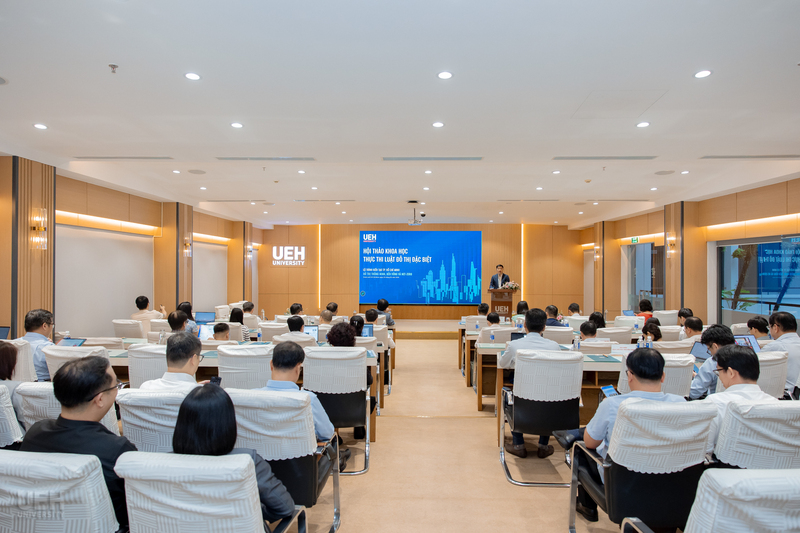
Overview of the conference
In his opening remarks and keynote address, Assoc. Prof. Bui Quang Hung, President of UEH, emphasized: “As Ho Chi Minh City enters a new stage of development, requiring a governance model that is smarter, more sustainable, and highly adaptive, the Special Urban Law is not merely an institutional reform but also an opportunity to establish a new model of urban governance. From an academic perspective, UEH is committed to accompanying the City as a knowledge hub, providing scientific evidence, policy insights, and innovative solutions that help transform institutions into drivers of development.”
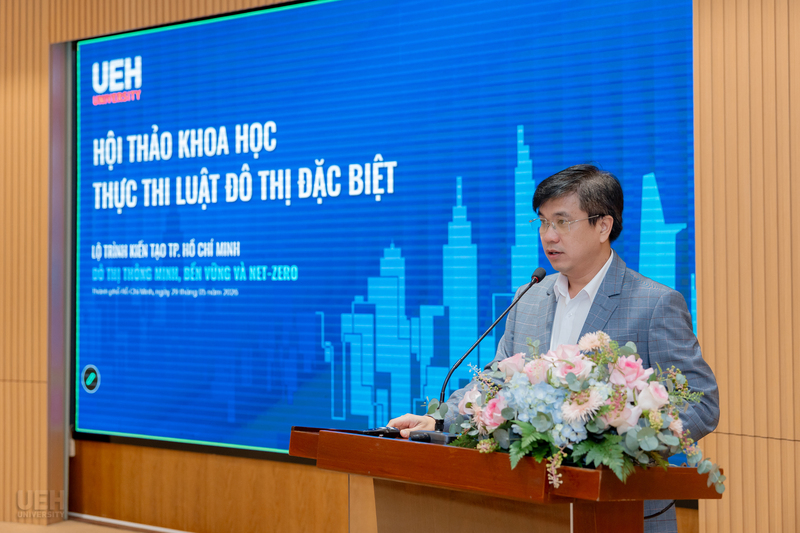
Assoc. Prof. Bui Quang Hung, President of UEH, delivering the opening and keynote remarks
Four Bottlenecks, Four Strategic Breakthroughs
The conference program centered on four major themes, reflecting the critical challenges Ho Chi Minh City must address in implementing the Special Urban Law.
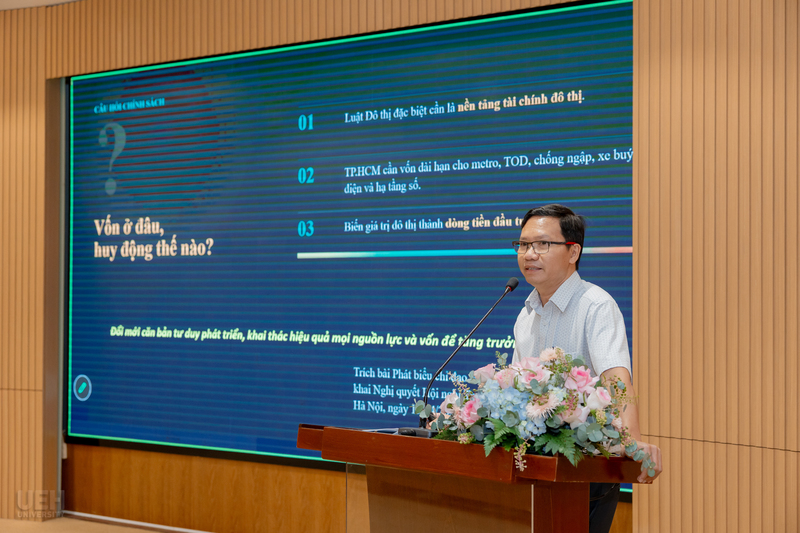
Dr. Le Dat Chi, Dean of the School of Finance at UEH, presented mechanisms for mobilizing investment resources through Green Bonds and urban Carbon Credit markets
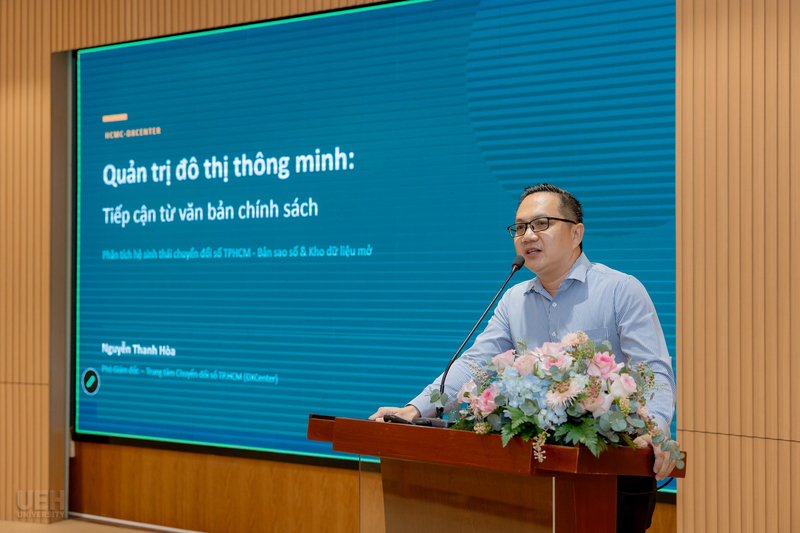
Mr. Nguyen Thanh Hoa, Deputy Director of the Ho Chi Minh City Digital Transformation Center, shared insights on the potential applications of Digital Twins and Open Data platforms in public administration and policy impact simulation.
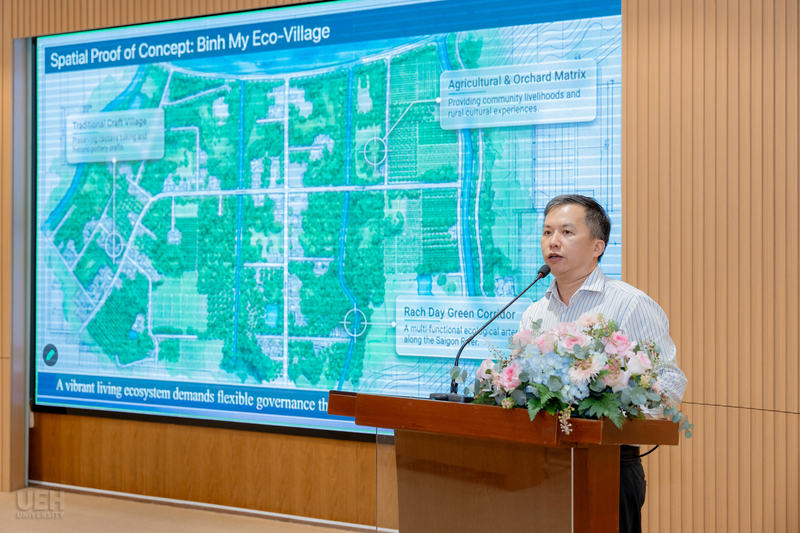
Dr. Architect Nguyen Anh Tuan, Chairman of Binh My Commune People’s Committee, Ho Chi Minh City, proposed integrating Nature-based Solutions (NBS) into urban design to address flooding and microclimate challenges.
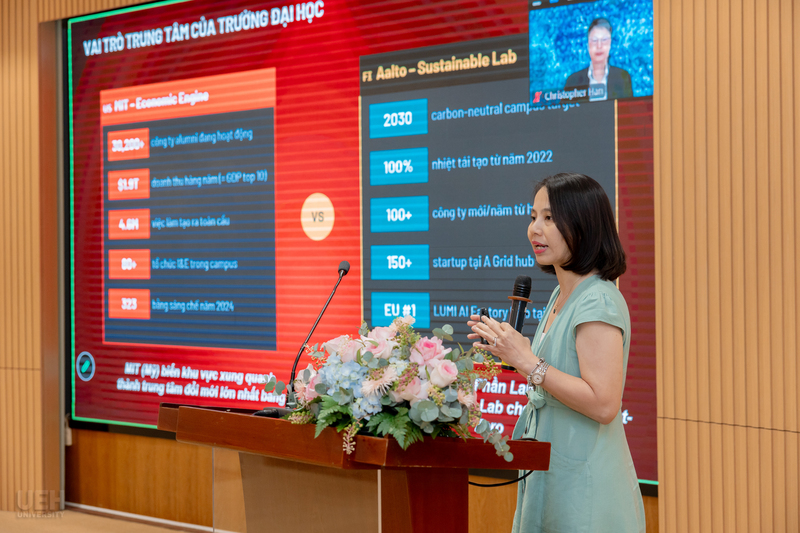
Assoc. Prof. Trinh Tu Anh, Director of the Institute of Smart City and Management (UEH), and Dr. Christopher Han, Director of Innovation Strategy at the UEH Institute of Innovation, introduced the Value Co-Creation Ecosystem for Sustainable Impact framework - a scientific methodology designed to address urban challenges by integrating multi-stakeholder resources.
Bridging Academic Knowledge and Policy Action
As part of the conference, an in-depth panel discussion featuring experts from businesses, universities, and research institutes offered diverse perspectives on governance mechanisms, opportunities for policy experimentation, and the conditions necessary for effective implementation of the Special Urban Law.
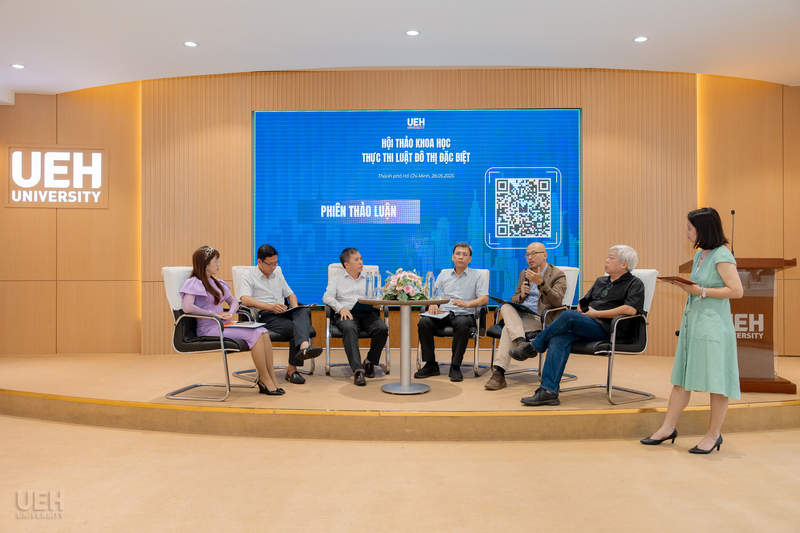
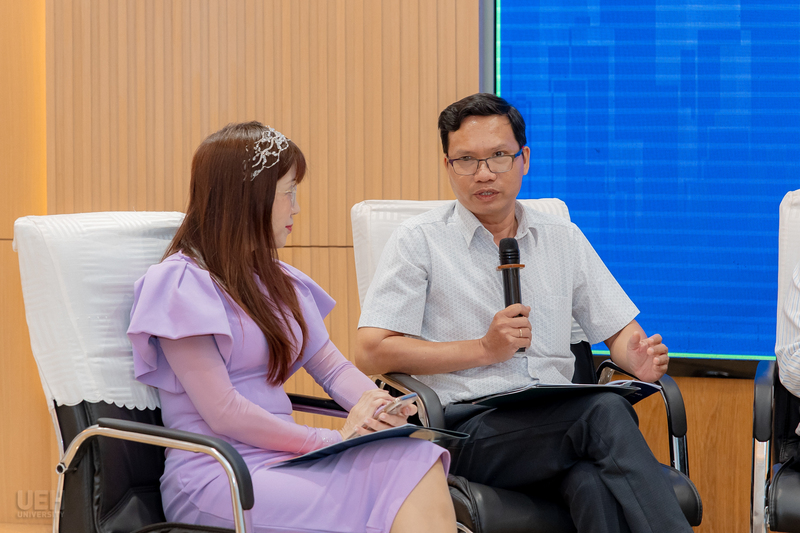
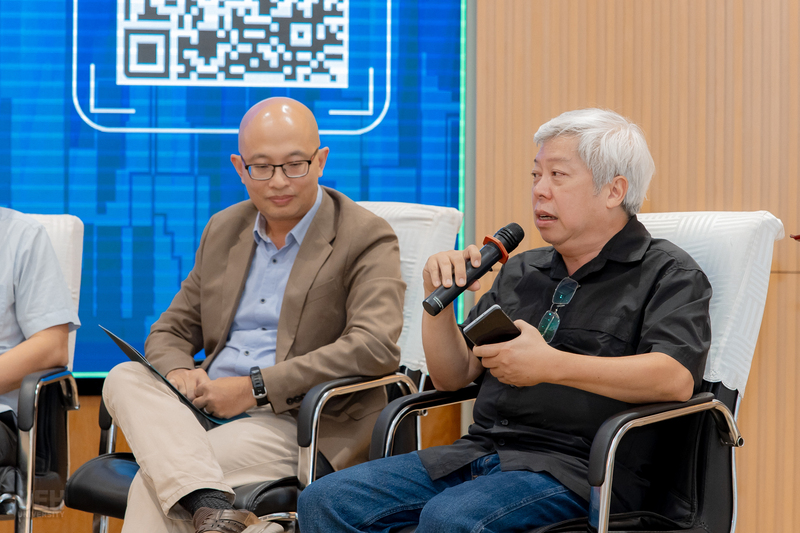
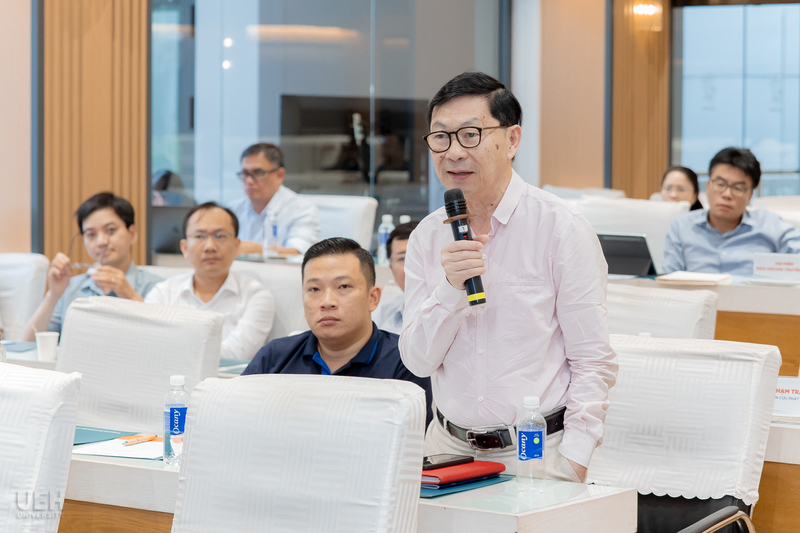
Experts exchanging views during the panel discussion
Alongside the academic program, the Empirical Urban Solutions Exhibition was organized as a visual showcase of research models that have been applied in real-world contexts. The exhibition enabled policymakers, experts, and participants to engage directly with research teams, helping to bridge the gap between academic knowledge and policy action.
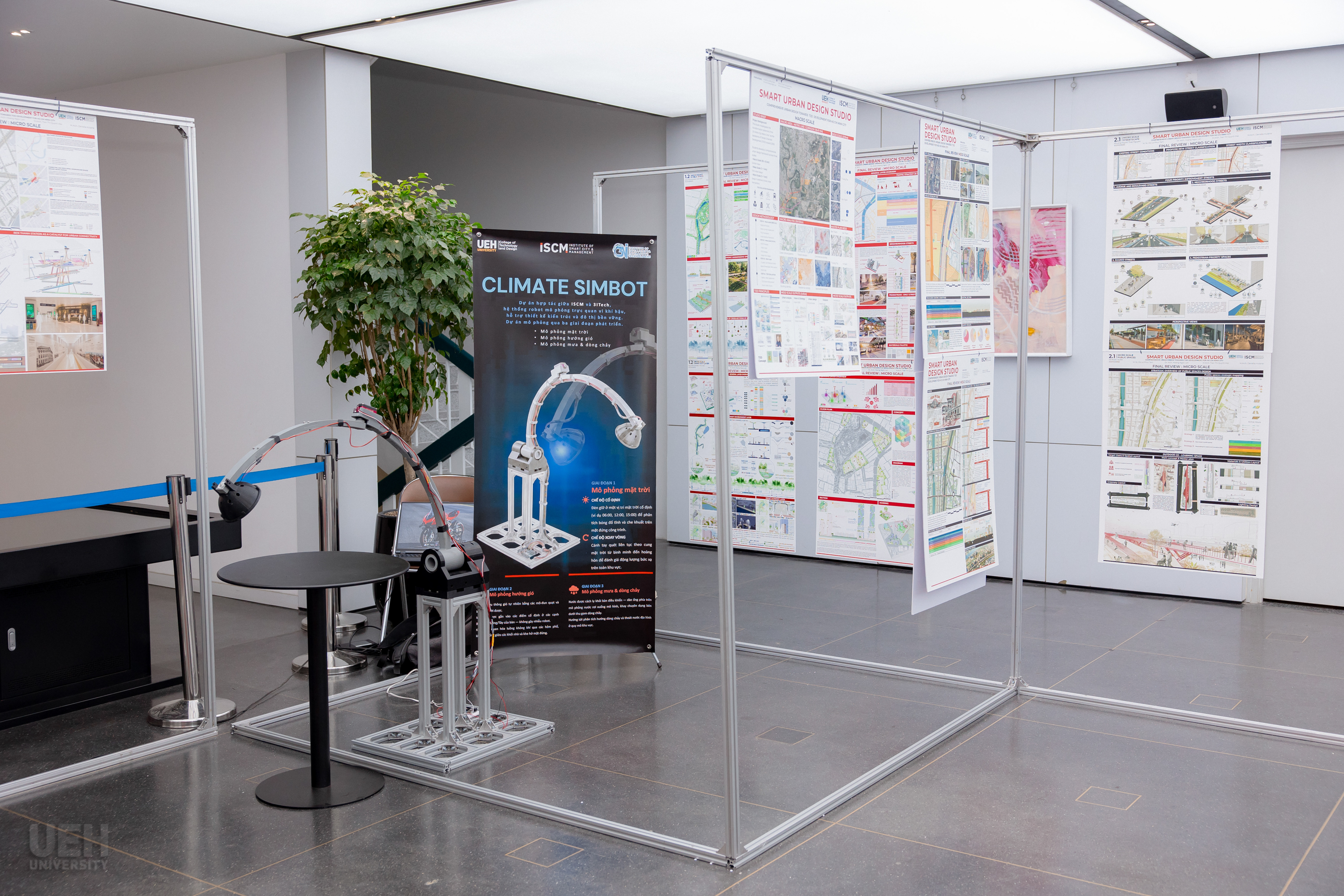
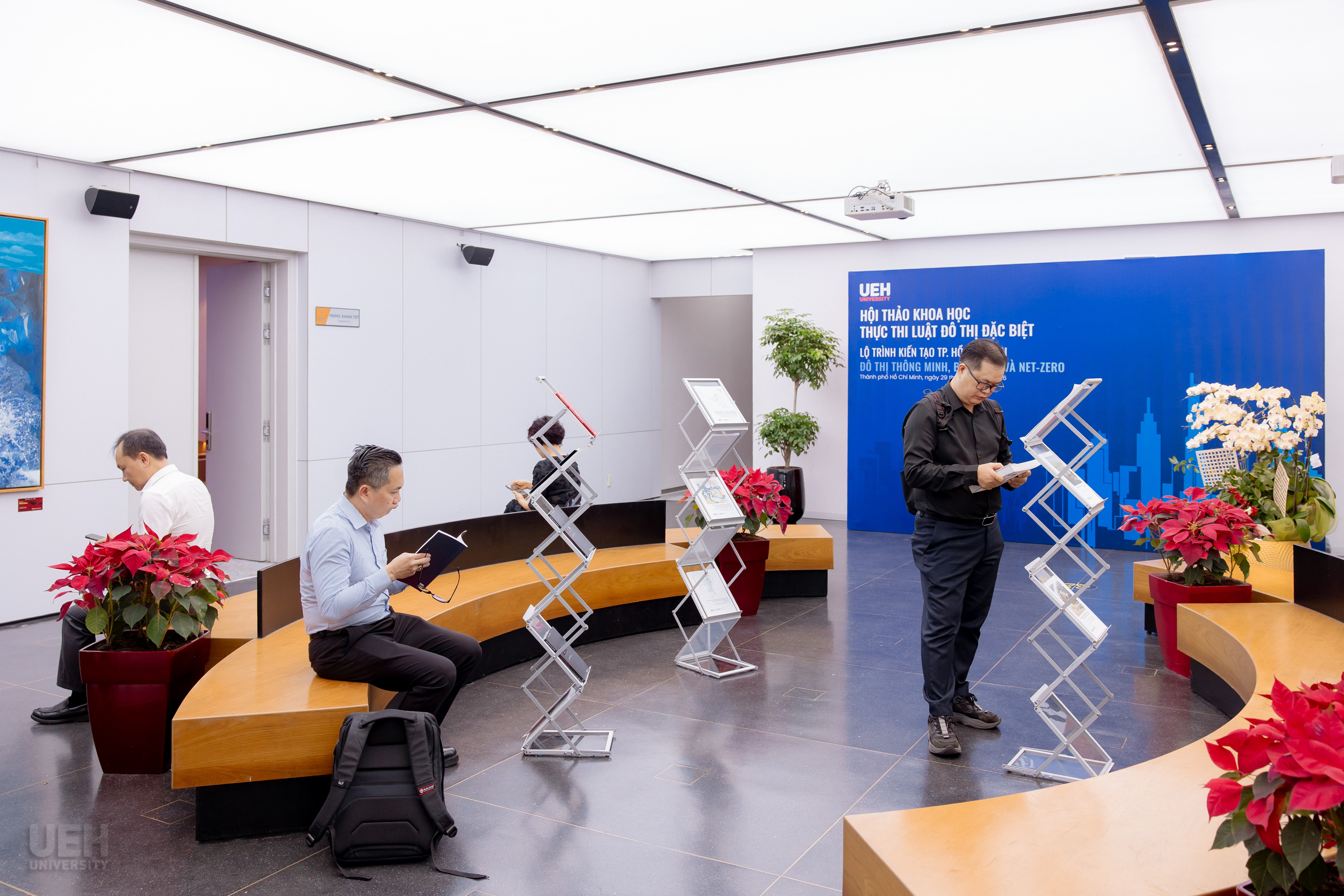
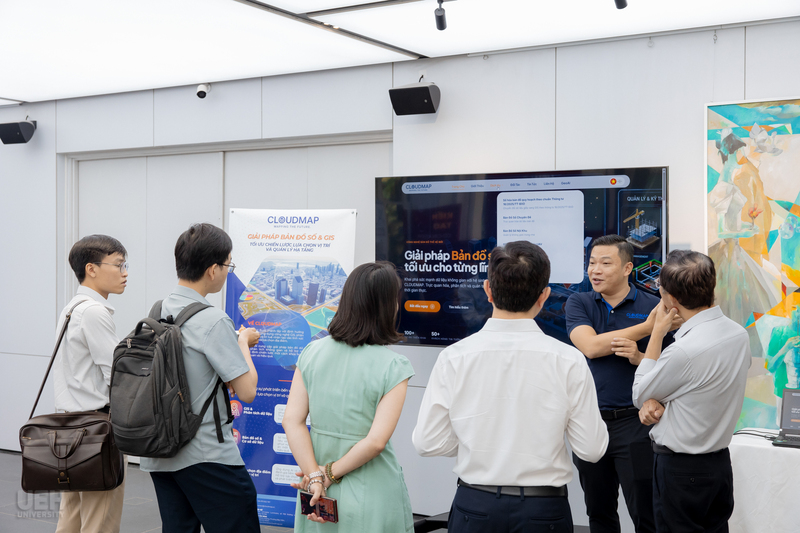
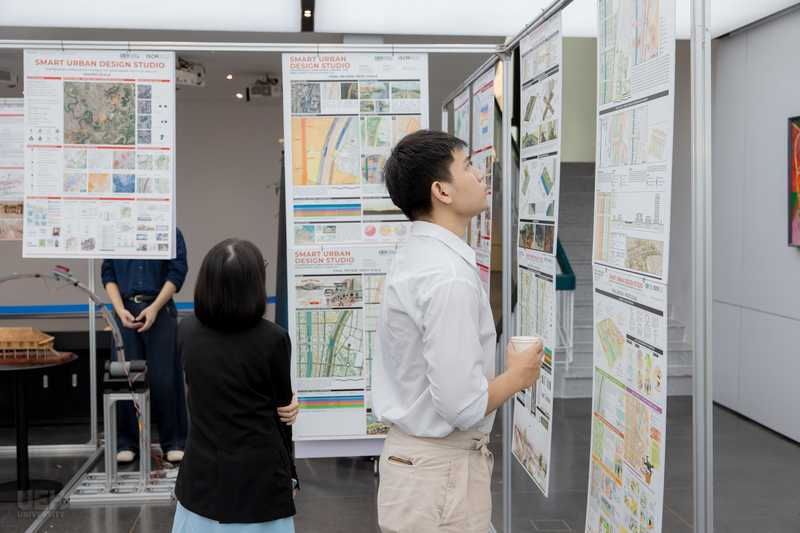
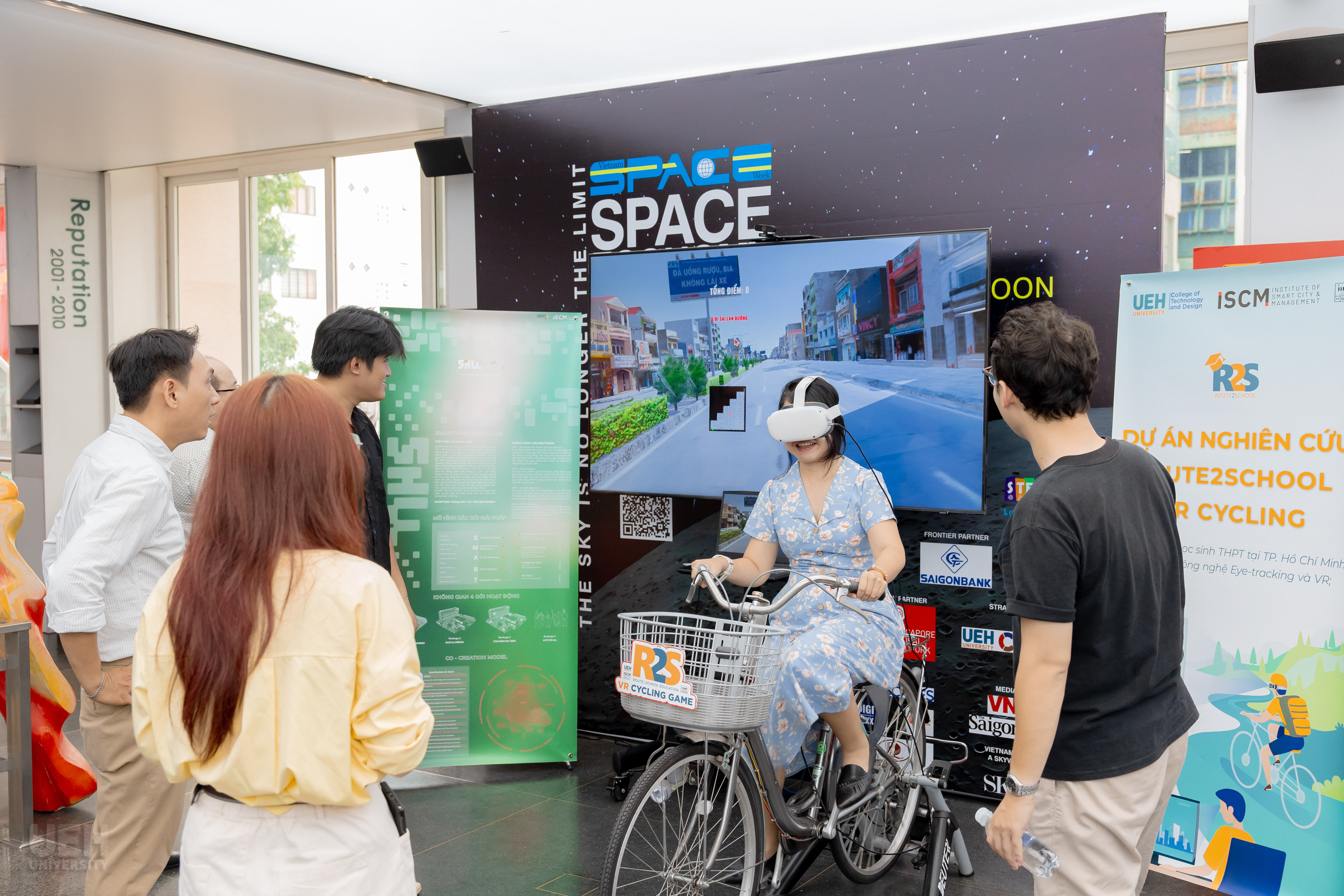
Empirical Urban Solutions Exhibition
Toward a Smart, Sustainable, and Livable Ho Chi Minh City
Drawing from the presentations and discussions, the conference generated a number of policy recommendations focused on four priority areas:
• Strengthening financial institutions and developing the digital economy through green bonds, carbon credits, and Transit-Oriented Development (TOD) models;
• Building a smart urban platform based on open data and smart mobility solutions;
• Integrating Net-Zero goals, green infrastructure, and Nature-based Solutions into urban planning;
• Piloting Sandbox mechanisms and developing a value co-creation ecosystem among Government, Universities, Businesses, Communities, and Nature.
View more Conference materials at: LINK
As a multidisciplinary research university with strong community and international engagement, UEH continues to reaffirm its commitment to supporting Ho Chi Minh City by providing scientific evidence, policy recommendations, and innovative models that help build a smart, sustainable, Net-Zero, and livable city.
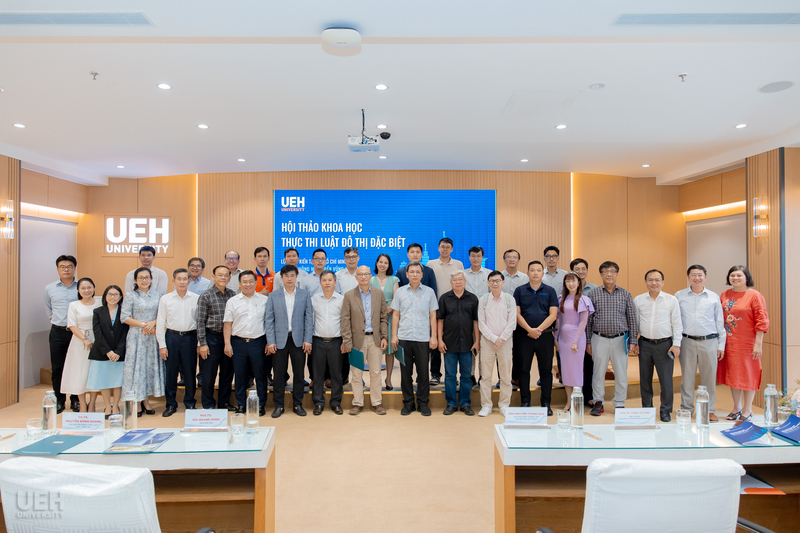
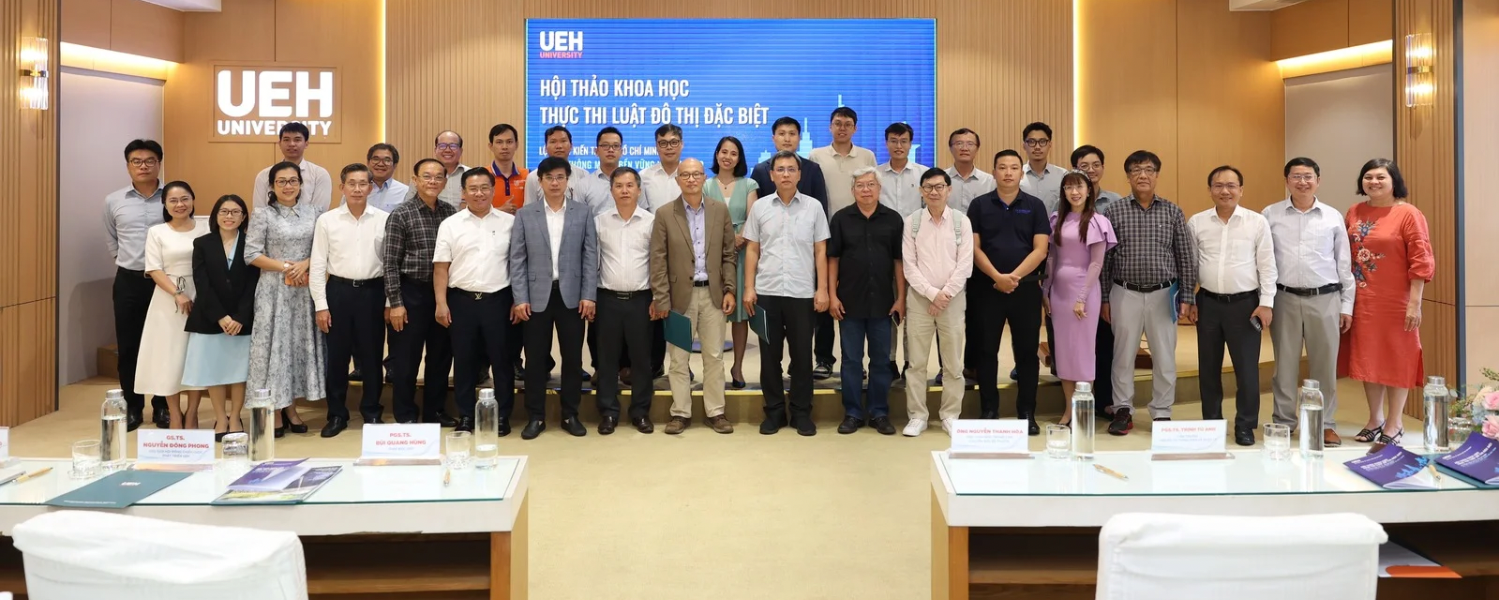
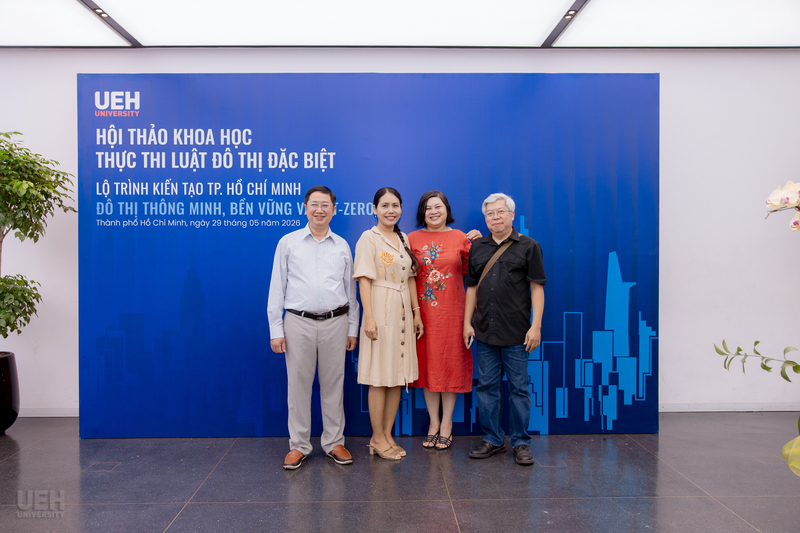
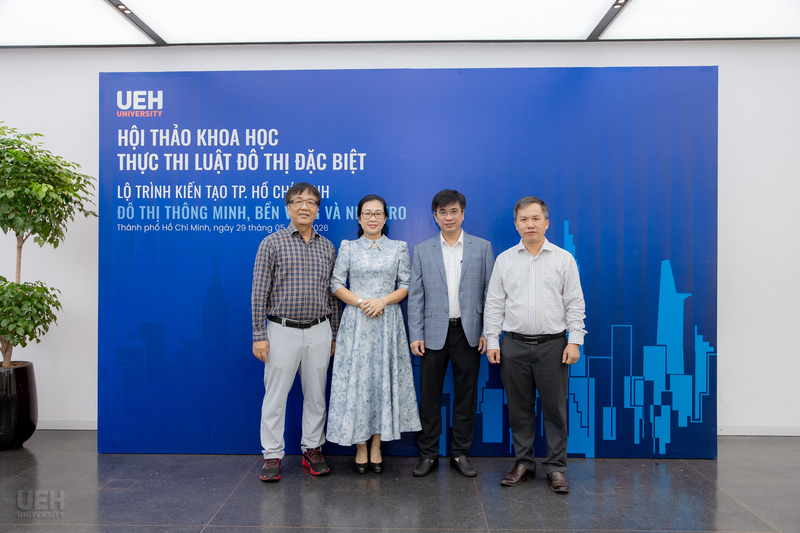
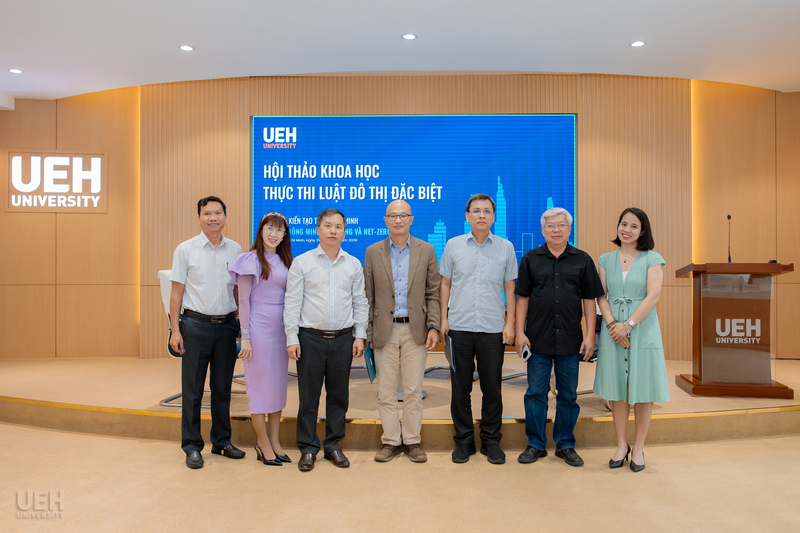
Conference participants posing for a commemorative photo
Some photos from the conference:
Pillars: Research, Community Engagement
Projects: UEH UniverCity Innovation, UEH Connecting
News and Photos: Department of Research - Development and Global Engagement; Department of Communications and Partnerships
![[UEH 50] JABES Launches Special Issue Celebrating the 50th Anniversary of UEH: 12 Research Papers Accompanying Vietnam's Development Issues](/images/upload/thumbnail/ueh-thumbnail-639283721313299577.png)
![[UEH Through the Lenses of Time #01] UEH 50 Years: From the Classroom Window to the Aspiration to Contribute](/images/upload/thumbnail/ueh-thumbnail-639282664984784994.png)
![[UEH Through the Lenses of Time #02] School of Mathematics - Statistics: Generations of Deans and the Journey of Continuation](/images/upload/thumbnail/ueh-thumbnail-639282663344912443.png)
![[UEH Through the Lenses of Time #03] Half a Century, A Journey & Hundreds of Thousands of Hearts](/images/upload/thumbnail/ueh-thumbnail-639282661905215411.png)
![[UEH Through the Lenses of Time #04] Simple Frames: Keepsakes, Teachers, and Everyday Memories of Generations of UEHers](/images/upload/thumbnail/ueh-thumbnail-639282660641392168.png)