Space Economy: From Space Science to a Driver of Innovation
03 Jun, 2026


Space Economy: From Space Science to a Driver of Innovation
Vietnam Space Week 2026, co-organized by the Saigon Times Foundation, the Innovation Services Center (ISC), and STEAMzone, with UEH serving as a Strategic Partner, returned after its inaugural edition in 2023. This year’s event embraced the theme “Fly Me to the Moon” and the message “The Sky Is No Longer the Limit,” expanding its focus from STEM education and scientific inspiration to strategic dialogue on the development of the space economy in Vietnam.
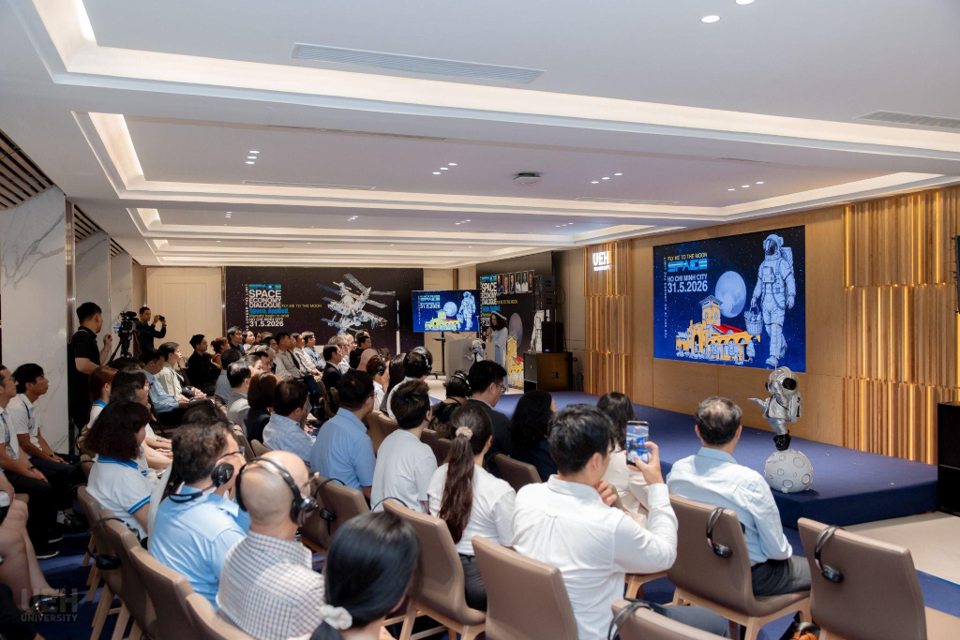
Event Overview
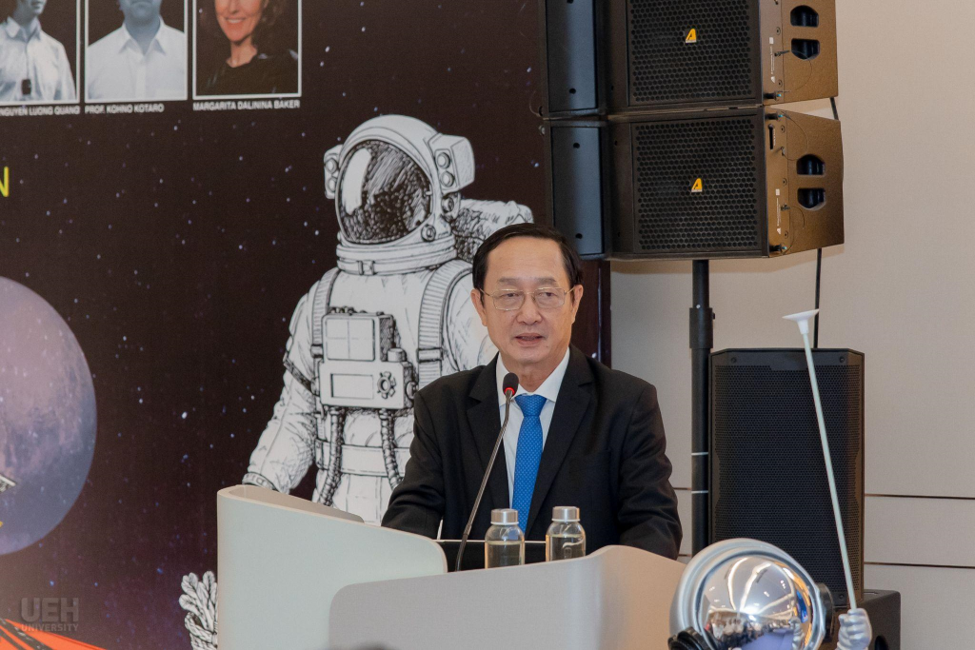
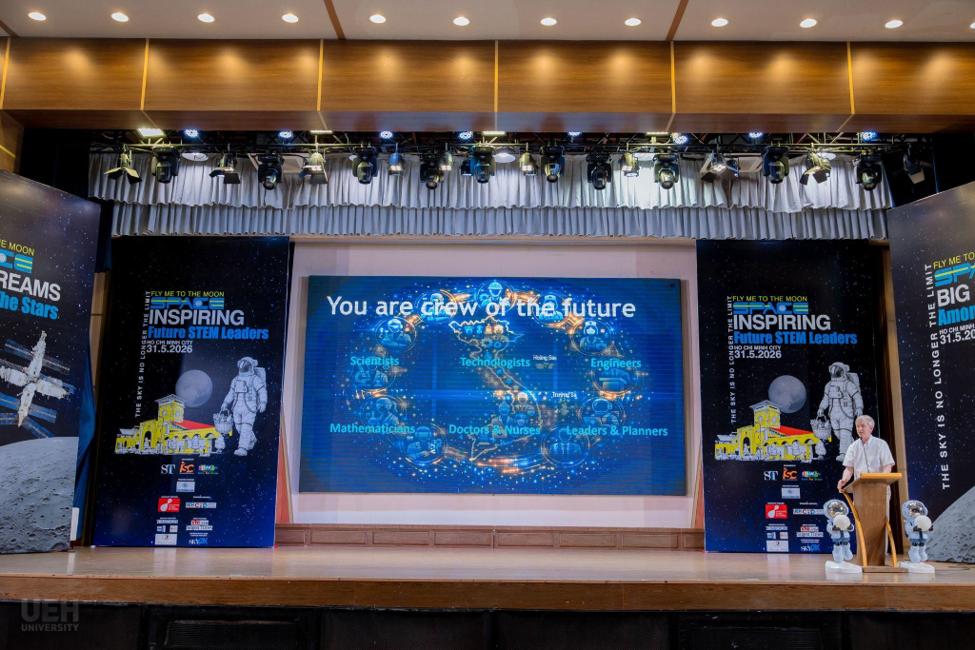
Mr. Huynh Thanh Dat – Deputy Head of the Central Commission for Communication and Mass Mobilization, Former Minister of Science and Technology, delivering the opening remarks at the Space Economy Dialogue.
Speaking at the event, Assoc. Prof. Dr. Bui Quang Hung, UEH President, emphasized that the space economy is experiencing rapid growth worldwide. Space is no longer solely the domain of astronomy or aerospace technology; it has become a catalyst for innovation, digital data, advanced technologies, sustainable development, and future business models.
For Vietnam, the space economy presents opportunities to strengthen technological capabilities, develop a highly skilled workforce, foster innovation, and create new momentum for sustainable growth in a new era.
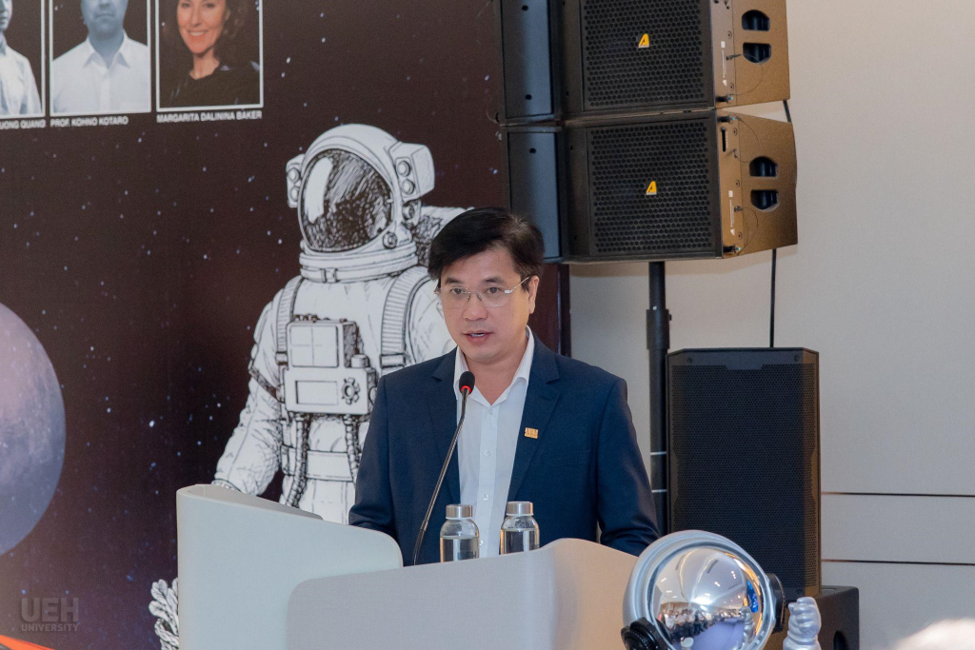
Assoc. Prof. Dr. Bui Quang Hung, President of UEH, delivering remarks at the event.
A Forum Connecting Policymakers, Academia, Business, and Education
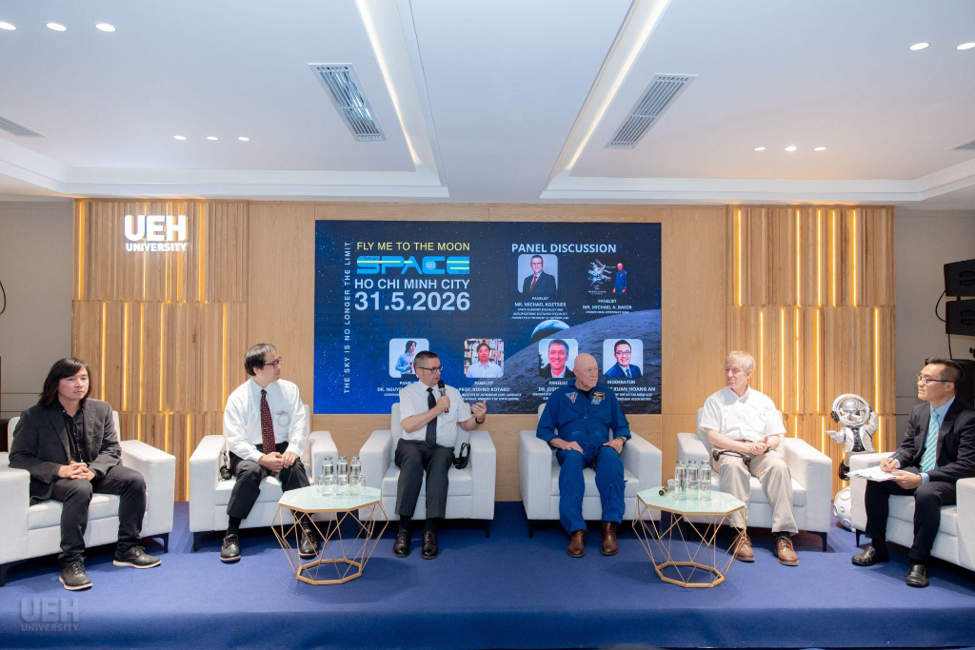
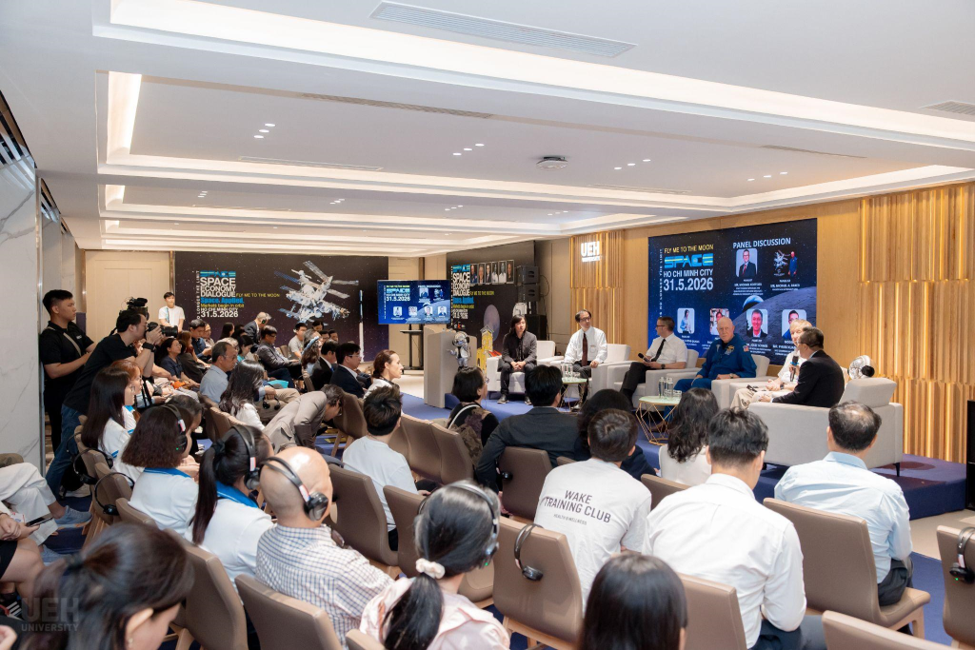
The Space Economy Dialogue brought together diverse perspectives from policymakers, researchers, business leaders, and educational institutions. Discussions focused on global space economy trends, the role of satellite data, artificial intelligence, telecommunications, Earth observation, smart agriculture, logistics, technology commercialization, and Vietnam’s potential participation in the global space value chain.
One of the central questions raised was: How can Vietnam participate in the space economy without necessarily possessing rocket-launching capabilities or launch infrastructure? According to experts, opportunities for developing countries extend far beyond spacecraft manufacturing. Significant value lies in downstream activities such as satellite data utilization, application development, AI solutions, software development, digital services, and technology commercialization.
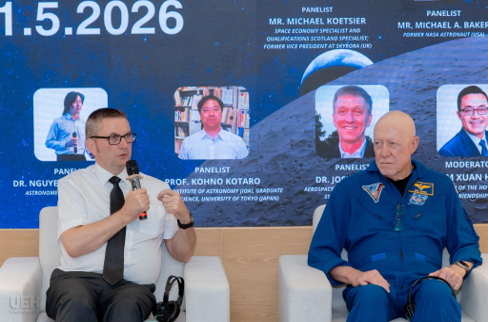
During the dialogue, Michael Koetsier, a space economy expert from the United Kingdom, highlighted the critical role of skills and human capital within the modern space value chain. His statement that “the most valuable launch system in the future will not be a rocket, but a graduate” offered a fresh perspective: in the space economy, talent can become strategic infrastructure alongside technology and data.
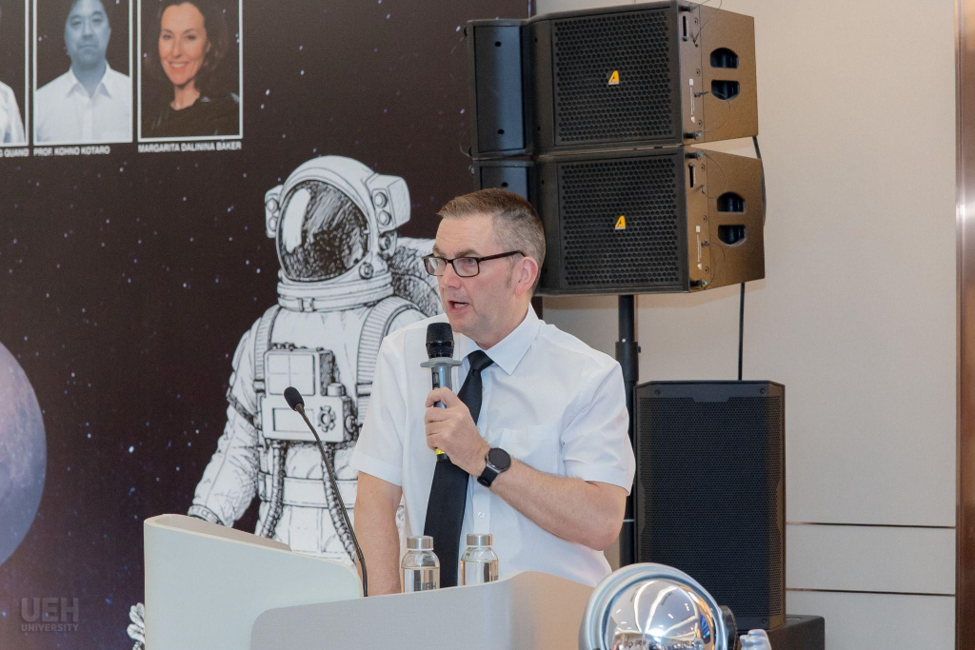
Michael Koetsier presenting insights on the development of the space economy in the United Kingdom.
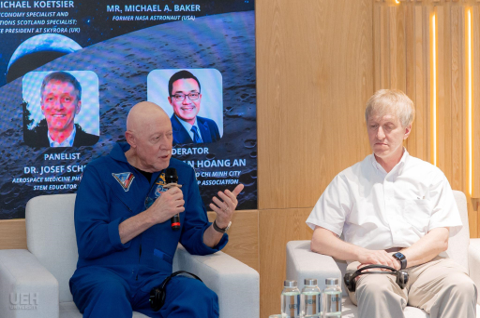
In addition, Dr. Josef Schmid broadened the discussion by emphasizing that the space sector is not limited to aerospace engineers or astronauts. Behind every space mission is the contribution of professionals from medicine, data science, education, business, policy, and communications. This perspective aligns closely with UEH’s multidisciplinary and innovation-driven approach to connecting academia, industry, and emerging sectors.
 |
 |
 |
 |
 |
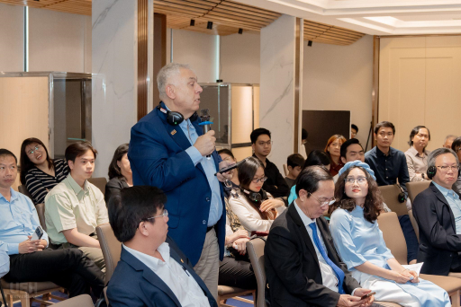 |
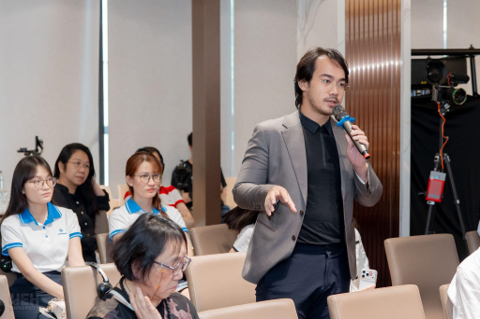
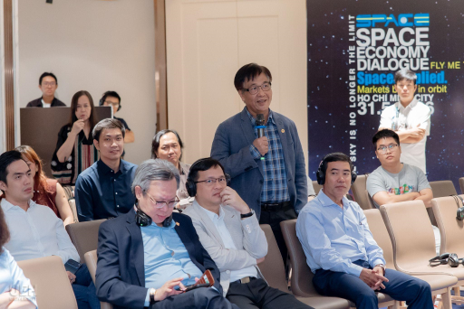
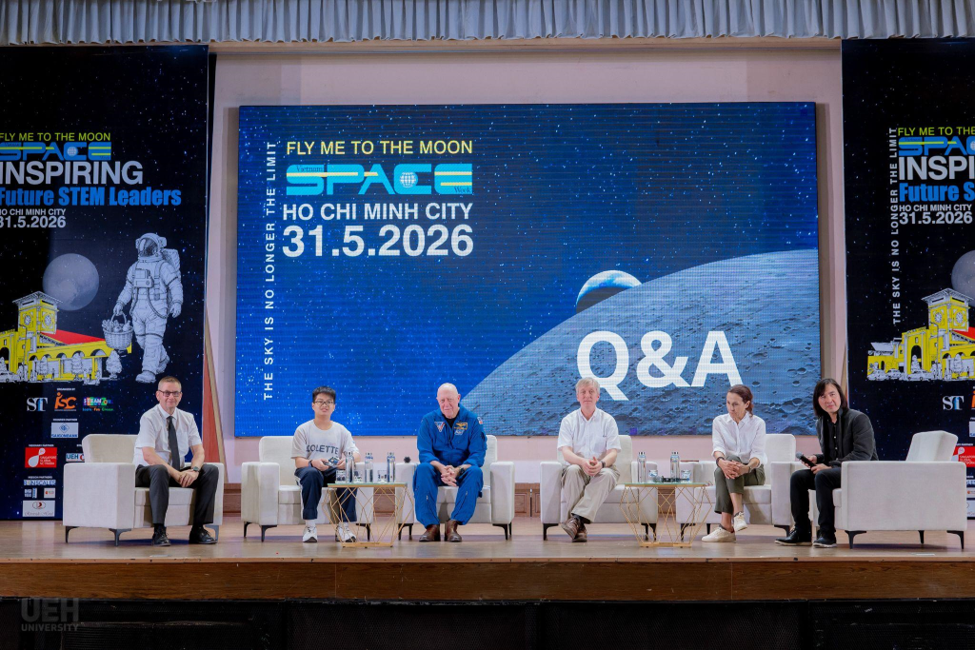
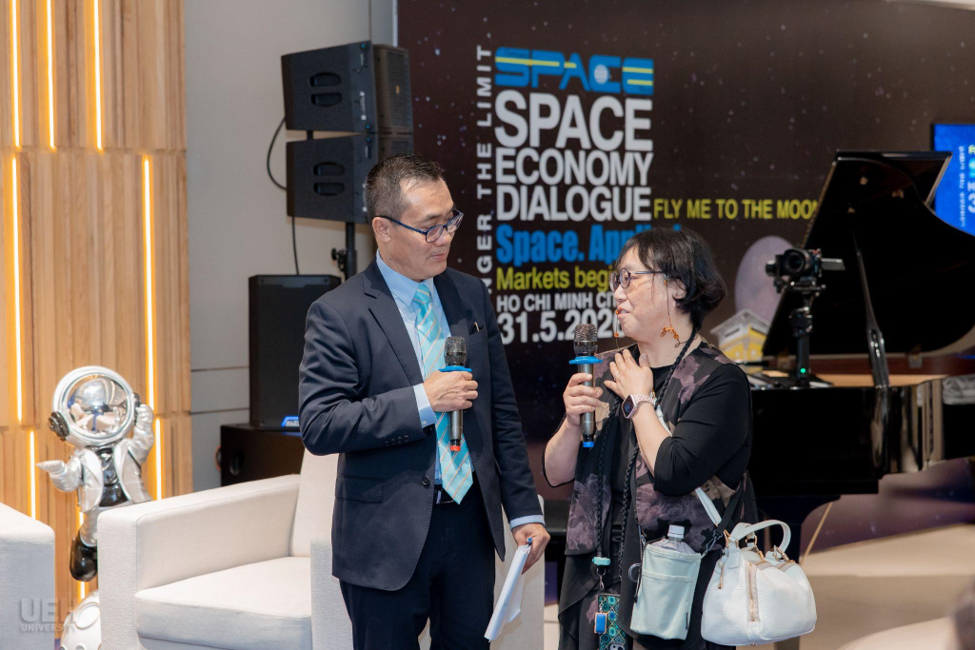
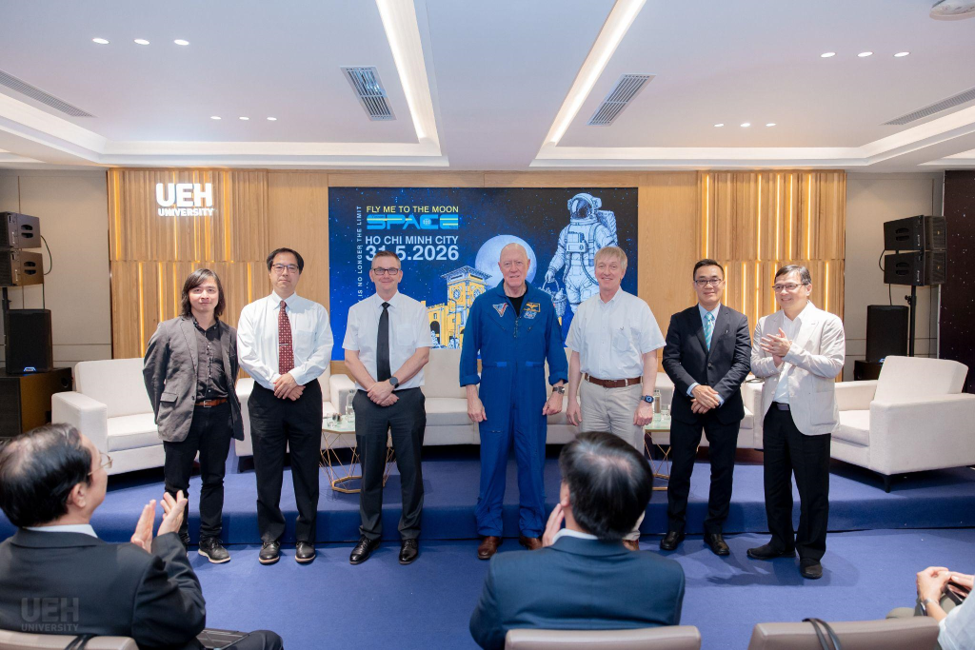
Speakers and guests exchanging perspectives during the Space Economy Dialogue.
Real Space Talk: Inspiring Discovery Through Stories Beyond Earth
Following the morning dialogue session, the Real Space Talk program took place in the afternoon, featuring former NASA astronaut Michael A. Baker, Dr. Josef Schmid, international experts, guests, university students, and high school students.
The session offered authentic stories about space missions, life in orbit, the exploration of the universe, and the human experiences behind scientific and technological achievements.
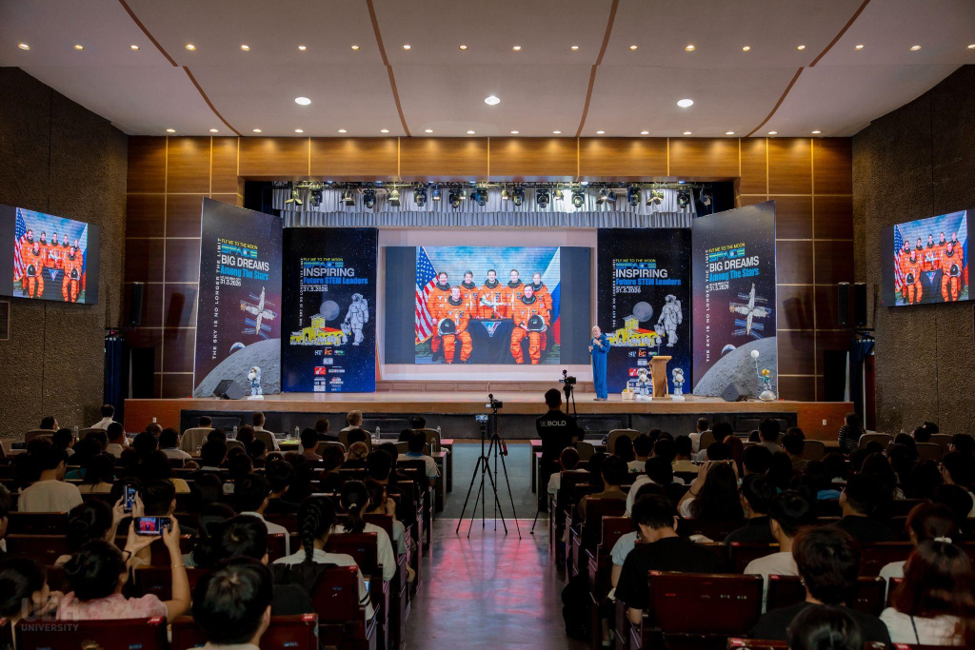
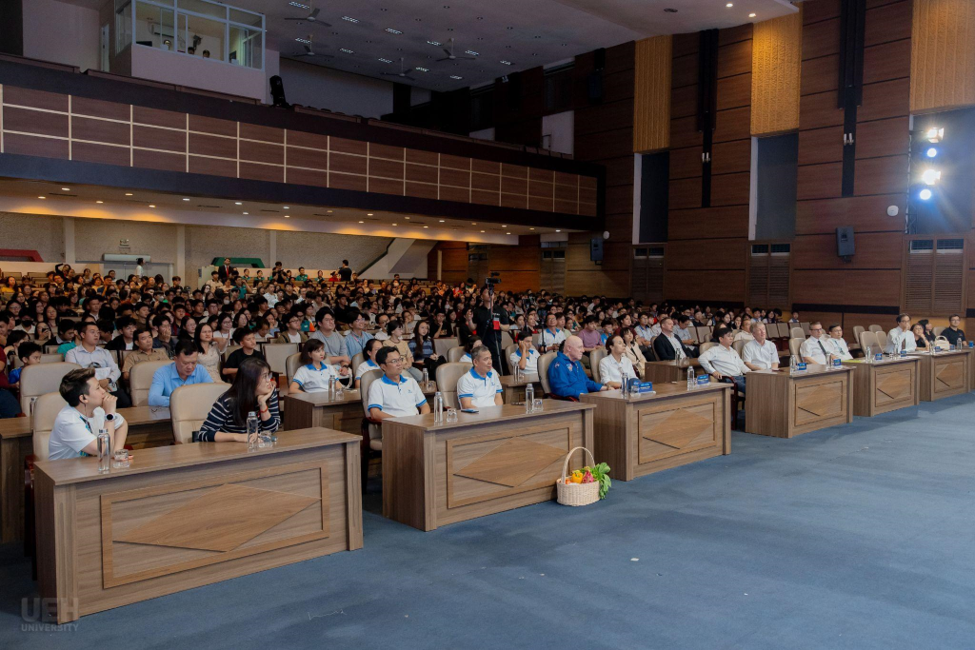
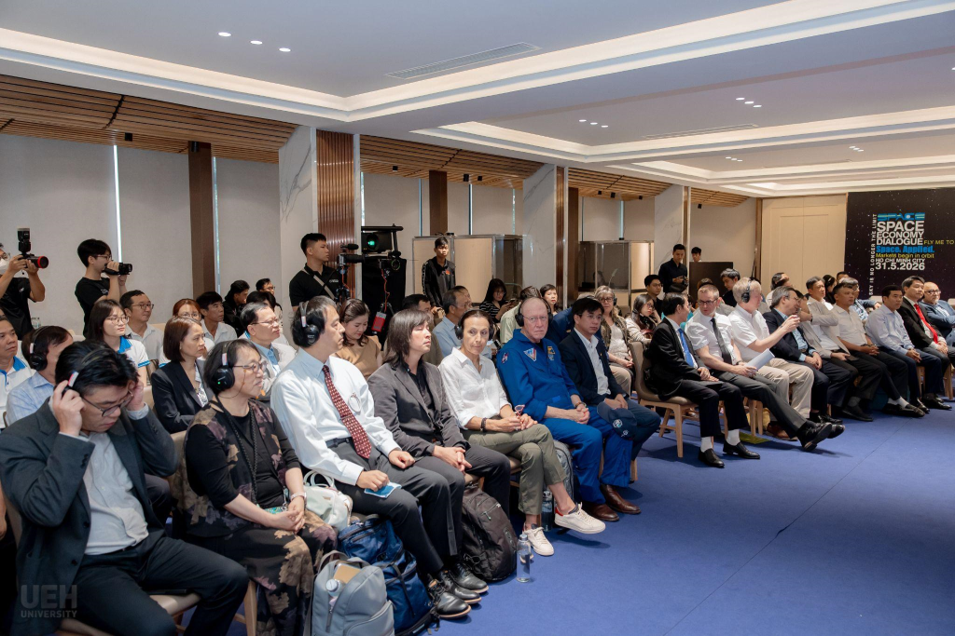
Overview of the Real Space Talk at Hall A116.
In his welcome remarks, Assoc. Prof. Dr. Bui Quang Hung shared that space exploration is not merely a technological achievement—it also represents curiosity, perseverance, creativity, and the courage to push beyond known boundaries. More importantly, stories from space have the power to inspire younger generations to dream bigger, think differently, and imagine new possibilities for the future.
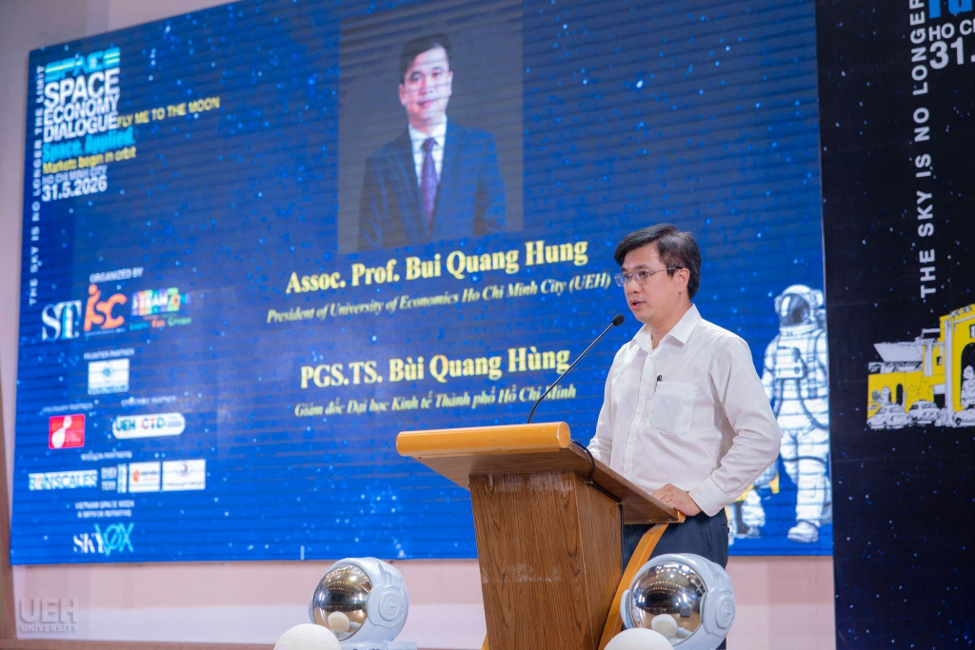
Assoc. Prof. Dr. Bui Quang Hung delivering welcome remarks.
One of the event’s most memorable moments was when former NASA astronaut Michael A. Baker walked onto the stage wearing his iconic blue flight suit while carrying a woven bamboo basket filled with Vietnamese mangoes and vegetables. This simple yet meaningful image conveyed a powerful message: space is not distant—it can begin with the familiar elements of everyday life.
During the session, Baker shared stories about his journeys into space, the sensation of weightlessness, and the experience of viewing Earth from an altitude of approximately 400 kilometers. He also reflected on more than 40 days spent in orbit across four Space Shuttle missions, including STS-81, a landmark mission in U.S.–Russian space cooperation that helped lay the foundation for the International Space Station (ISS). Drawing from his firsthand experiences, he highlighted valuable lessons about responsibility, adaptability, teamwork, and the determination to overcome personal limits.
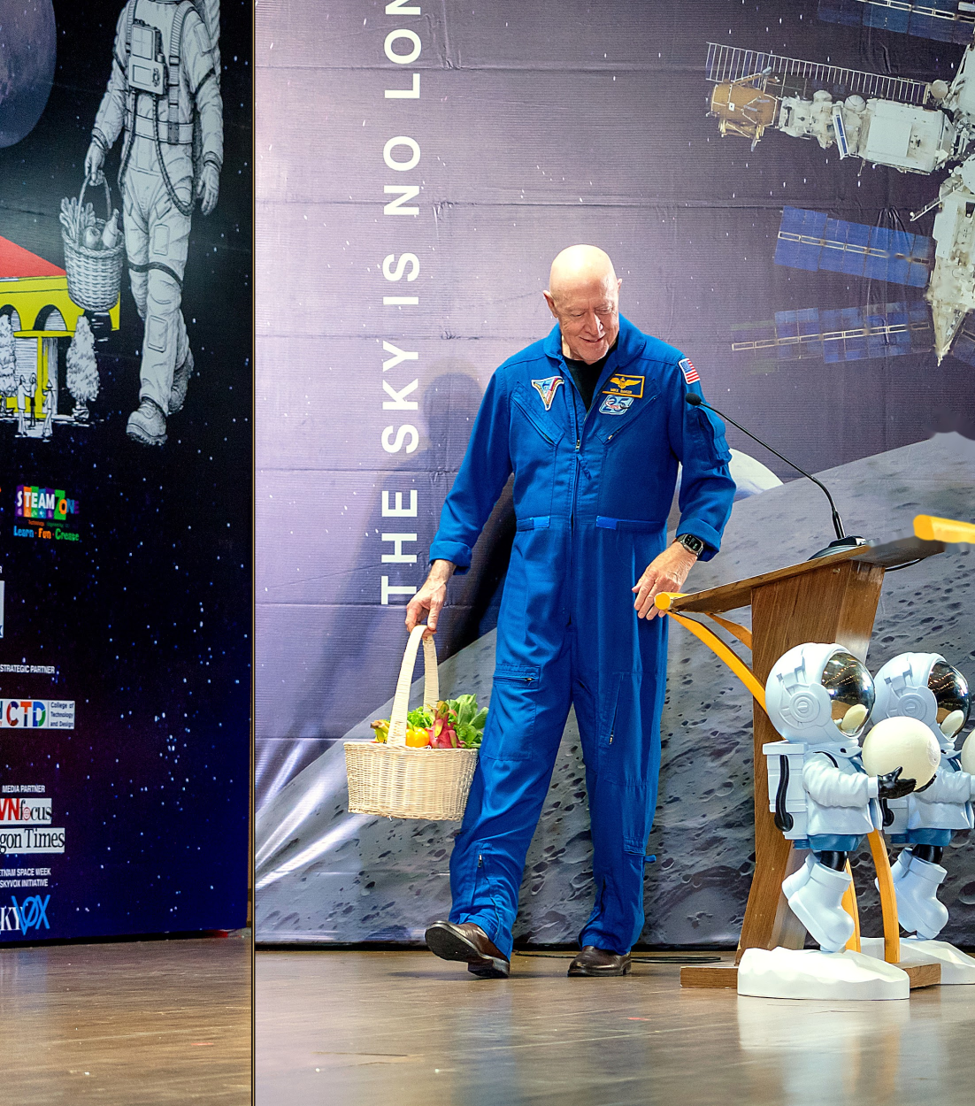
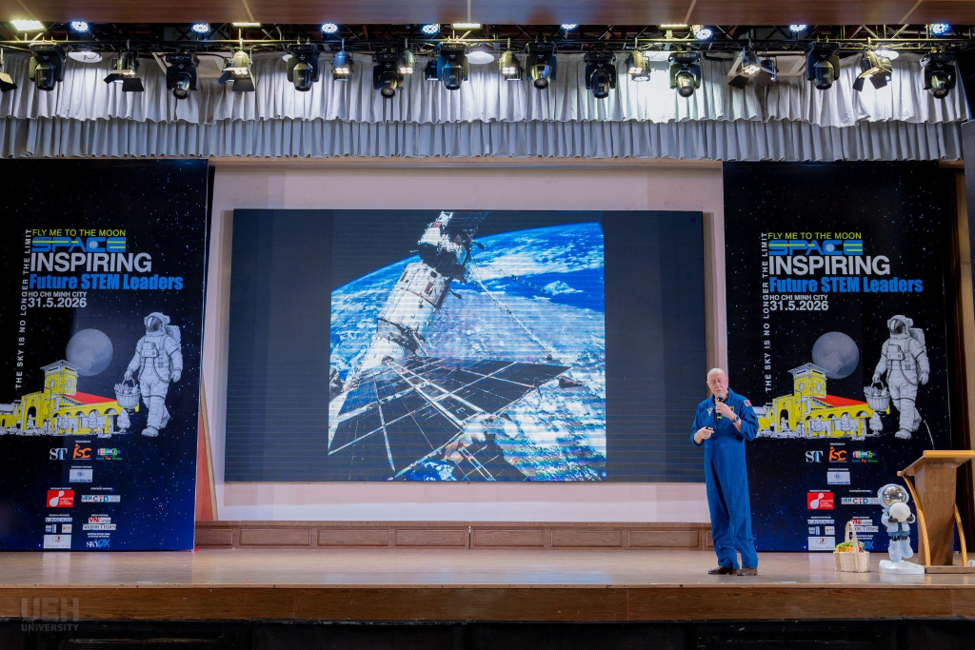
Michael A. Baker, veteran astronaut and former Space Shuttle commander who helped pave the way for the International Space Station, sharing his experiences.
Dr. Josef Schmid, NASA Aerospace Medicine Specialist, discussed space medicine and the future of technology in space missions. He highlighted the groundbreaking holoportation experiment conducted aboard the ISS in 2021, which enabled interaction with astronauts in space through mixed-reality technology while participants remained on Earth. Beyond technological advancements, Dr. Schmid also emphasized the importance of mental health and purpose-driven motivation during long-duration space missions.
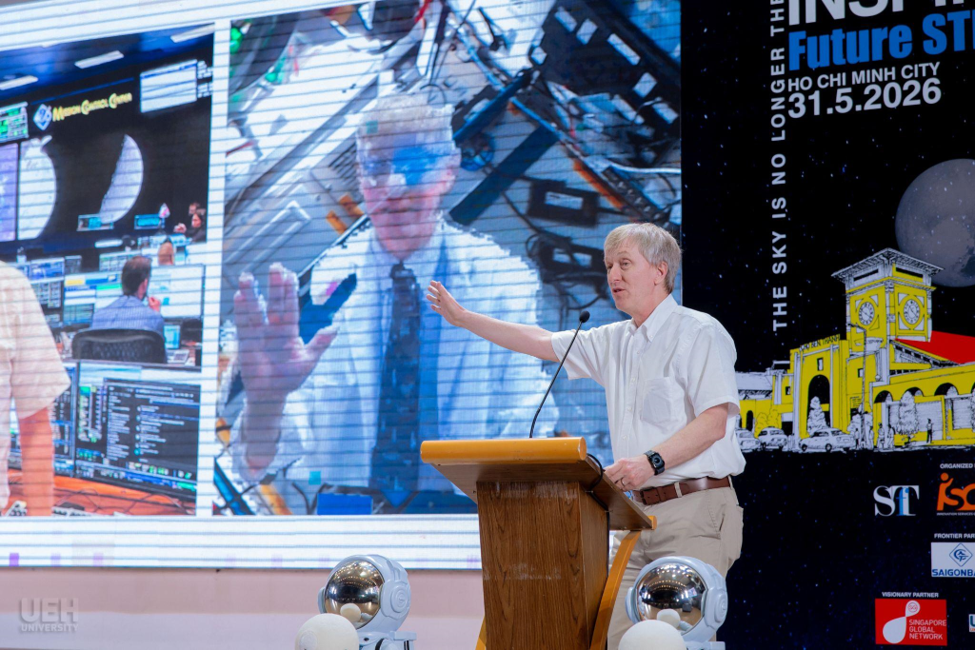
Dr. Josef Schmid discussing hologram technology and the future of space medicine.
Fostering Curiosity and Connecting Science Enthusiasts
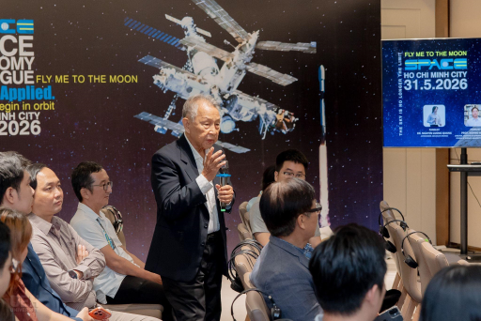
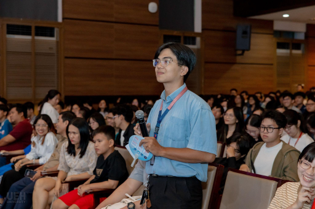
During the interactive session, speakers answered a wide range of questions from students and participants, covering topics such as weightlessness, daily life aboard the ISS, and opportunities for Vietnamese individuals to engage with the space sector. The speakers also shared insights on lifelong learning, adapting to technological change, and the importance of nurturing a passion for scientific exploration.
 |
 |
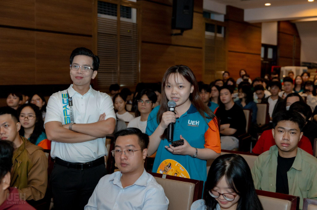 |
Students engaging in discussions and asking questions to international speakers during Real Space Talk.
As UEH celebrates its 50th anniversary in 2026, the university continues to pursue its vision of “Taking Action for a More Sustainable Future.” Through initiatives such as Vietnam Space Week, UEH continues to expand learning opportunities and global connections, enabling learners and communities to engage with new ideas, emerging industries, and inspiring real-world experiences.
With the message “The Sky Is No Longer the Limit,” Vietnam Space Week 2026 at UEH not only provided new perspectives on the space economy, AI, space technologies, and STEM education, but also inspired younger generations to continue exploring knowledge, technology, and the limitless opportunities of the future.
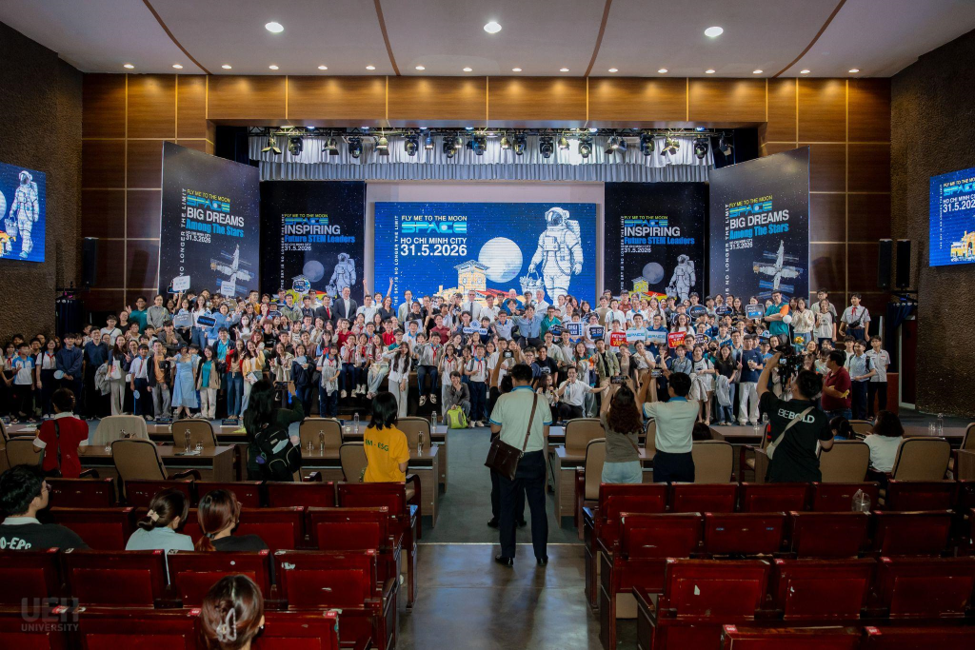
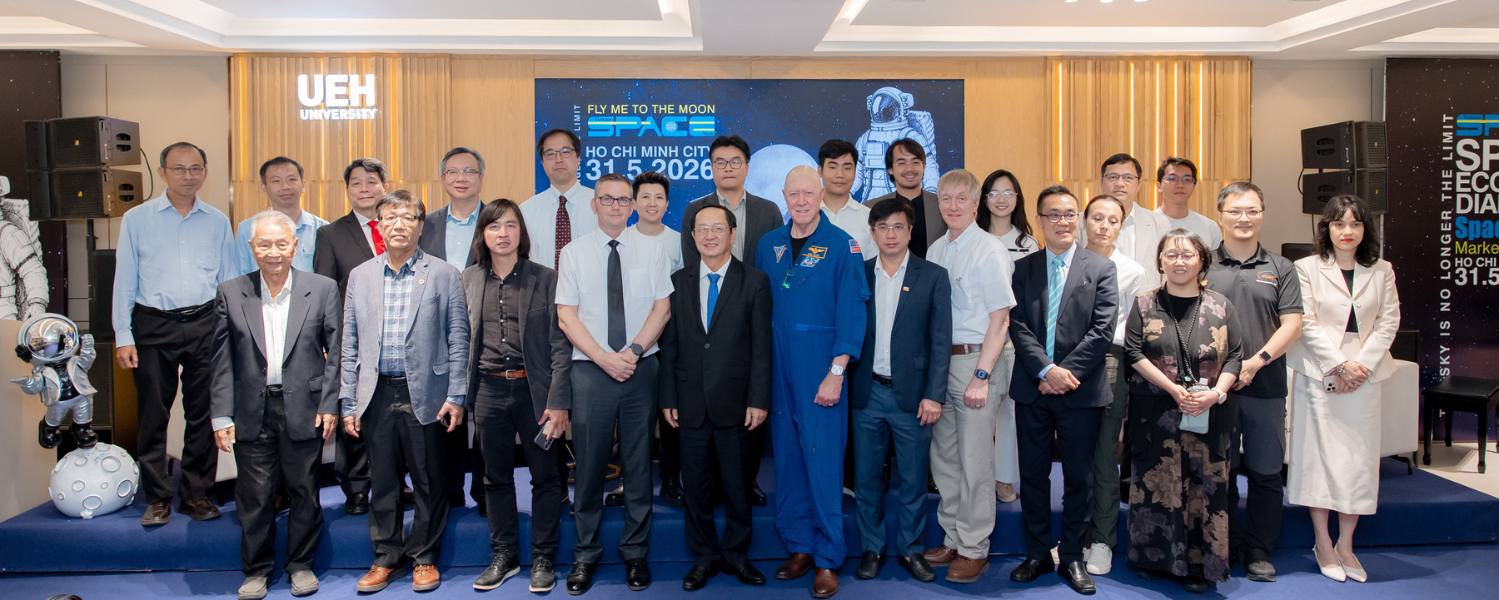
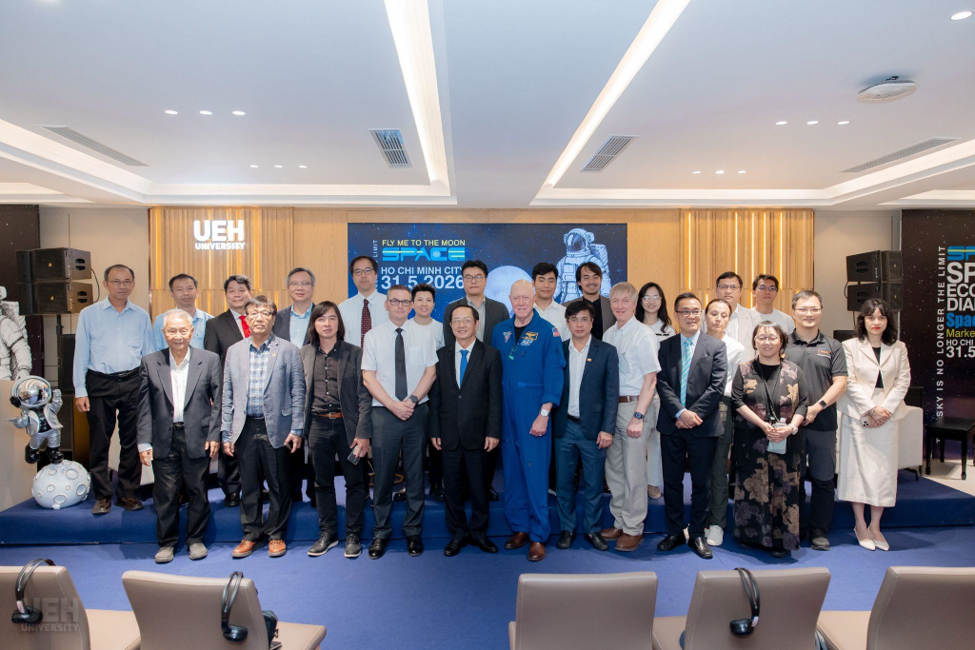
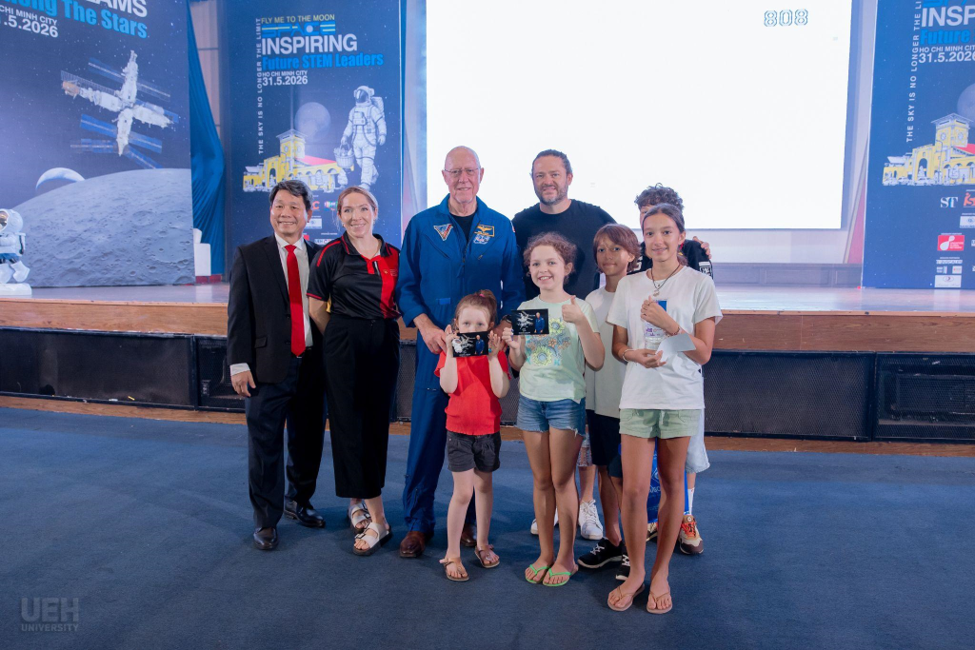
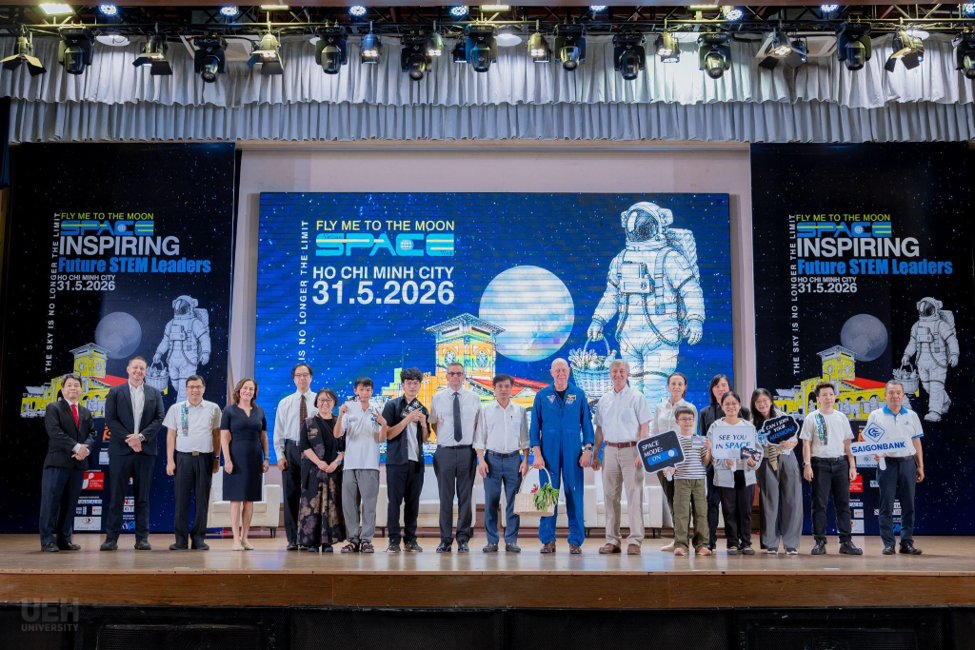
International speakers, delegates, and participants posing for a commemorative photo at Real Space Talk.
Some Other Highlights:
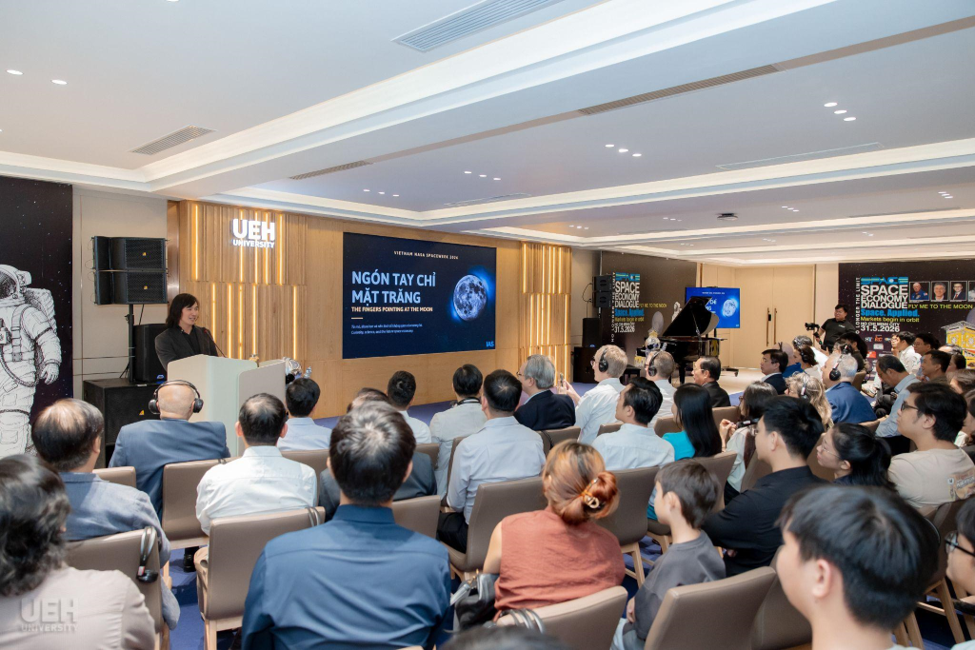
Space Economy Dialogue Seminar with the theme “Fly Me to the Moon: Where Space Meets Business”
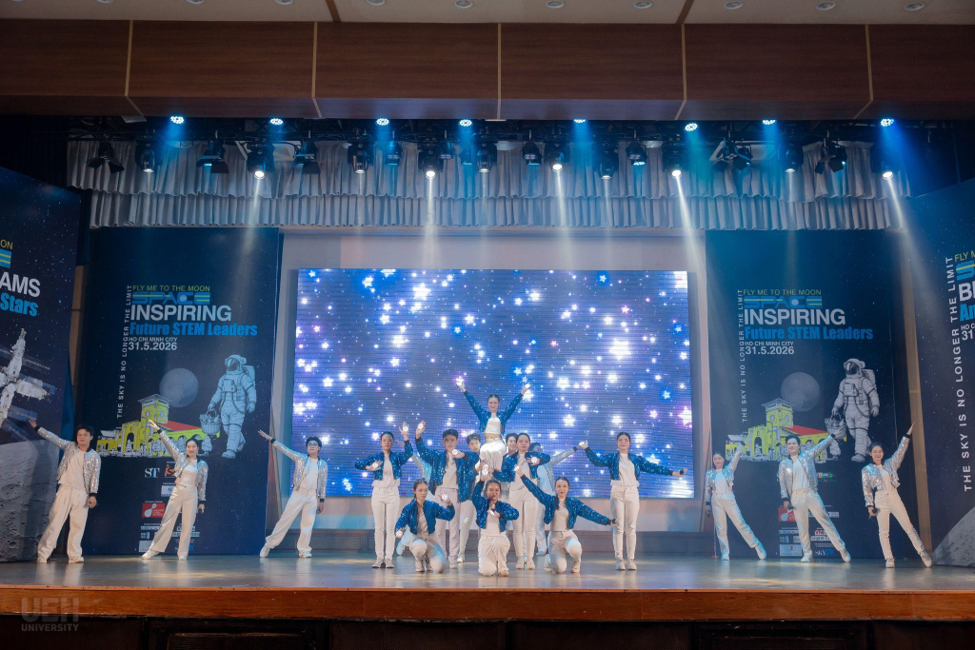
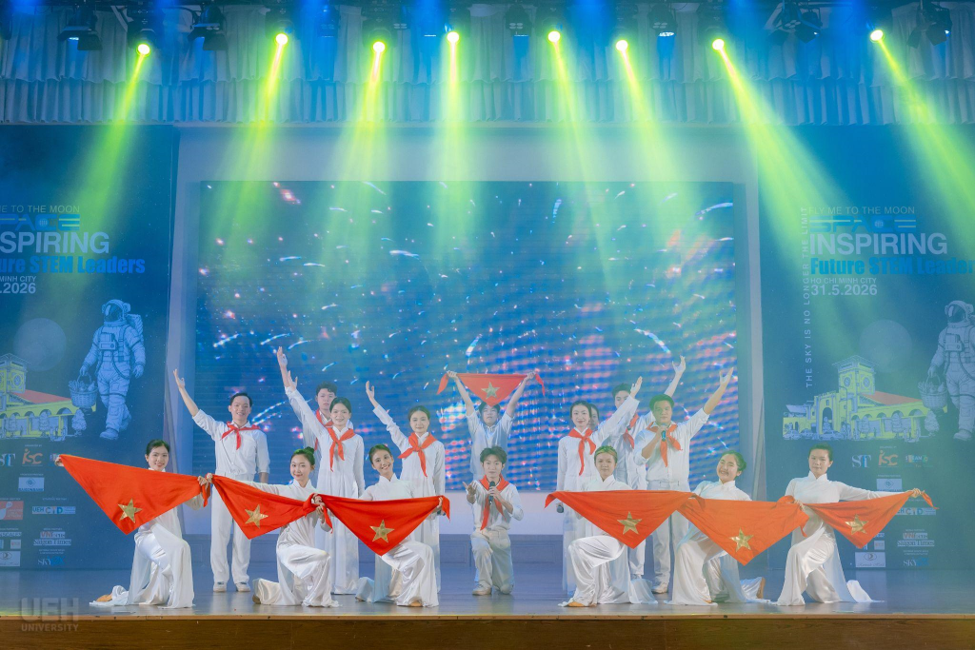
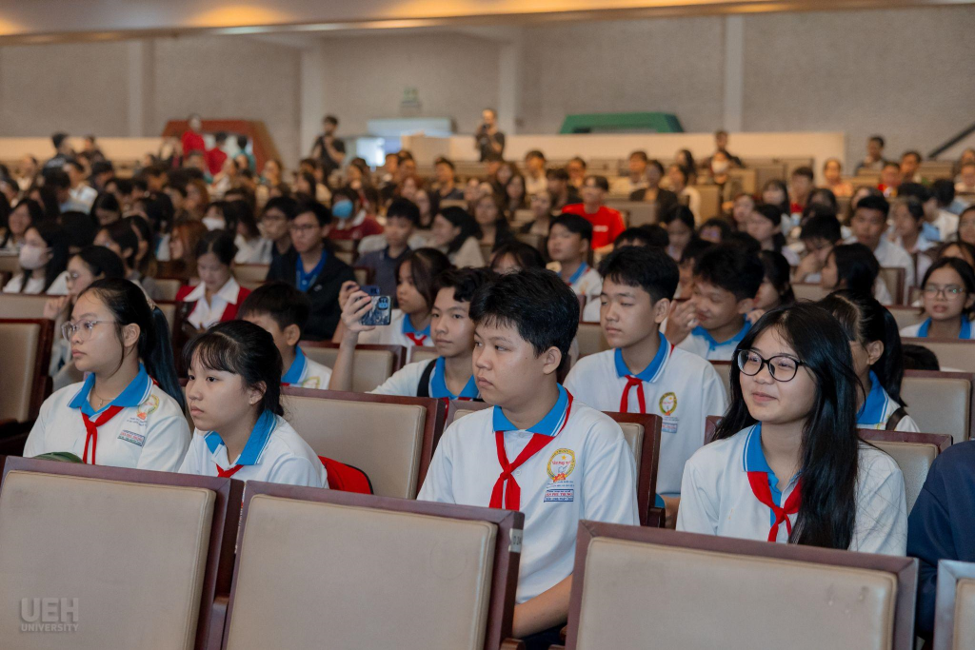
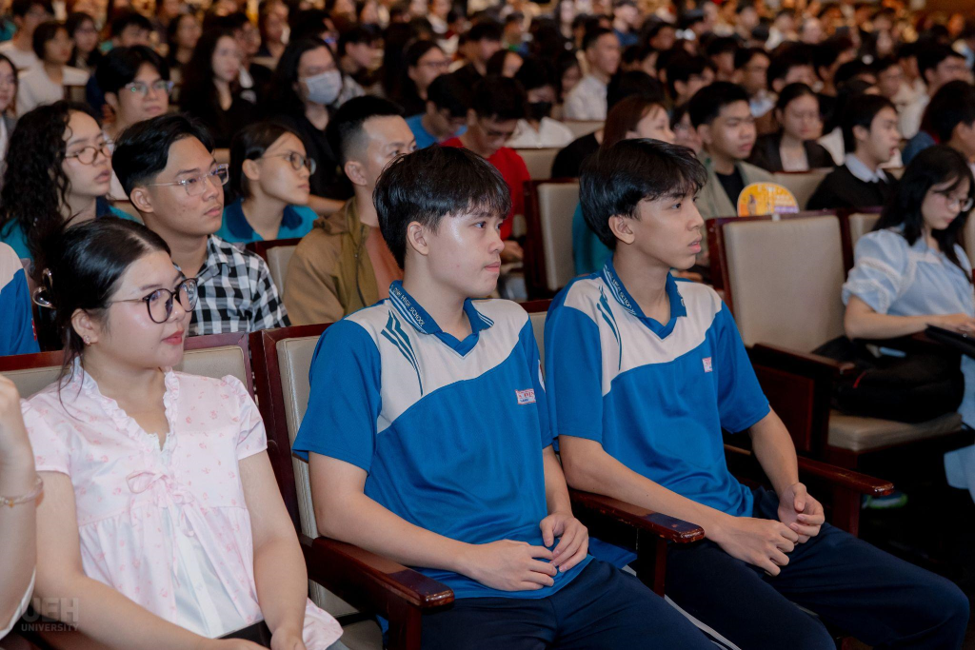
Real Space Talk: “Fly Me to the Moon: NASA Astronauts Share Stories from Space”
Media Coverage:
VNfocus: Vietnam Space Week 2026: How Can Vietnam Enter the Trillion-Dollar Space Economy Without Rockets?
Pillars: Training, Community
Project: UEH Connecting
News and photos: Department of Communications and Partnerships, UEH College of Technology and Design
![[UEH CONFERENCE 50] UEH Hosts SR-ICYREB 2026, Advancing Student Research and Nurturing the Next Generation of Young Scholars](/images/upload/thumbnail/ueh-thumbnail-639273984608805382.png)