UEH School of Tourism Contributes Strategic Insights at High-Level Roundtable on Australia–Vietnam Skills Training and Workforce Development
04 Sep, 2026

In Hanoi, the Australia–Vietnam Policy Institute (AVPI), in collaboration with KOTO Social Enterprise, organized a high-level roundtable discussion on the role of education, vocational training, and businesses in Vietnam’s economic transformation. Bringing together prominent leaders and experts from both countries, the event provided a platform for the UEH School of Tourism, University of Economics Ho Chi Minh City (UEH), to share valuable perspectives and practical solutions for human resource development.
A Platform for Strategic and Inclusive Dialogue
Moderated by Ms. Dominique Wiehahn, AVPI Representative, the panel discussion brought together influential figures, including former Australian Federal Minister Brendan O'Connor; Ms. Peggy O'Neal AO, Australia's Business Champion for Vietnam; Ms. Freya Kaine, Counsellor for Education and Research at the Australian Embassy in Vietnam; Assoc. Prof. Dr. Vu Thi Tu Anh, Deputy Director General of the Department of Vocational and Continuing Education under the Ministry of Education and Training; and Mr. Jimmy Pham, Founder and Chief Executive Officer of KOTO.
The discussions highlighted the importance of building an inclusive, future-ready skills ecosystem while emphasizing the value of practical, work-integrated learning approaches in creating employment opportunities and strengthening bilateral relations between Australia and Vietnam.
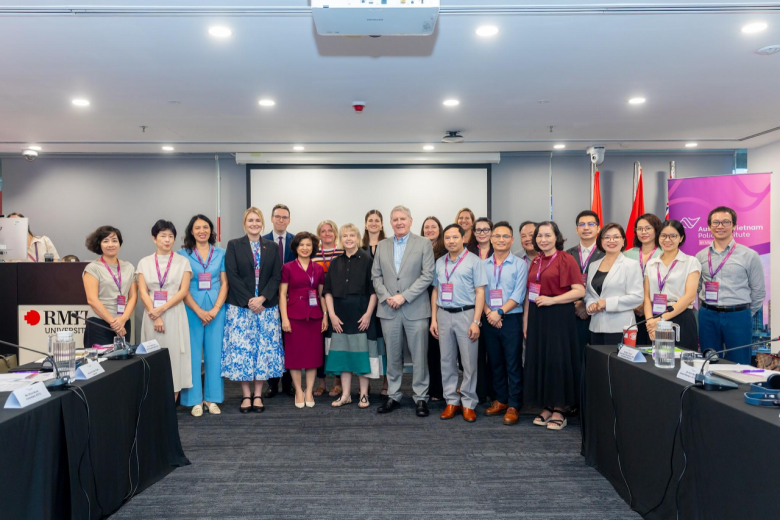
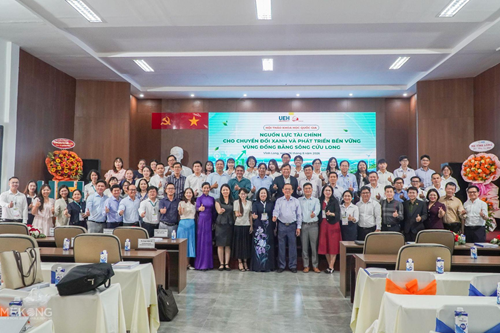
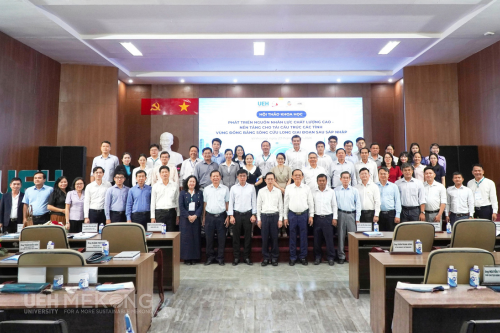
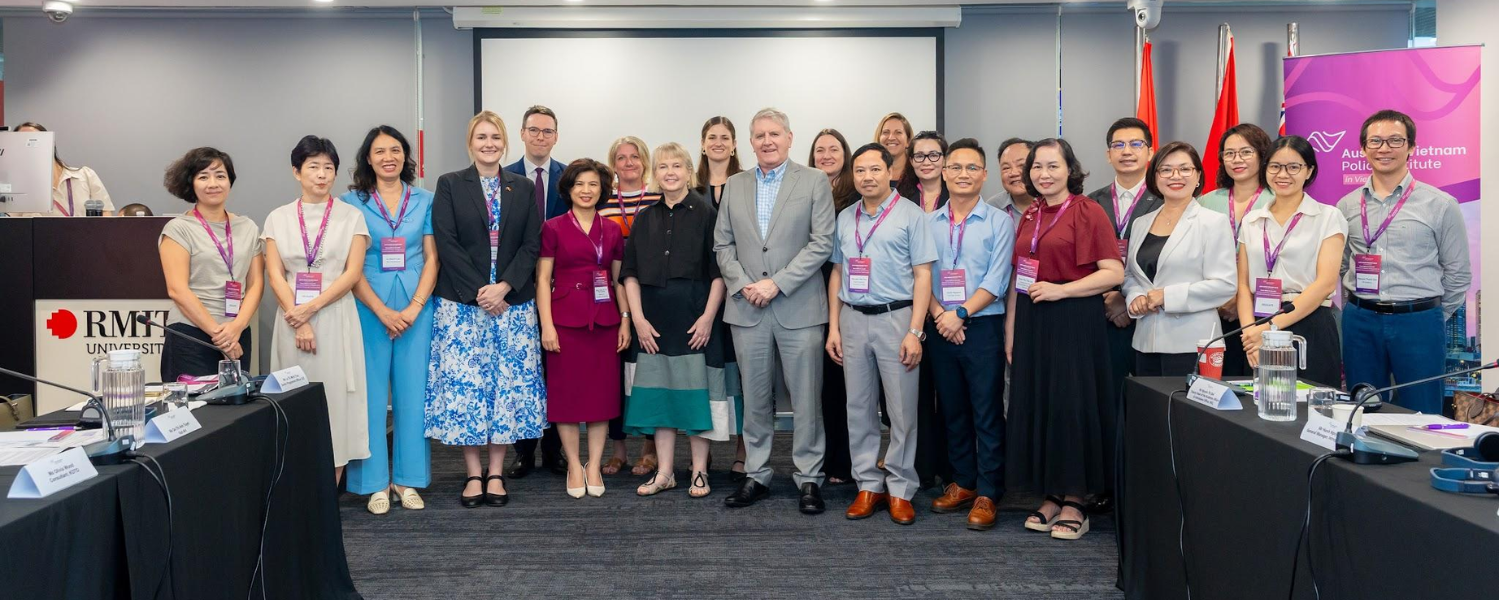
Delegates attending the panel discussion
UEH School of Tourism's Contribution: Innovative Solutions Through the "Head – Hand – Heart" Philosophy
Representing the higher education sector, Mr. Doan Duc Minh, MA, Vice Dean of the UEH School of Tourism, delivered a presentation offering a comprehensive perspective on current human resource development strategies in the tourism industry. His presentation examined practical challenges and proposed four key groups of innovative solutions:
- Integrating businesses into the educational ecosystem: Strengthening the involvement of industry professionals in teaching, research, and curriculum development. At the same time, establishing mechanisms that enable lecturers and students to immerse themselves in real-world business projects, thereby narrowing the gap between theoretical knowledge and practical application.
- Applying the "Head – Hand – Heart" philosophy: The UEH School of Tourism emphasized the importance of adopting the philosophy of "Head (Thinking) – Hand (Skills) – Heart (Attitude)" as a bridge between academic education and vocational training. This approach encourages the two education systems to complement and reinforce each other rather than operate separately, fostering the development of well-rounded professionals.
- Addressing the human resource bottleneck: The presentation examined a longstanding paradox in the labor market: "Businesses continue to face staff shortages, while graduates struggle with the risk of unemployment." To address this challenge, it strongly advocated for a flexible articulation mechanism between different education and training pathways, enabling more effective resource allocation and closer alignment with labor market demands.
- Enhancing labor productivity in the tourism industry: Proposing a range of macro- and micro-level solutions to optimize workforce productivity in Vietnam's tourism sector, thereby strengthening the industry's overall competitiveness in the international market.
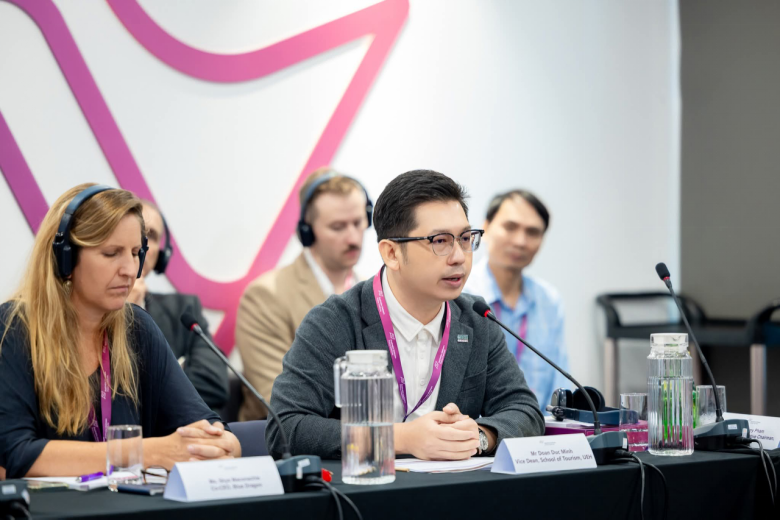
Mr. Doan Duc Minh, MA, Vice Dean of the UEH School of Tourism, delivers his presentation at the panel discussion
The participation and strategic proposals of the UEH School of Tourism at the panel discussion reaffirmed the University's strong commitment to continuous innovation and close collaboration with industry networks and international partners. These efforts not only contribute to addressing human resource challenges in the tourism industry but also directly support the sustainable development of Vietnam's economy in a new era of international integration.
Pillars: Research, Community Engagement
Article and photos: School of Tourism