
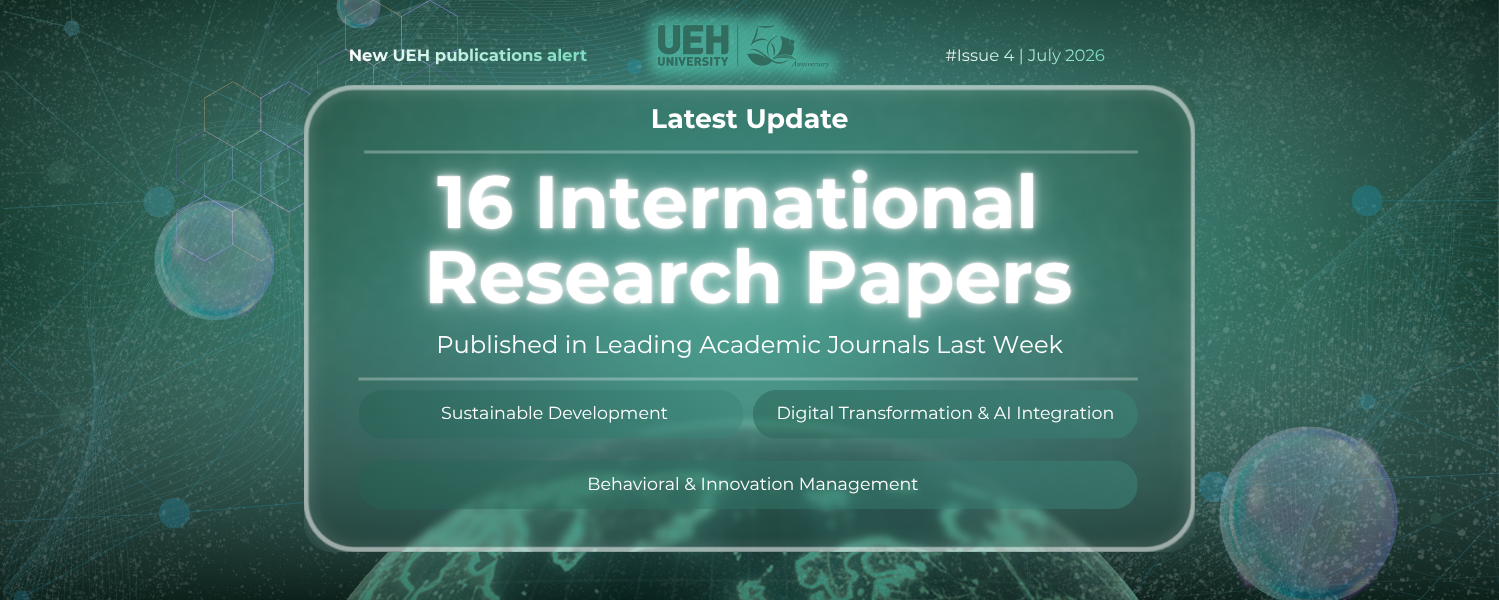
New UEH Publications Alert (Week 4 – July 2026): Multidisciplinary Convergence from ESG and Artificial Intelligence to Green Logistics
28 Jul 2026

In Week 4 – July 2026, the University of Economics Ho Chi Minh City (UEH) continued to demonstrate its growing multidisciplinary research excellence through an impressive series of international publications. This week's studies highlight the University's ability to integrate economics, management, technology, data science, social sciences, and engineering to address emerging challenges in digital transformation, artificial intelligence (AI), sustainable development, ESG, and green logistics.
Read More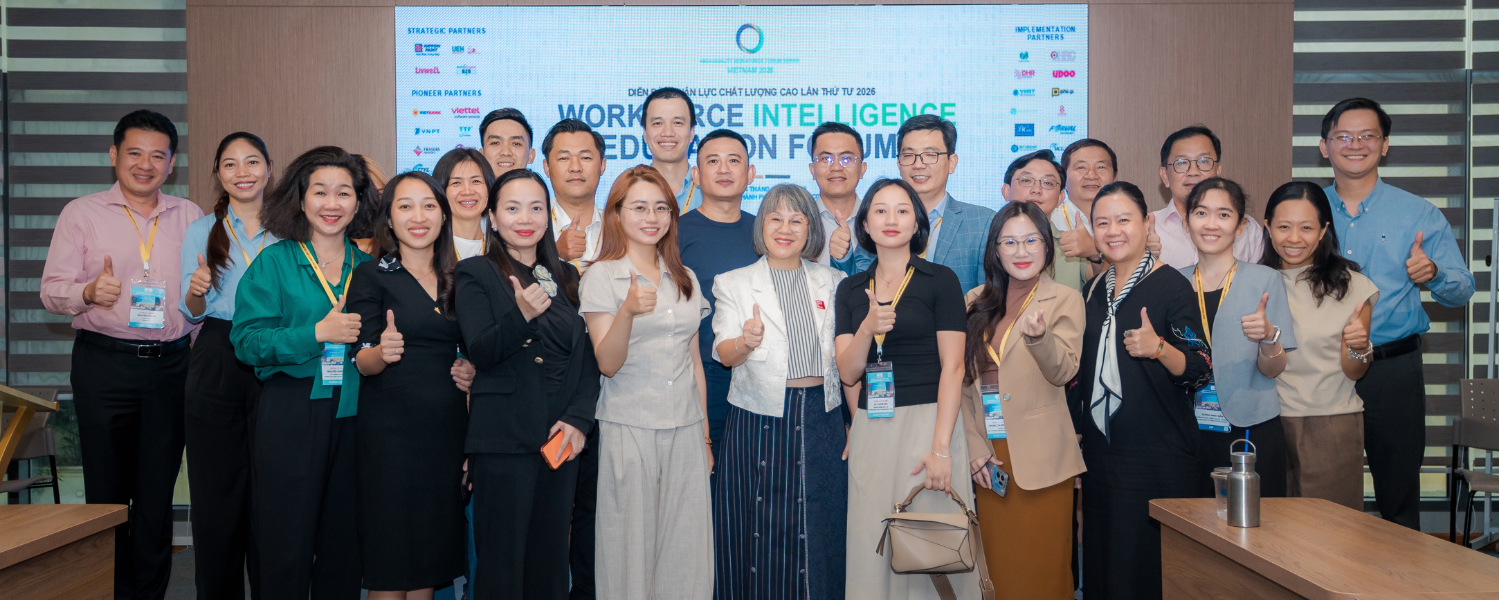
Workforce Intelligence Education Forum 2026: Connecting Education and Industry for High-Quality Workforce Development
28 Jul 2026
On July 24, 2026, the 4th Workforce Intelligence Education Forum, themed Education, was held at Campus B of the University of Economics Ho Chi Minh City (UEH). As a co-organizer, UEH created a collaborative platform that brought together higher education institutions, businesses, industry experts, and professional organizations to discuss workforce development trends in the era of Artificial Intelligence (AI), while promoting the application of data in talent assessment, education, and the alignment of human capital with labor market demands.
Read More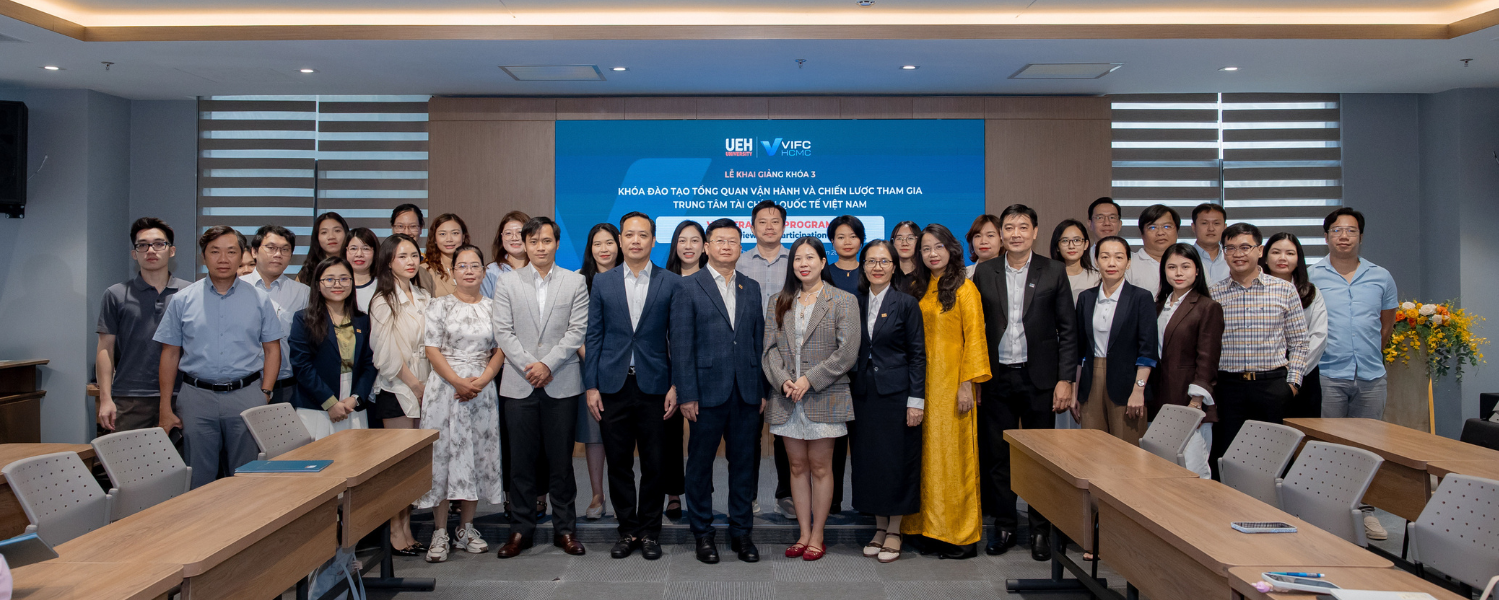
UEH Hosted Closing Ceremony for Cohort 2 and Opening Ceremony for Cohort 3 of the Training Program "Operation Overview and Participation Strategy for the Vietnam International Financial Center"
28 Jul 2026
On July 25, 2026, the University of Economics Ho Chi Minh City (UEH), in coordination with the Executive Agency of the Vietnam International Financial Center in Ho Chi Minh City (VIFC-HCMC), organized the Closing Ceremony for Cohort 2 and the Opening Ceremony for Cohort 3 of the program "Overview of Operations and Participation Strategy for the Vietnam International Financial Center." The event marked a transitional milestone in the journey of training high-quality human resources to serve the development and operation of the Vietnam International Financial Center (VIFC).
Read More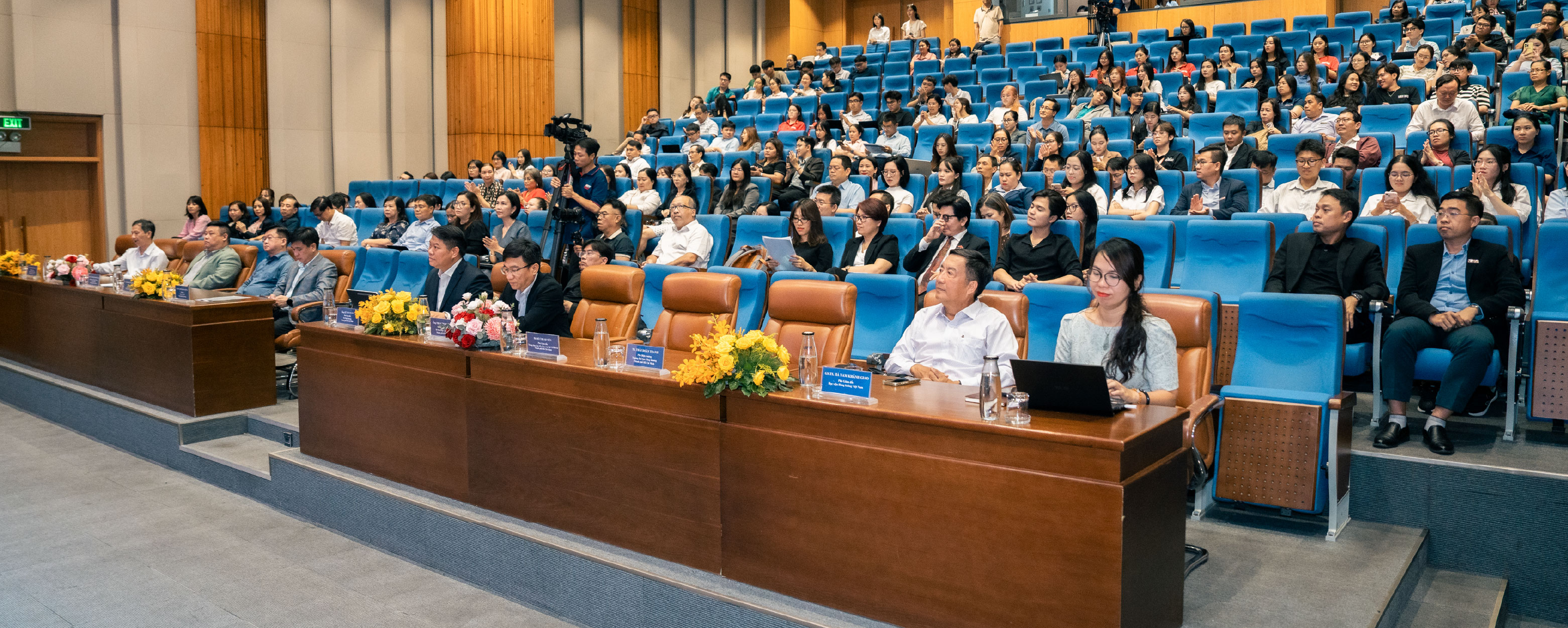
ASIA R&D Connect Forum 2026: Building and Protecting Vietnamese Brands in Global Economic Integration
28 Jul 2026
On the afternoon of July 22, 2026, the ASIA R&D CONNECT 2026 Forum took place at the University of Economics Ho Chi Minh City (UEH) under the theme "Building and Protecting Vietnamese Brands in Global Economic Integration". The event served as a strategic dialogue space, helping businesses find solutions to the challenge of positioning intangible assets amidst constantly shifting global supply chains.
Read More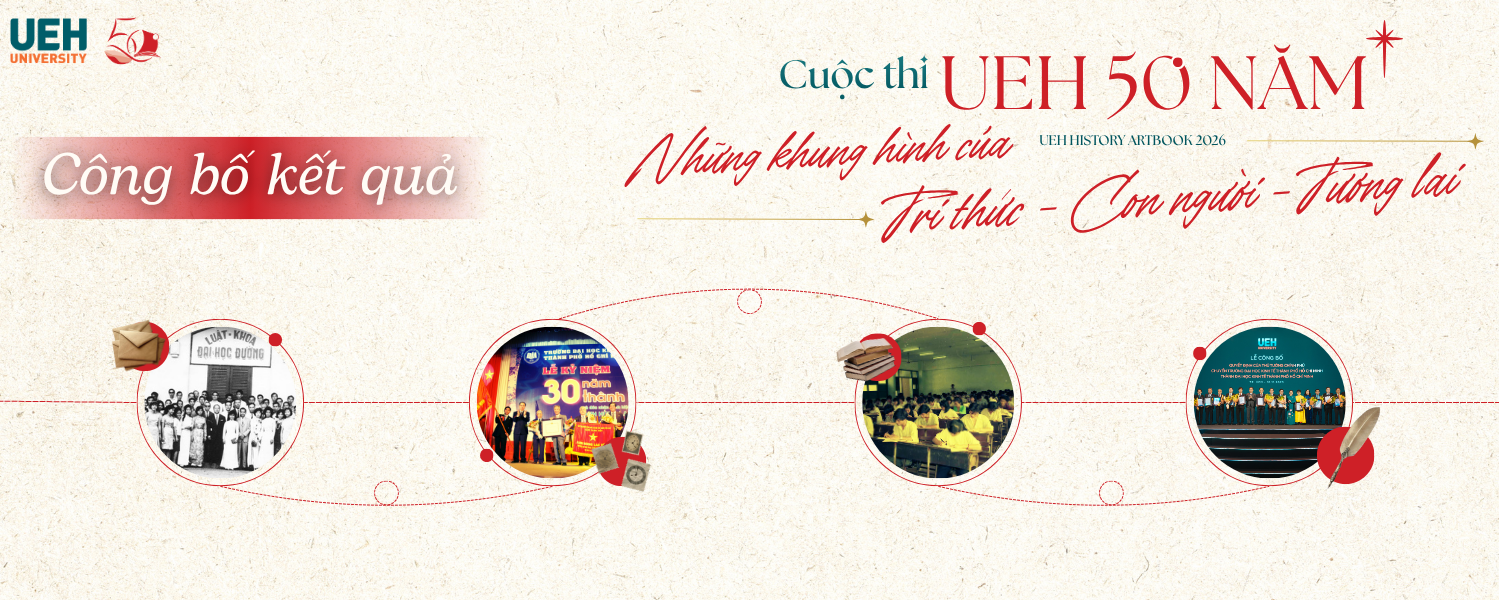
UEH Announces Outstanding Works from the “UEH 50 Years – Through the Lenses of Knowledge – People – Future” Competition
27 Jul 2026
After more than three months since its launch, the “UEH 50 Years – Through the Lenses of Knowledge – People – Future” Competition has received 51 entries across various formats, including articles, short writings, poems, and photographs, contributed by UEH staff and employees, former staff members, alumni, and the wider UEHer community.
Read More![[Green Monday Series] What does SDG 13 - Climate Action mean at UEH?](/images/upload/img_background/ueh-background-639214304360767196.png)
[Green Monday Series] What does SDG 13 - Climate Action mean at UEH?
27 Jul 2026
Climate change has become one of the greatest challenges facing humanity as global temperatures continue to rise and extreme weather events occur with increasing frequency and severity, threatening the sustainable development of many countries. In pursuit of Sustainable Development Goal 13 (SDG 13 - Climate Action), UEH has implemented a wide range of initiatives in green operations, education, research, community engagement, and policy contribution, thereby promoting meaningful climate action. This week’s Green Monday Series invites readers to explore some of the key milestones in UEH’s journey toward achieving SDG 13.
Read More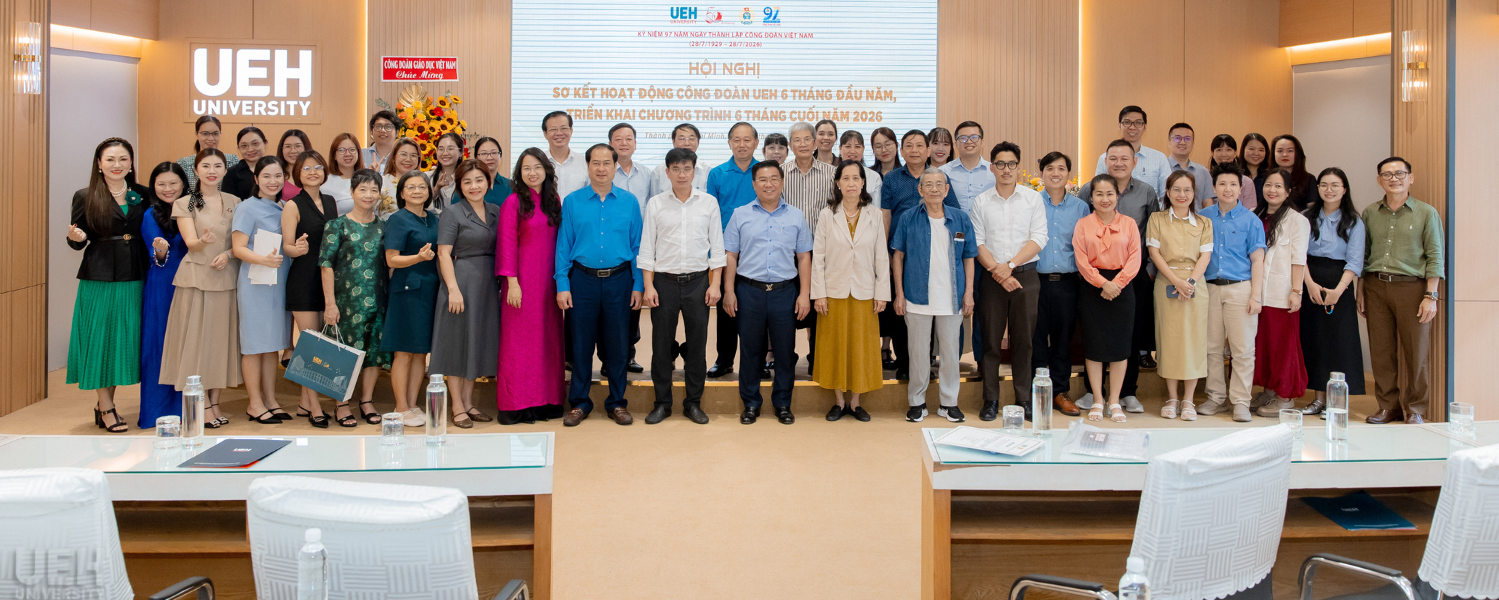
UEH Trade Union holds a meeting to celebrate the 97th anniversary of the Vietnam Trade Union and a conference reviewing activities in the first six months and implementing the program for the last six months of 2026
25 Jul 2026
On the morning of July 24, 2026, at Hall A.103 (Campus A), the UEH Trade Union organized a meeting to celebrate the 97th anniversary of the establishment of the Vietnam Trade Union (July 28, 1929 - July 28, 2026), along with a conference reviewing UEH Trade Union activities in the first six months of 2026 and implementing the program for the last six months of 2026.
Read More![[UEH 50 Global Partners] UEH College of Business Signs Partnership Agreement with the Faculty of Economics and Business, Universitas Airlangga, Expanding Its Global Partnership Network](/images/upload/img_background/ueh-background-639249801730191893.png)
[UEH 50 Global Partners] UEH College of Business Signs Partnership Agreement with the Faculty of Economics and Business, Universitas Airlangga, Expanding Its Global Partnership Network
24 Jul 2026
As part of its ongoing efforts to expand international partnerships and strengthen education and research in line with its internationalization strategy, the UEH College of Business (COB) officially signed a Memorandum of Understanding (MoU) with the Faculty of Economics and Business (FEB), Universitas Airlangga (UNAIR), Indonesia on the morning of July 22, 2026, at Campus B, Universitas Airlangga, Surabaya, Indonesia.
Read More![[Research Contribution] The Co-creation University: Preparing human resources for a transforming Ho Chi Minh City](/images/upload/img_background/ueh-background-639205089253876879.png)
[Research Contribution] The Co-creation University: Preparing human resources for a transforming Ho Chi Minh City
24 Jul 2026
Ho Chi Minh City is entering a new phase of development with the goal of becoming a regional center for economy, finance, science and technology, and innovation. As the growth model shifts from reliance on labor and capital to one based on knowledge, technology, and creativity, the challenge of human resource development demands a novel approach. Consequently, the role of universities extends beyond learner training to direct participation in the knowledge creation process, resource connectivity, and alignment with the city's development strategy.
Read More![[UEH 50 Years] UEH50 Global Leadership Forum 2026: Connecting Global University Leaders to Shape a Sustainable Future for Higher Education](/images/upload/thumbnail/ueh-thumbnail-639287195725926552.png)
![[UEH 50 Years] A Multidisciplinary and Sustainable University: A strategic transformation to expand the frontiers of knowledge and create value for the community](/images/upload/thumbnail/ueh-thumbnail-639286299966128227.png)
![[UEH 50] Launching Ceremony UEH Technology Convergence Hub and UEH FLEX Pilot Project: A Convergence Point for Technology, Knowledge Connection, and Innovation for Sustainable Development](/images/upload/thumbnail/ueh-thumbnail-639286062840222030.png)
![[UEH 50] JABES Launches Special Issue Celebrating the 50th Anniversary of UEH: 12 Research Papers Accompanying Vietnam's Development Issues](/images/upload/thumbnail/ueh-thumbnail-639283721313299577.png)
![[UEH Through the Lenses of Time #01] UEH 50 Years: From the Classroom Window to the Aspiration to Contribute](/images/upload/thumbnail/ueh-thumbnail-639282664984784994.png)